Shekhawat Declares 'Today's India is Unstoppable'
Synopsis
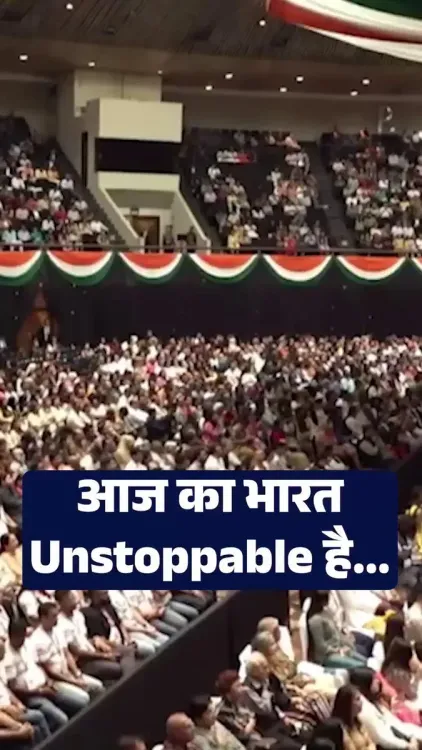
Union Culture and Tourism Minister Gajendra Singh Shekhawat posted 'Today's India is Unstoppable' on X on 8 July 2026, reinforcing the BJP government's sustained campaign to project India's cultural confidence and soft power on digital platforms.
Key Takeaways
Gajendra Singh Shekhawat , Union Minister of Culture and Tourism, declared 'Aaj ka Bharat Unstoppable hai' on X on 8 July 2026 .
The post included a video and was published at 7:50 AM IST , maximising morning social media reach.
The messaging aligns with the BJP government's cultural confidence narrative active since 2014 , linking heritage promotion with national image-building.
India's soft-power push through tourism has institutional roots in the Incredible India campaign launched in 2002 .
Shekhawat is a senior BJP leader and Lok Sabha MP from Jodhpur, Rajasthan , with a portfolio spanning both culture and tourism.
Upcoming parliamentary sessions may see related budget or policy announcements from the ministry.
Union Culture and Tourism Minister Gajendra Singh Shekhawat on Wednesday, 8 July 2026, took to X to assert that India's momentum is unstoppable, sharing a video that underscores the government's continuing push to project cultural confidence and national pride on digital platforms.
Context
Shekhawat's post — 'Aaj ka Bharat Unstoppable hai' ('Today's India is unstoppable') — is brief but pointed. Accompanied by a video, it channels a sentiment the BJP-led government has consistently amplified since 2014: that India is experiencing a civilisational resurgence driven by cultural pride, economic ambition, and soft-power assertion. The post was published at 7:50 AM IST, reaching a wide morning audience across social media.
As the minister responsible for both culture and tourism, Shekhawat's messaging sits at the intersection of national image-building and policy advocacy. Posts of this nature frequently precede or accompany ministry-level announcements, heritage events, or tourism campaigns, though no specific trigger for this particular post has been confirmed.
Policy Backdrop
India's soft-power projection through culture and tourism has a long institutional lineage. The Incredible India campaign, launched in 2002, was among the earliest systematic efforts to market India's heritage and diversity to a global audience. Under successive governments, and with renewed vigour post-2014, the Ministry of Culture and Tourism has expanded this mandate to include digital outreach, heritage site restoration, and cultural diplomacy.
Shekhawat, a senior BJP leader and Lok Sabha MP from Jodhpur, Rajasthan, has been a vocal proponent of linking India's ancient cultural legacy with its contemporary global ambitions. His social media presence regularly reinforces this narrative, positioning tourism and heritage as instruments of national pride rather than merely economic sectors.
Stakeholders and Impact
The message resonates across multiple stakeholder groups. For the tourism sector — which employs millions of Indians directly and indirectly — ministerial confidence-signalling can influence investor sentiment, destination marketing strategies, and the broader perception of India as a travel destination. Cultural institutions, too, draw legitimacy and public attention from such high-profile endorsements of India's heritage identity.
On the diplomatic front, assertions of an 'unstoppable India' contribute to the government's broader soft-power narrative, one that seeks to position India as a rising civilisational force on the world stage. This framing has been a consistent thread in BJP-era communications, from the G20 presidency in 2023 to ongoing initiatives around Yoga, classical arts, and UNESCO heritage nominations.
What's Next
Observers will watch for whether this post is followed by a concrete ministry announcement — a new tourism scheme, a heritage conservation initiative, or a cultural diplomacy event. Upcoming parliamentary sessions are also expected to see budget-related discussions on tourism infrastructure and cultural funding, areas where Shekhawat's ministry has been seeking expanded allocations. The digital messaging strategy suggests the ministry is priming public attention ahead of a potential policy milestone.
Point of View
Shareable, and emotionally resonant, designed to prime public sentiment ahead of possible policy moves. The 'unstoppable India' framing is not incidental; it has been a recurring motif in BJP communications since 2014, most visibly during the G20 presidency and cultural diplomacy pushes. For a minister who holds both culture and tourism portfolios, such messaging does double duty: it energises a domestic base while signalling to global audiences that India is a confident, ascending civilisation. The real test will be whether this rhetorical moment is followed by substantive announcements.
NationPress
8 Jul 2026
Frequently Asked Questions
What did Gajendra Singh Shekhawat post on X on 8 July 2026?
Shekhawat posted 'Aaj ka Bharat Unstoppable hai' ('Today's India is Unstoppable') along with a video on X on 8 July 2026, reinforcing the government's cultural confidence narrative.
Who is Gajendra Singh Shekhawat?
Gajendra Singh Shekhawat is India's Union Minister of Culture and Tourism, a senior BJP leader, and the Lok Sabha MP representing Jodhpur, Rajasthan.
What is the BJP government's approach to India's cultural soft power?
Since 2014, the BJP-led government has consistently linked heritage promotion with national image-building, using campaigns, digital outreach, and cultural diplomacy to project India as a rising civilisational force globally.
What is the Incredible India campaign?
The Incredible India campaign was launched in 2002 to market India's cultural heritage and diversity to global audiences, and remains a cornerstone of the Ministry of Culture and Tourism's promotional strategy.
What policy announcements might follow Shekhawat's post?
Observers are watching for potential tourism scheme launches, heritage conservation initiatives, or budget announcements in upcoming parliamentary sessions that the post may be signalling.