Shekhawat Highlights India-France Bond of Shared Values and Vision
Synopsis
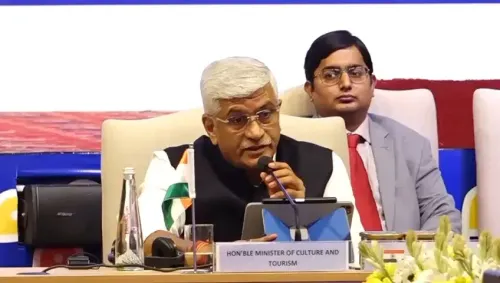
Union Culture and Tourism Minister Gajendra Singh Shekhawat on 14 June 2026 hailed the India-France relationship as a bond of connection, conviction, innovation, and shared vision — reinforcing a strategic partnership established in 1998 and spanning defence, culture, and people-to-people ties.
Key Takeaways
Gajendra Singh Shekhawat , Union Culture and Tourism Minister, posted on 14 June 2026 celebrating the depth of the India-France relationship .
He described the bilateral bond as encompassing connection, conviction, innovation, inspiration, shared values, and a shared vision.
The India-France Strategic Partnership was established in January 1998 and covers defence, nuclear energy, space, and cultural cooperation.
A Cultural Cooperation Agreement was renewed in 2018 when President Emmanuel Macron visited New Delhi for Republic Day .
The minister's post aligns with India's broader multi-aligned foreign policy that pairs hard-power ties with soft-power and tourism diplomacy.
Upcoming bilateral summits may yield concrete announcements on joint cultural festivals and tourism promotion schemes.
Union Culture and Tourism Minister Gajendra Singh Shekhawat on Sunday, 14 June 2026 took to X to celebrate the depth of the India-France relationship, describing it as a partnership defined by connection, conviction, innovation, inspiration, shared values, and a shared vision.
Writing in Hindi, the minister posted: 'भारत और फ्रांस के इस रिश्ते में Connection भी है, Conviction भी है। इस रिश्ते में Innovation भी है, Inspiration भी है। इस रिश्ते में Shared Values हैं, Shared Vision भी है।' — translated as: 'In this relationship between India and France, there is connection and conviction. There is innovation and inspiration. There are shared values and a shared vision.'
Context
The post arrives against the backdrop of a long-standing India-France Strategic Partnership, first established in January 1998 during Prime Minister Atal Bihari Vajpayee's visit to Paris. The partnership spans defence, nuclear energy, space cooperation, and cultural exchanges — making France one of India's most privileged bilateral partners. Shekhawat's framing, which weaves together material and normative threads, mirrors the established diplomatic vocabulary both countries have used for nearly three decades.
The minister's portfolio — culture and tourism — places him at the soft-power end of this relationship, an area that has grown steadily through bilateral cultural cooperation agreements and people-to-people initiatives. A Cultural Cooperation Agreement between the two nations was renewed in 2018 when French President Emmanuel Macron visited New Delhi as the chief guest at Republic Day.
Policy Backdrop
Prime Minister Narendra Modi's April 2015 state visit to France produced a joint statement that specifically expanded cultural and educational exchanges, laying institutional groundwork for the kind of people-to-people diplomacy Shekhawat now oversees. The Rafale aircraft deal of 2016 further cemented military trust and technology transfer, demonstrating that the partnership operates simultaneously across hard-power and soft-power dimensions.
India has consistently positioned France as a cornerstone of its multi-aligned foreign policy — pairing defence and technology cooperation with heritage projects and tourism promotion. Successive governments have used high-level rhetoric to underline convergence on democratic values, multilateralism, and innovation, and Shekhawat's post continues that well-worn pattern.
Stakeholders and Impact
Cultural diplomacy bodies on both sides, as well as tourism industry stakeholders, stand to benefit from sustained high-level messaging that keeps India and France visible to each other's citizens as attractive destinations and creative partners. Elevated political rhetoric around shared values typically precedes or accompanies concrete announcements — joint cultural festivals, bilateral tourism promotion schemes, and student exchange programmes.
For the tourism sector specifically, a minister-level endorsement of the bilateral relationship signals institutional support for initiatives that could channel French visitors toward Indian heritage sites and vice versa — a priority for Shekhawat's ministry as it works to expand India's inbound tourism numbers.
What's Next
Observers will watch for concrete outcomes at upcoming India-France bilateral engagements, particularly any announcements on joint cultural festivals or new tourism promotion frameworks. With Shekhawat publicly foregrounding the relationship's depth across innovation and shared vision, the ministry appears to be laying rhetorical groundwork that could accompany a formal bilateral initiative. The durability of the India-France partnership suggests that such messaging rarely remains purely symbolic for long.
Point of View
Suggesting this is coordinated messaging rather than spontaneous sentiment. Coming from the ministry that controls heritage diplomacy and inbound tourism policy, the post subtly positions culture as a pillar of foreign policy rather than a footnote to defence deals. If history is a guide, rhetorical investment of this kind tends to precede announcements on joint festivals, visa facilitation, or tourism corridors.
NationPress
14 Sept 2026
Frequently Asked Questions
What did Gajendra Singh Shekhawat say about India and France?
On 14 June 2026, Shekhawat posted that the India-France relationship is defined by connection, conviction, innovation, inspiration, shared values, and a shared vision.
What is the India-France Strategic Partnership?
The India-France Strategic Partnership was established in January 1998 during PM Atal Bihari Vajpayee's visit to Paris, covering defence, nuclear energy, space cooperation, and cultural exchanges.
Why is Gajendra Singh Shekhawat commenting on India-France ties?
As Union Minister of Culture and Tourism, Shekhawat oversees the soft-power and people-to-people dimensions of India's bilateral relationships, making cultural diplomacy a core part of his portfolio.
What is the history of India-France cultural cooperation?
India and France renewed their bilateral Cultural Cooperation Agreement in 2018 when President Emmanuel Macron visited New Delhi as Republic Day chief guest, building on decades of educational and cultural exchange.
What could follow Shekhawat's India-France post?
Observers expect upcoming bilateral summits to potentially yield announcements on joint cultural festivals, tourism promotion schemes, or expanded people-to-people initiatives between India and France.