Shekhawat pays tribute to Ashok Singhal on birth centenary

Synopsis
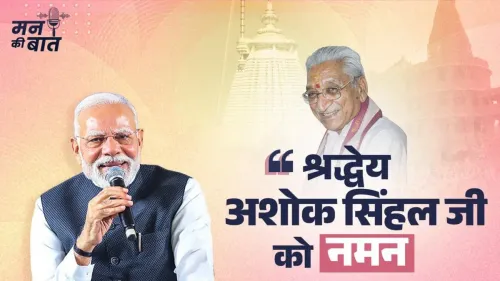
On the birth centenary of Ashok Singhal, Union Culture and Tourism Minister Gajendra Singh Shekhawat honoured the VHP stalwart who led the Ram Janmabhoomi movement, calling the Ayodhya temple the direct result of Singhal's life's work.
Key Takeaways
Ashok Singhal was born on 27 September 1926 in Agra ; Sunday marked his birth centenary .
Union Minister Gajendra Singh Shekhawat paid formal tribute on X , describing Singhal as having lived 'like an ascetic among society.' Singhal was the senior organisational leader of the Vishva Hindu Parishad (VHP) and a principal force behind the Ram Janmabhoomi movement from the 1980s onward.
The 2019 Supreme Court judgment cleared the path for temple construction at Ayodhya ; Singhal passed away in 2015 before the verdict.
Shekhawat's tribute aligns with the BJP's consistent practice of crediting movement-era leaders when referencing the completed Ayodhya temple.
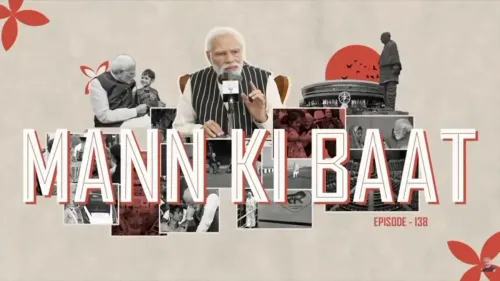
The post carried the hashtag #MannKiBaat , situating the tribute within a broader government communication moment.
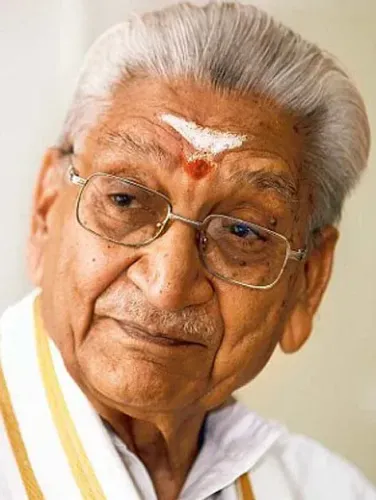
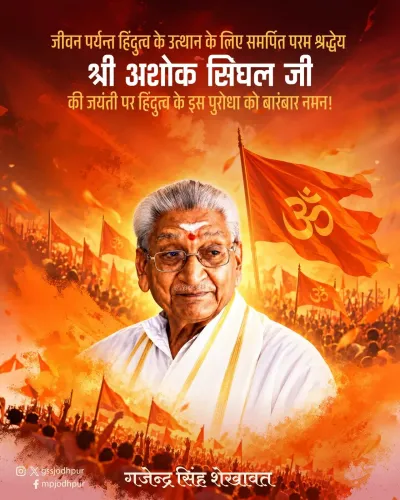
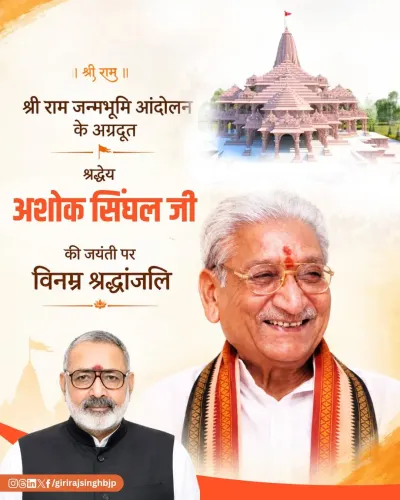
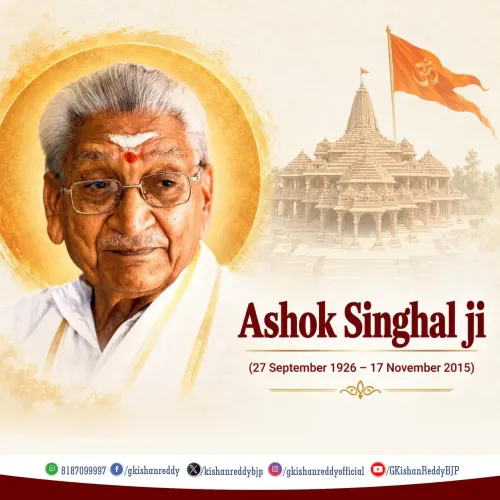
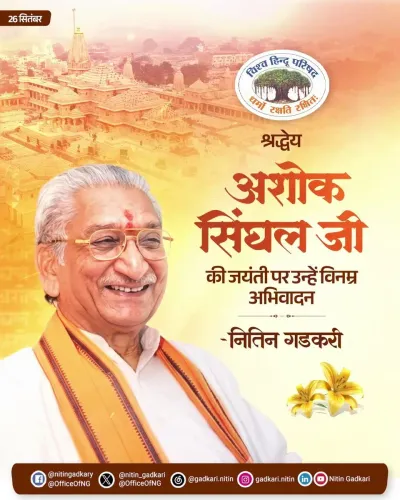
A hundred years after Ashok Singhal was born in Agra on 27 September 1926, his legacy stands etched in stone — quite literally — at Ayodhya. Union Culture and Tourism Minister Gajendra Singh Shekhawat offered a formal tribute on Sunday, marking the birth centenary of the veteran Vishva Hindu Parishad leader who spent decades organising the Ram Janmabhoomi movement.
Shekhawat wrote: 'उन्होंने समाज में रहकर तपस्वियों जैसा जीवन जिया' — 'He lived among society like an ascetic.' The minister directly linked Singhal's direction and energy to the Ram Janmabhoomi campaign, concluding: 'Today, its result is before us — the grand temple at Ayodhya that we can witness with our own eyes.'
The man who shaped the Ram Janmabhoomi campaign
Ashok Singhal was the defining organisational force behind the Ram Janmabhoomi movement from the 1980s onward, serving as a senior leader of the Vishva Hindu Parishad (VHP). He channelled a mass religious campaign into a sustained political and social mobilisation, drawing millions of Hindu devotees and VHP workers into the cause across three decades.
The movement culminated legally in the landmark 2019 Supreme Court judgment, which cleared the way for temple construction at the disputed site in Ayodhya, Uttar Pradesh. Singhal did not live to see that verdict — he passed away in 2015 — but the temple that now stands at the site is widely seen, within the BJP and VHP, as the fulfilment of the mission he championed.
Centenary tribute as cultural and political statement
Shekhawat's post carries the hashtag #MannKiBaat, signalling that the tribute connects to a broader government communication moment. The BJP has consistently credited movement-era leaders like Singhal when referencing the Ayodhya temple, framing the completed temple as both a civilisational milestone and a vindication of those who sustained the campaign through legal battles and social turbulence.
As Culture and Tourism Minister, Shekhawat sits at the intersection of both these threads: Ayodhya is today a frontline priority in India's religious tourism infrastructure push, with the government investing heavily in pilgrimage corridors, airport upgrades, and heritage circuits centred on the temple city. Marking Singhal's centenary publicly reinforces the ideological lineage the BJP draws between the movement era and its current governance agenda.
One hundred years on, a movement that began with marches and mobilisations has a temple to show for it. The man Shekhawat calls an ascetic-among-us never saw it finished — but on his centenary, the government is making sure no one forgets who laid the foundations.
Point of View
Reinforcing a narrative of ideological continuity. For a minister who oversees both culture and tourism, citing Singhal also draws a direct line between the temple's spiritual history and Ayodhya's emerging role as a flagship pilgrimage-tourism destination. The tribute's placement under #MannKiBaat suggests coordinated government messaging, not a spontaneous personal post. As the BJP approaches future electoral cycles, invoking the Ram Janmabhoomi movement's founders keeps the temple as a living political and cultural touchstone rather than a concluded chapter.
NationPress
27 Sept 2026
Frequently Asked Questions
Who was Ashok Singhal?
Ashok Singhal was a senior leader of the Vishva Hindu Parishad (VHP) and the principal organiser of the Ram Janmabhoomi movement from the 1980s onward. He was born on 27 September 1926 in Agra and passed away in 2015.
What is Ashok Singhal's connection to the Ayodhya Ram Temple?
Singhal led the decades-long campaign seeking a temple at the claimed birthplace of Lord Rama in Ayodhya. The 2019 Supreme Court verdict cleared the way for construction, and the temple is widely credited as the realisation of the movement he shaped.
Why did Gajendra Singh Shekhawat pay tribute to Ashok Singhal today?
27 September 2026 marks the 100th birth anniversary — the birth centenary — of Ashok Singhal, prompting Shekhawat to offer a formal tribute on social media.
What did the 2019 Supreme Court judgment say about Ayodhya?
The Supreme Court's 2019 judgment resolved the decades-old title dispute over the Ayodhya site, clearing the way for the construction of a Ram temple at the location claimed as Lord Rama's birthplace.
What is VHP and what role did it play in the Ram Janmabhoomi movement?
The Vishva Hindu Parishad (VHP) is a Hindu religious organisation that was the primary institutional force behind the Ram Janmabhoomi movement, mobilising Hindu devotees and coordinating campaigns for a temple at Ayodhya from the 1980s through to the legal resolution in 2019.