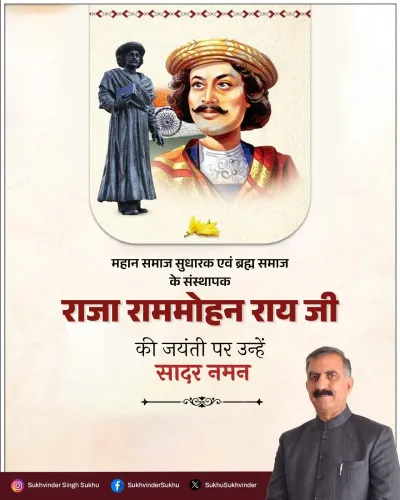
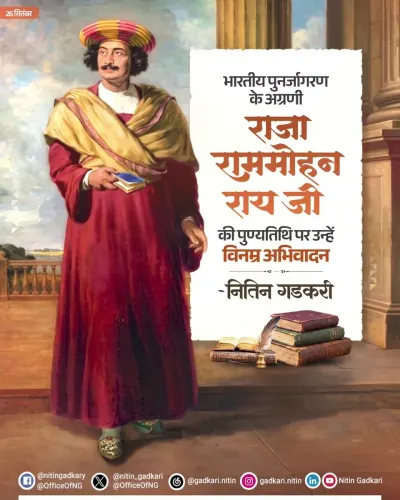
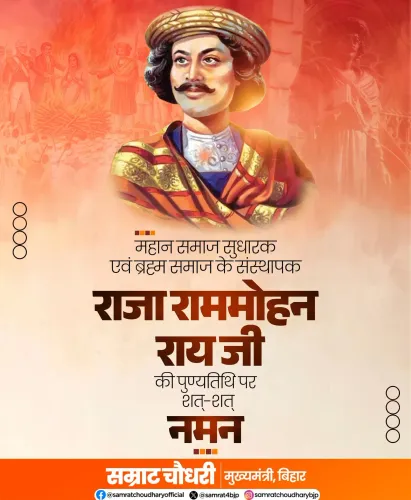
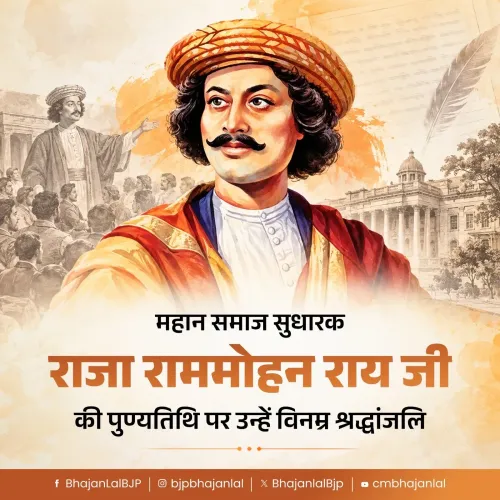
Shekhawat pays tribute to Raja Ram Mohan Roy on death anniversary
Synopsis
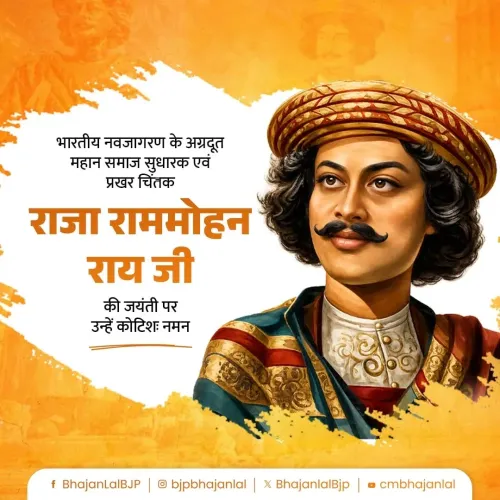
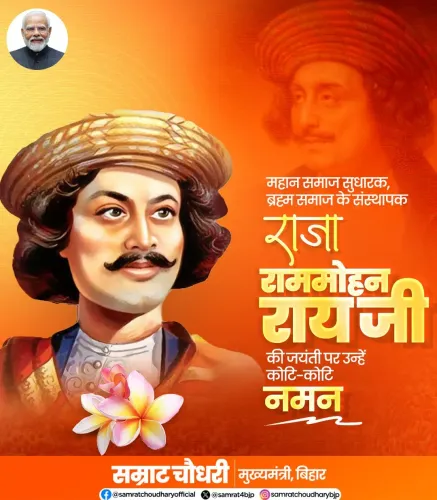
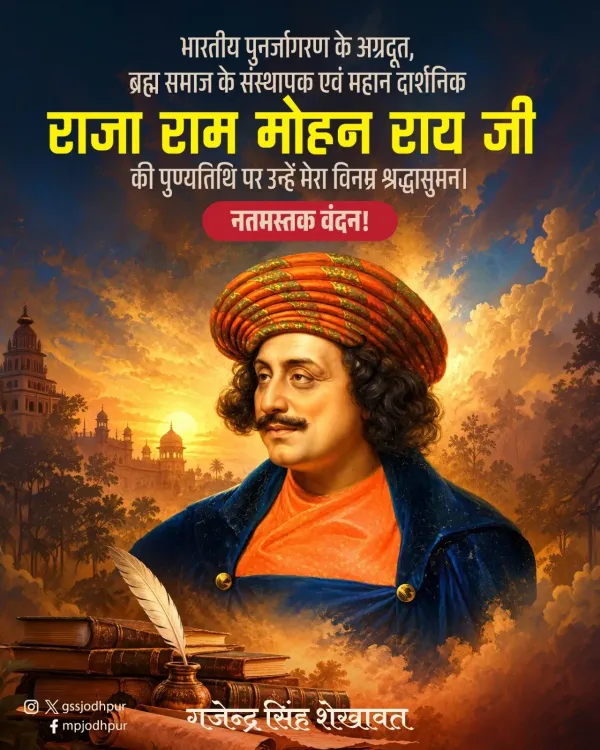
Union Culture and Tourism Minister Gajendra Singh Shekhawat marked the death anniversary of Raja Ram Mohan Roy on 27 September 2026, calling the Brahmo Samaj founder the harbinger of the Indian Renaissance and offering a tribute of humble reverence.
Key Takeaways
Union Culture and Tourism Minister Gajendra Singh Shekhawat paid tribute to Raja Ram Mohan Roy on his death anniversary, 27 September 2026 .
Shekhawat called Roy the 'harbinger of the Indian Renaissance' and a 'great philosopher' in his Hindi-language post on X.
Raja Ram Mohan Roy founded the Brahmo Samaj in 1828 , a landmark monotheistic reform movement that shaped Indian social and nationalist thought.
Roy's campaign against the practice of sati led to its colonial ban in 1829 ; he also championed widow remarriage and English education.
The Ministry of Culture routinely observes the anniversaries of 19th-century social reformers as part of its official cultural calendar.
A founding pillar of India's social awakening is remembered today. Union Culture and Tourism Minister Gajendra Singh Shekhawat on Sunday, 27 September 2026, offered his homage to Raja Ram Mohan Roy — the 19th-century reformer whose relentless campaigns helped reshape Indian society — on the occasion of Roy's death anniversary.
Posting in Hindi on X, Shekhawat called Roy the 'harbinger of the Indian Renaissance' and 'great philosopher,' paying tribute with the words 'विनम्र श्रद्धासुमन' — humble floral offerings of reverence — and a deep bow of remembrance.
The man who challenged a century
Raja Ram Mohan Roy's legacy is not a footnote — it is a foundation. Born in Bengal in the late 18th century, Roy took on some of the most entrenched social practices of his era, most notably the practice of sati, which he campaigned against until the British colonial administration banned it in 1829. He also championed widow remarriage and the introduction of English education, believing that exposure to Western learning could serve as a catalyst for rational, reformed thinking in Indian society. In 1828, Roy established the Brahmo Samaj — a monotheistic reform movement that would go on to shape not just religious thought but the broader contours of Indian nationalism and civic consciousness. The Samaj rejected idol worship and caste hierarchy, becoming a crucible for the social liberalism that many later reformers and freedom fighters would draw upon.Culture Ministry's annual arc of remembrance
Shekhawat's tribute fits a well-established practice: the Ministry of Culture routinely marks the birth and death anniversaries of India's 19th-century social reformers as part of its cultural calendar. For a ministry charged with preserving and projecting India's civilisational heritage, such commemorations serve as public affirmations of the reform tradition that runs alongside — and sometimes against — classical heritage. The anniversary on 27 September is observed by cultural institutions and educational bodies across the country, keeping Roy's intellectual and moral legacy in active public memory rather than archival dust. Two centuries on, the man who dared to reimagine what Indian society could become is still being summoned — proof that the most consequential reforms never really retire.Point of View
Anti-superstition legacy into a nationalist cultural narrative. For the Ministry of Culture, commemorating 19th-century reformers reinforces a pluralistic view of Indian identity that can co-exist with more traditionalist cultural messaging. Roy's Brahmo Samaj lineage, historically associated with Bengali liberal thought, being honoured by a Rajasthan-based BJP minister also signals that the reform tradition is framed as pan-Indian rather than regionally or ideologically exclusive. These annual rituals of remembrance do quiet but steady work in legitimising the state as custodian of social progress.
NationPress
27 Sept 2026
Frequently Asked Questions
When did Raja Ram Mohan Roy die and why is 27 September significant?
Raja Ram Mohan Roy passed away on 27 September 1833 in Bristol, England, making this date his annual death anniversary observed across India.
Who founded the Brahmo Samaj and what was its purpose?
Raja Ram Mohan Roy founded the Brahmo Samaj in 1828 as a monotheistic reform movement that rejected idol worship, caste discrimination, and practices like sati, while promoting rational, ethical religious life.
What did Raja Ram Mohan Roy do about the practice of sati?
Roy campaigned vigorously against sati — the practice of a widow immolating herself on her husband's funeral pyre — and his efforts led the British colonial administration to ban it in 1829.
Why is Raja Ram Mohan Roy called the father of the Indian Renaissance?
Roy is called the father of the Indian Renaissance because he combined Western rationalism with Indian philosophical traditions to challenge social evils and push for modern education, earning him recognition as the foremost architect of 19th-century Indian social reform.
What did Union Minister Shekhawat say about Raja Ram Mohan Roy?
Minister Gajendra Singh Shekhawat called Roy the 'harbinger of the Indian Renaissance,' the founder of the Brahmo Samaj, and a great philosopher, offering humble tribute on his death anniversary on 27 September 2026.