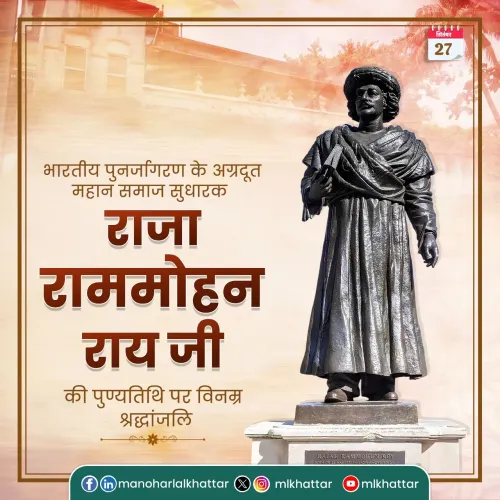
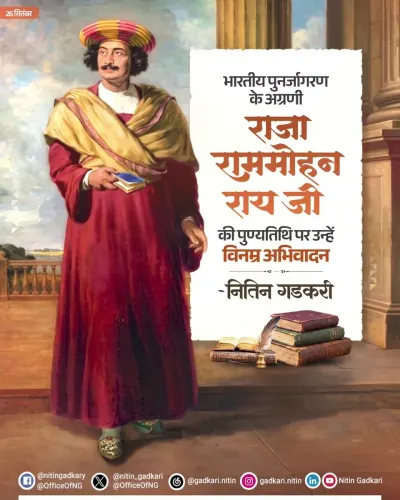
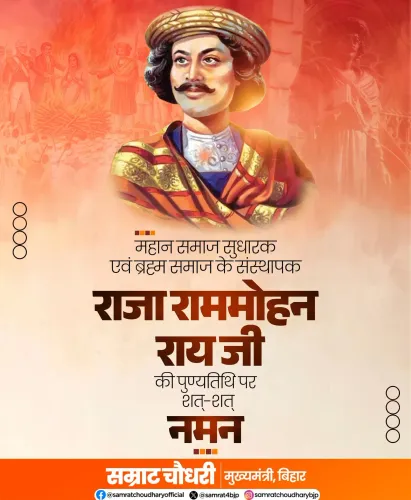
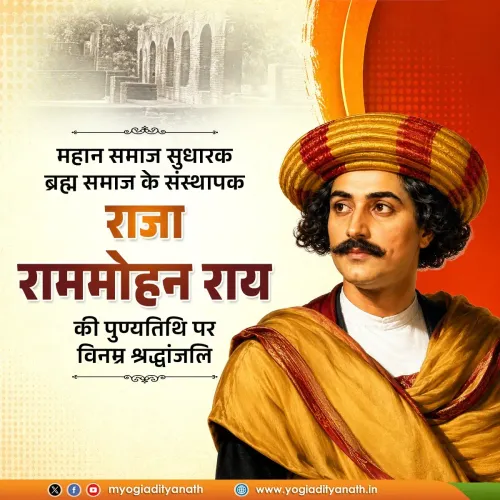
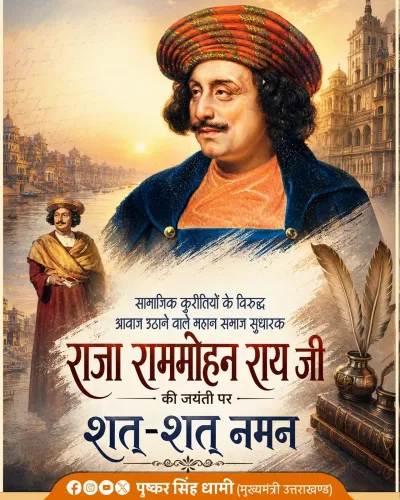
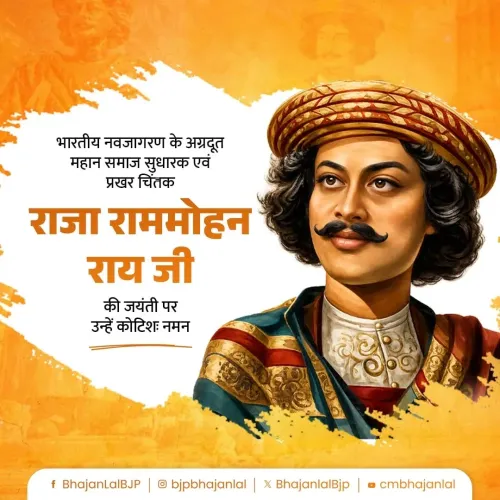
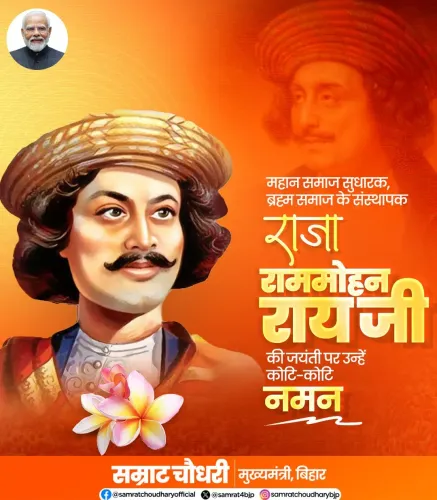
CM Bhajan Lal Sharma Pays Tribute to Raja Ram Mohan Roy
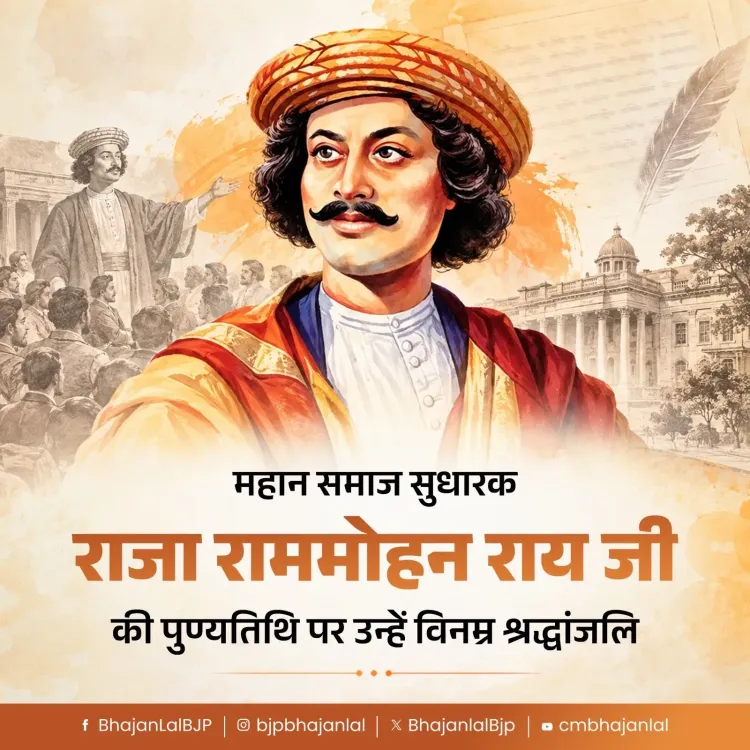
Synopsis
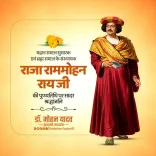
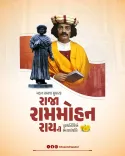
Rajasthan Chief Minister Bhajan Lal Sharma paid tribute on 27 September 2026 to Raja Ram Mohan Roy on his death anniversary, honouring the 19th-century reformer's campaigns against sati, promotion of women's education, and founding of the Brahmo Samaj.
Key Takeaways
Rajasthan CM Bhajan Lal Sharma posted a tribute to Raja Ram Mohan Roy on 27 September 2026 , the reformer's death anniversary.
Roy, born in 1772 , founded the Brahmo Samaj in 1828 and is widely regarded as a father of the Bengal Renaissance.
His campaign led to the Bengal Sati Regulation of 1829 , outlawing widow immolation under British colonial law.
CM Sharma specifically cited the abolition of sati, promotion of women's education, and introduction of modern rational thought as Roy's key legacies.
Roy died in Bristol, England on 27 September 1833 — the date observed as his death anniversary each year.
The tribute reflects a broader Indian political tradition of marking reformers' anniversaries to connect governance to a progressive historical lineage.
A man who dismantled one of colonial India's most brutal traditions — the burning of widows on their husbands' funeral pyres — died in 1833, yet his death anniversary still draws tributes from the highest offices of the land. Rajasthan Chief Minister Bhajan Lal Sharma on Sunday, 27 September 2026, honoured the memory of Raja Ram Mohan Roy, paying homage to the 19th-century reformer whose campaigns reshaped the moral architecture of modern India.
In his post, CM Sharma wrote: 'Mahan samaj sudharak Raja Ram Mohan Roy ji ki punyatithi par unhe koti-koti naman!' — 'Crores of salutes to the great social reformer Raja Ram Mohan Roy on his death anniversary!' He specifically named the abolition of sati, the promotion of women's education, and the laying of foundations for modern rational thought as Roy's enduring contributions, adding that Roy's ideas of equality and rationalism 'will always inspire us to build an egalitarian and progressive society.'
The Reformer Who Rewrote India's Social Contract
Raja Ram Mohan Roy — often called the 'Father of the Bengal Renaissance' — was born in 1772 in Bengal and went on to found the Brahmo Samaj in 1828, a reformist socio-religious movement that challenged idol worship, caste hierarchy, and the subordination of women. His most consequential campaign led directly to the Bengal Sati Regulation of 1829, by which the British colonial government formally outlawed the practice of widow immolation — one of the first legislative victories of the Indian social reform movement.
Roy was equally fierce in his advocacy for women's education and the right of widows to inherit property, ideas that were profoundly radical in early 19th-century India. He also championed the study of English and Western sciences alongside classical Indian learning, making him a bridge between two civilisational worlds. He died in Bristol, England, on 27 September 1833 — the date now observed as his death anniversary.
A Pattern of Political Memory-Keeping
CM Sharma's tribute follows a well-established tradition across India's political spectrum — marking the death anniversaries of 19th-century social reformers through public statements. Such gestures serve to anchor contemporary governance to a lineage of progressive thought, framing today's policy aspirations around women's empowerment and social equity as continuations of a historical struggle rather than novel departures.
For a state like Rajasthan, with its own complex history of feudal social structures and ongoing efforts to expand girls' education and curb child marriage, invoking Roy's legacy carries particular resonance. The reformer's insistence on rationalism over orthodoxy — 'roodhivadita ko samaapt kar samata aur tarkikta', as Sharma put it, 'ending conservatism and establishing equality and rationality' — echoes in the state's current social welfare priorities.
Nearly two centuries after Roy's death, the battles he waged — for education, for reason, for the dignity of women — remain live debates in India's public square. The tribute is a reminder that the reformers who moved those mountains are not museum pieces. They are still the measuring stick.
Point of View
Egalitarian social reform — a tradition more commonly associated with Congress-era nation-building. By highlighting Roy's dismantling of orthodoxy and caste-inflected practices like sati, Sharma signals a BJP commitment to the reform-led arc of Indian modernity, even as debates over social conservatism within Hindu nationalist discourse continue. The invocation of 'equality and rationality' by a chief minister is not merely ceremonial — it subtly frames the party's social welfare agenda as heir to a 200-year reform movement. Whether state policy in Rajasthan on women's education and child marriage substantively echoes that framing is the test that follows every such tribute.
NationPress
27 Sept 2026
Frequently Asked Questions
Why is Raja Ram Mohan Roy's death anniversary on 27 September?
Raja Ram Mohan Roy died on 27 September 1833 in Bristol, England, making that date his death anniversary, observed annually across India.
What did Raja Ram Mohan Roy do to abolish sati?
Roy campaigned vigorously against the practice of sati — the immolation of widows on their husbands' funeral pyres — which led directly to the Bengal Sati Regulation of 1829 , formally outlawing the custom under British colonial law.
What is the Brahmo Samaj founded by Raja Ram Mohan Roy?
The Brahmo Samaj , founded by Raja Ram Mohan Roy in 1828 , was a reformist socio-religious movement in Bengal that challenged idol worship, caste hierarchy, and the marginalisation of women, advocating instead for monotheism, rationalism, and social equality.
Why did Bhajan Lal Sharma pay tribute to Raja Ram Mohan Roy?
Rajasthan Chief Minister Bhajan Lal Sharma posted the tribute on 27 September 2026 , Roy's death anniversary, honouring his contributions to abolishing sati, advancing women's education, and establishing modern rational thought in India.
Who is called the Father of the Bengal Renaissance?
Raja Ram Mohan Roy is widely called the 'Father of the Bengal Renaissance' for his pioneering 19th-century work in social reform, women's rights, and the promotion of modern education and rational inquiry in India.