Shekhawat inaugurates 'Takshanam' sculpture show at NGMA Delhi
Synopsis
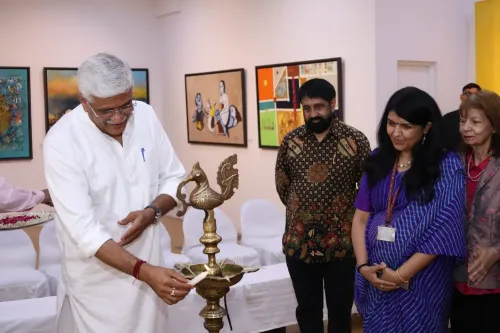
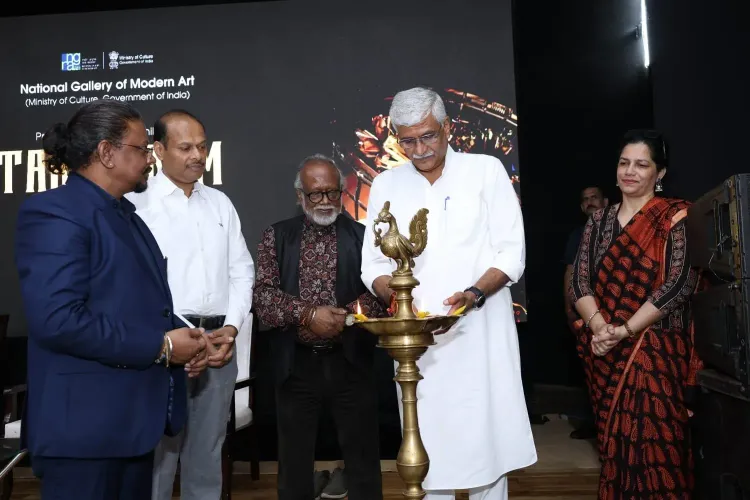
Union Culture and Tourism Minister Gajendra Singh Shekhawat inaugurated 'Takshanam', a landmark contemporary Indian sculpture exhibition at NGMA New Delhi, showcasing over 250 works by 150 artists — spanning emerging talent and established masters.
Key Takeaways
Takshanam ( तक्षणम् ) is a special contemporary Indian sculpture exhibition inaugurated at NGMA, New Delhi on 16 October 2026 .
The exhibition features more than 250 sculptures created by 150 artists , ranging from established names to emerging talent.
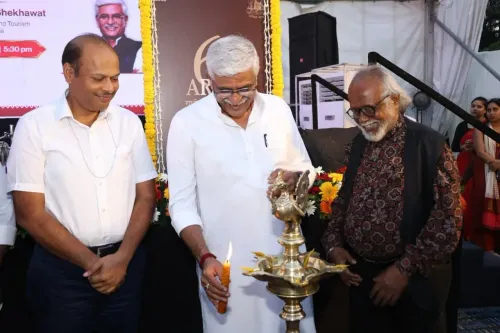
Union Culture and Tourism Minister Gajendra Singh Shekhawat personally inaugurated the show and toured the galleries.
The exhibition is described as a confluence of India's classical art tradition and contemporary sculptural expression.
NGMA was established in 1954 and operates under the Ministry of Culture as India's primary modern-art institution.
The Ministry of Culture, the NGMA team and all participating artists received the minister's congratulations for the successful event.
Over 250 sculptures by 150 artists now fill the galleries of National Gallery of Modern Art (NGMA), New Delhi — a rare convergence of India's classical sculpting tradition and its most urgent contemporary voices. Union Culture and Tourism Minister Gajendra Singh Shekhawat inaugurated the special exhibition 'Takshanam' (तक्षणम्) on Thursday, 16 October 2026, personally walking through the installation and engaging with the artists on display.
What 'Takshanam' brings to NGMA's storied halls
The Sanskrit word takshanam — rooted in the act of carving or chiselling — is itself a statement of intent. The exhibition brings together seasoned masters and emerging sculptors under one roof, spanning materials, techniques and idioms that stretch from ancient Indian shilpa shastra principles to thoroughly modern abstraction. Shekhawat described the works as 'a beautiful confluence of Indian art tradition and contemporary expression,' and called the effort to spotlight emerging talent alongside senior artists a commendable endeavour.
The minister walked the galleries, observed the artworks directly and acknowledged the 'extraordinary creativity and craftsmanship' of the participating artists. His post extended congratulations to the Ministry of Culture, the NGMA team and all contributing artists for the successful organisation of the event.
NGMA's 72-year mandate — and why this exhibition fits it
NGMA New Delhi, established in 1954, is India's premier national institution for modern and contemporary art, operating under the Ministry of Culture. Its foundational mandate — to collect, preserve and exhibit the full arc of modern Indian artistic practice — makes it the natural home for an exhibition of this scale and ambition. Takshanam is the latest in a long line of NGMA-hosted showcases that have used the institution's reach to bring visual art to a broad public audience.
Sculpture, as a discipline, has historically received less institutional spotlight than painting in the Indian gallery circuit. An exhibition of 250-plus works dedicated entirely to three-dimensional form represents a deliberate corrective — and a signal of where the Ministry of Culture is directing its curatorial energy.
A platform for emerging sculptors, not just celebrated names
Perhaps the most pointed aspect of Takshanam is its explicit commitment to emerging talent. By placing newer artists on the same platform as established names, the exhibition creates visibility that is otherwise hard to earn in a market where established reputations dominate acquisition decisions and press coverage. Shekhawat framed this as central to the exhibition's purpose: encouraging artists and connecting the general public to art in the same gesture.
That dual goal — artist encouragement and public engagement — maps directly onto the Ministry of Culture's broader strategy of using NGMA not merely as an archival institution but as a live, participatory cultural space.
With Takshanam now open, the question the Indian art world will be watching is whether this level of dedicated, large-scale support for sculpture becomes a recurring feature of NGMA's programming calendar — or a landmark one-off.
Point of View
Not just celebrate its past. For Minister Shekhawat, presiding over a 150-artist, 250-sculpture showcase is also a visible demonstration of the Culture portfolio's ambition — particularly as the ministry seeks to position India's soft power ahead of major global cultural engagements. Whether the ministry sustains this programming intensity, or whether Takshanam remains a high-profile exception, will define the exhibition's true legacy.
NationPress
16 Oct 2026
Frequently Asked Questions
What is the Takshanam exhibition at NGMA Delhi?
'Takshanam' is a special exhibition of contemporary Indian sculpture inaugurated at the National Gallery of Modern Art (NGMA), New Delhi on 16 October 2026, featuring over 250 works by 150 artists.
Who inaugurated the Takshanam sculpture exhibition?
Union Culture and Tourism Minister Gajendra Singh Shekhawat inaugurated the Takshanam exhibition at NGMA, New Delhi.
What does the word Takshanam mean?
'Takshanam' is a Sanskrit word rooted in the act of carving or chiselling, making it a fitting name for an exhibition dedicated to the art of sculpture.
What is NGMA and who runs it?
The National Gallery of Modern Art (NGMA), New Delhi was established in 1954 and operates under India's Ministry of Culture as the country's premier institution for modern and contemporary art.
How many artists and sculptures are featured in Takshanam?
The Takshanam exhibition features more than 250 sculptures created by 150 artists, including both senior masters and emerging talent in contemporary Indian sculpture.