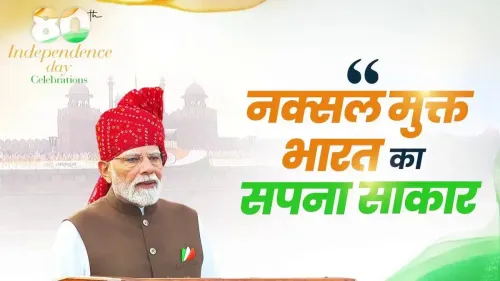
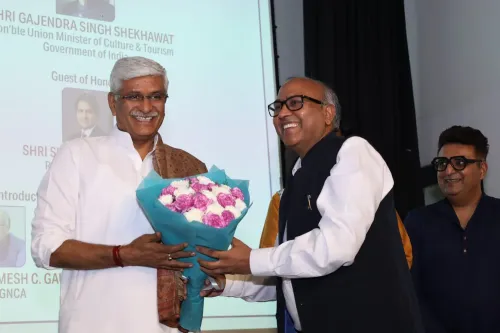
Shekhawat on I-Day: 'Armed Naxals Gone, Ideological Ones Lurking'
Synopsis
On Independence Day 2026, Union Minister Gajendra Singh Shekhawat posted that while armed Naxals have been defeated, 'ideological Naxals' — a contested political label — remain a lurking threat, reigniting a sharp debate about dissent and security in India.
Key Takeaways
Union Culture and Tourism Minister Gajendra Singh Shekhawat posted a warning on Independence Day, August 15, 2026 , distinguishing between armed and ideological Naxals.
His Hindi phrase 'दिमागी नक्सल' translates to 'ideological' or 'brain Naxals' — a term aimed at alleged non-armed supporters of Left Wing Extremism.
The government has cited sustained security operations in Chhattisgarh, Jharkhand, Odisha, and Telangana as having reduced armed LWE incidents significantly.
The 'urban Naxal' label remains deeply contested: civil liberties groups call it a tool to criminalise dissent; the government maintains it identifies real extremist networks.
The post was tagged #IndiaIndependenceDay , using the national occasion to frame an internal security narrative ahead of likely parliamentary and policy discussions.
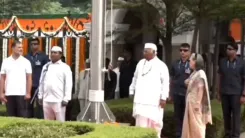
On a morning when the tricolour rose across the country, Union Culture and Tourism Minister Gajendra Singh Shekhawat used Independence Day, August 15, 2026 to draw a sharp line — not just between India's past and present, but between two kinds of threats he sees as unfinished business.
Posting on X, Shekhawat wrote in Hindi: 'हथियारी नक्सल तो गए, लेकिन ये दिमागी नक्सल मौके की तलाश में है…' — 'The armed Naxals are gone, but the ideological Naxals are waiting for an opportunity.' The timing, on India's Independence Day, was deliberate: a national moment repurposed as a political warning.
The two-front framing: guns down, ideas still live
The remark draws on a distinction that has surfaced repeatedly in Indian political and security discourse — between the armed Left Wing Extremist cadres operating in the forests of central and eastern India, and what critics of that movement call 'urban Naxals': alleged ideological fellow-travellers in academic, legal, and activist circles. Shekhawat's phrase 'दिमागी नक्सल' — literally 'brain Naxals' or 'ideological Naxals' — sharpens that distinction into a single coinage.
The government has pointed to sustained security operations over the past several years as having dramatically reduced armed Left Wing Extremism incidents across Chhattisgarh, Jharkhand, Odisha, and Telangana. The Ministry of Home Affairs has periodically released data showing declining violence counts and shrinking geographic footprint of armed groups — a trend that BJP leaders have cited as a security success of the current dispensation.
Independence Day as the chosen stage
Leaders across the spectrum use Independence Day to frame national narratives, and Shekhawat's post fits that tradition — but with a combative edge. By pairing the hashtag #IndiaIndependenceDay with an internal-threat warning, he signals that in his reading, the security story is only half-told. The armed insurgency may be retreating; the ideological contest, he implies, is not.
The phrase is also a provocation by design. The 'urban Naxal' label has been contested fiercely in India — civil liberties groups and opposition voices argue it is used to tar dissent and activism with a sedition brush, while the government and its allies maintain it identifies a real network of support for extremist violence. Shekhawat's post reignites that debate, on the most visible day in the national calendar.
Whether the Ministry of Home Affairs follows with fresh Left Wing Extremism data — or whether the remark sparks a parliamentary exchange — will be worth watching as the session cycle resumes.
Point of View
Keeping a contentious label in active circulation. The move fits a broader BJP pattern of separating the armed LWE retreat (claimed as a governance win) from an ongoing ideological contest (framed as an unfinished civilisational fight). The phrase will inevitably draw opposition fire, which itself extends the news cycle — a dynamic the post appears designed to exploit. Whether it translates into legislative or executive action, or remains rhetorical positioning, depends on what follows in parliamentary session.
NationPress
15 Aug 2026
Frequently Asked Questions
What did Gajendra Singh Shekhawat say on Independence Day 2026?
He posted on X that while armed Naxals have been defeated, 'ideological Naxals' — his phrase दिमागी नक्सल — are still waiting for an opportunity, warning that an ideological threat persists even as armed Left Wing Extremism recedes.
What does 'urban Naxal' or 'ideological Naxal' mean in Indian politics?
The term refers to alleged non-armed supporters of Left Wing Extremist ideology in urban, academic, or activist settings. The government uses it to describe a broader support network; critics argue it is used to delegitimise lawful dissent.
Has the Indian government reduced Naxal violence?
Government data and Ministry of Home Affairs reports have indicated a significant decline in armed Left Wing Extremism incidents over recent years, attributed to sustained security operations in states like Chhattisgarh, Jharkhand, and Odisha.
Why did Shekhawat post this on Independence Day?
Independence Day is the highest-profile moment in India's national calendar, making it a strategic platform for political leaders to frame security and governance narratives for maximum public reach.
What is the controversy around the 'urban Naxal' label?
Civil liberties organisations and opposition politicians argue the label is applied broadly to silence activists, lawyers, and academics. The government and ruling party maintain it accurately identifies individuals who provide ideological cover or support to armed extremist groups.