Shekhawat attends launch of 'Naxal Terror Vanquished' at IGNCA
Synopsis
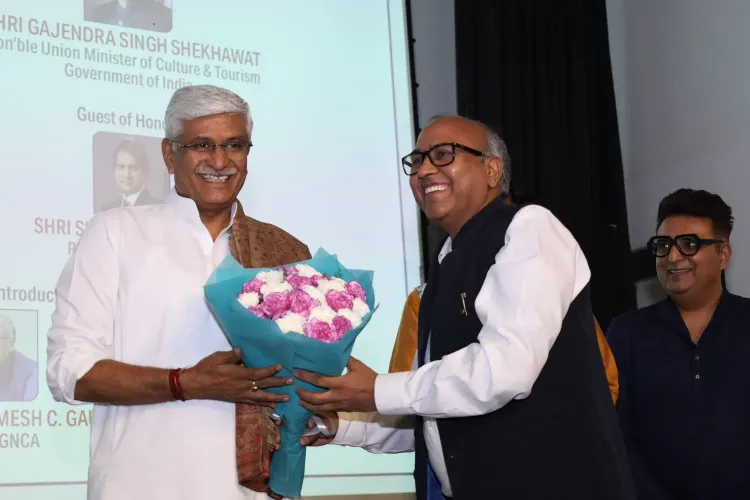
Union Culture Minister Gajendra Singh Shekhawat attended the launch of 'Naxal Terror Vanquished' by Tuhin A. Sinha at IGNCA in New Delhi on 25 May 2026, crediting PM Modi and Home Minister Amit Shah for the political will that has brought decades of Naxal violence to near-elimination.
Key Takeaways
Union Culture Minister Gajendra Singh Shekhawat attended the launch of Tuhin A.
Sinha's book 'Naxal Terror Vanquished' at IGNCA, New Delhi on 25 May 2026 .
Shekhawat credited PM Narendra Modi and Home Minister Amit Shah with providing the political will to end decades of Naxal violence.
The SAMADHAN doctrine (2017) combined security, development, and rehabilitation to address left-wing extremism.
Official data shows a decline of more than 75 percent in LWE-related violence since the 2010 peak.
LWE-affected districts have fallen from over 100 to fewer than 40 since 2014.
Senior journalist Sudhir Chaudhary was among those present at the event.
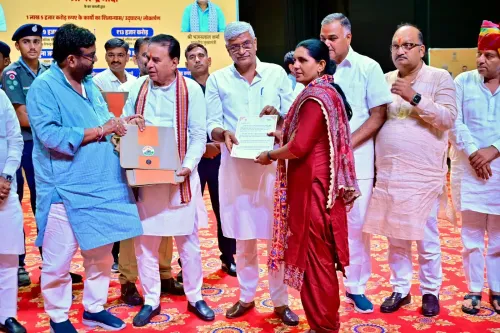
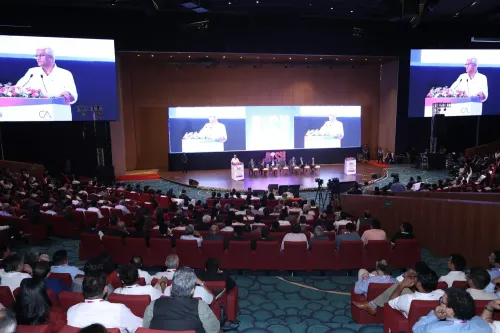
Union Culture and Tourism Minister Gajendra Singh Shekhawat attended the book-release ceremony of Tuhin A. Sinha's 'Naxal Terror Vanquished' at the Indira Gandhi National Centre for the Arts (IGNCA) in New Delhi on Monday, 25 May 2026. The event, held at the autonomous institution under the Ministry of Culture, brought together senior officials and media figures to mark the publication documenting India's decades-long campaign against left-wing extremism.
Context
Shekhawat, posting in Hindi on X, described the book as one that 'explains the country's decisive fight against Naxalism, the courage of security forces, and the government's commitment.' He attributed the turnaround to the political will of Prime Minister Narendra Modi and Union Home Minister Amit Shah, writing that 'what was once considered an unsolvable problem is now on the verge of being erased without a trace.' Senior journalist Sudhir Chaudhary was also present at the event, which Shekhawat described as a particularly notable presence on the occasion.
Author Tuhin A. Sinha has documented the operational and political arc of counter-insurgency efforts in India's so-called Red Corridor. The choice of IGNCA — a culture ministry institution — as the venue signals the government's intent to place counter-Naxal gains within a broader national narrative, not merely a security or home-affairs frame.
Policy Backdrop
The Ministry of Home Affairs' SAMADHAN doctrine, articulated in 2017, combined security operations with development and rehabilitation measures to address left-wing extremism at its roots. Official data released in 2023 recorded a decline of more than 75 percent in LWE-related violence incidents compared with peak levels recorded around 2010.
The number of districts classified as LWE-affected has contracted steadily since 2014, falling from over 100 to fewer than 40, according to annual Home Ministry reports. Successive governments have paired intensified security operations with expanded road, telecom, and welfare infrastructure to reduce the ideological appeal of Naxalism in affected regions.
Stakeholders and Impact
The most direct beneficiaries of the policy gains documented in the book are residents of formerly LWE-affected districts — communities in states such as Chhattisgarh, Jharkhand, and Odisha that endured decades of violence and administrative paralysis. Security forces personnel, whose operational sacrifices form a central theme of Sinha's work, are also prominently acknowledged.
The book launch at a Culture Ministry venue reflects a deliberate framing: counter-insurgency success is being institutionalised as a settled national achievement, not merely a live security brief. This positioning has implications for how the government communicates its governance record ahead of future electoral and parliamentary cycles.
What's Next
The release of the next Ministry of Home Affairs annual report on left-wing extremism will be closely watched for updated district-level data and any acknowledgment of residual LWE pockets. Parliamentary discussions during the winter session are expected to revisit the question of whether the remaining affected areas can be formally de-notified. The book's entry into public discourse may also shape the terms of that debate, particularly around the role of political leadership versus ground-level security operations in bringing the insurgency to heel.
Point of View
The BJP-led government is seeking to cement it as a legacy milestone ahead of future electoral cycles. Shekhawat's public endorsement, with explicit attribution to Modi and Shah, reinforces the party's centralised credit-claiming strategy on security issues. The broader arc here is one of institutionalising security gains into the national memory, a pattern visible across several recent government-backed publications and events.
NationPress
10 Oct 2026
Frequently Asked Questions
What is the book 'Naxal Terror Vanquished' about?
'Naxal Terror Vanquished' by Tuhin A. Sinha documents India's campaign against left-wing extremism, focusing on the courage of security forces and the government's policy efforts that have sharply reduced Naxal violence over the past decade.
Where was the book launch of 'Naxal Terror Vanquished' held?
The book launch was held at the Indira Gandhi National Centre for the Arts (IGNCA) in New Delhi on 25 May 2026.
What is the SAMADHAN doctrine on Naxalism?
The SAMADHAN doctrine, articulated by the Ministry of Home Affairs in 2017, is a multi-pronged strategy combining security operations, infrastructure development, and rehabilitation to address left-wing extremism at its roots.
How much has Naxal violence declined in India?
Official data released in 2023 recorded a decline of more than 75 percent in LWE-related violence incidents compared with peak levels around 2010, with affected districts falling from over 100 to fewer than 40.
Who is Tuhin A. Sinha?
Tuhin A. Sinha is the author of 'Naxal Terror Vanquished,' a book documenting India's decades-long effort to counter left-wing extremism and the role of security forces and government policy in bringing it to near-elimination.