Shekhawat Hails 'Padharo Mhare Des' Folk Revival in Delhi
Synopsis
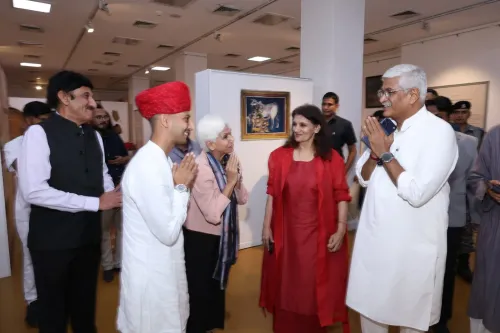
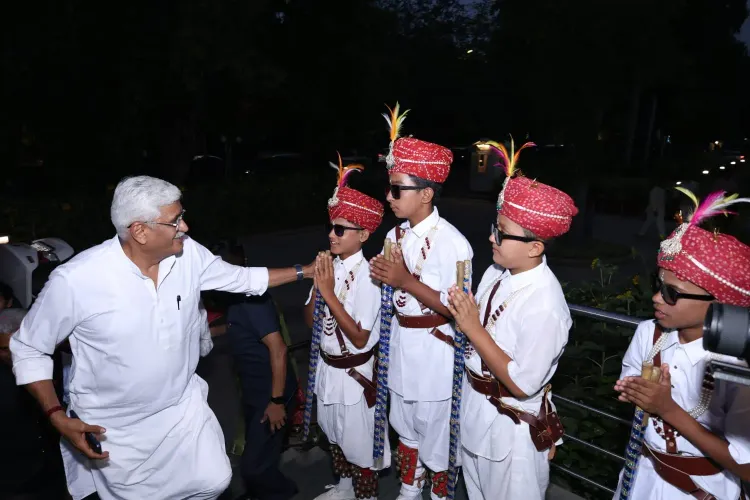
Union Culture and Tourism Minister Gajendra Singh Shekhawat attended 'Padharo Mhare Des – Revisiting the Song and the Slogan' at the India International Centre, New Delhi. He praised the Arpan Foundation for linking Rajasthani folk traditions with younger audiences and called the slogan a pan-Indian symbol of hospitality.
Key Takeaways
Union Culture and Tourism Minister Gajendra Singh Shekhawat attended 'Padharo Mhare Des – Revisiting the Song and the Slogan' at IIC, New Delhi .
The event was organised by the Arpan Foundation and centred on Rajasthani folk music and hospitality traditions.
Shekhawat called 'Padharo Mhare Des' a hospitality slogan for all of India, not just Rajasthan.
He credited such programmes with connecting folk traditions and cultural values to the new generation.
The event aligns with the Union government's push to mainstream regional folk expressions through Culture and Tourism initiatives.
Union Culture and Tourism Minister Gajendra Singh Shekhawat attended the cultural programme 'Padharo Mhare Des – Revisiting the Song and the Slogan' at the India International Centre in New Delhi on 3 June 2026. The event, organised by the Arpan Foundation, was curated around the iconic Rajasthani hospitality refrain and brought together folk artists and audiences to re-engage with the song's heritage.
In a post on X, the Minister wrote that he joined the gathering 'with the earthy fragrance of the soil in mind' (mann mein mitti ki saundhi khushboo liye). He described 'Padharo Mhare Des' as a slogan of hospitality that 'has become not just Rajasthan's but the whole of India's', and congratulated the Arpan Foundation and the participating artists.
Context
The phrase 'Padharo Mhare Des' ('Come to my land') originates in Rajasthani folk music and has, over decades, transcended its regional roots to become one of the most recognised welcome lines in Indian tourism communication. The Rajasthan Tourism Department formally adopted it as its core marketing slogan in the early 2000s, and it has since featured across campaigns, airport branding and cultural exchanges.
Hosting the programme at the India International Centre — a venue long associated with seminars and performances on Indian heritage — placed the slogan back in a reflective, archival setting rather than a purely promotional one. Shekhawat framed his attendance as a moment of intergenerational connection, saying such events 'are doing the important work of linking our folk traditions, music and cultural values with the new generation'.
Policy backdrop
The Minister's appearance dovetails with the Union government's broader effort to mainstream regional folk expressions through the Culture and Tourism portfolios. Since 2015, the Ministry of Culture has backed state-level festivals and the Ek Bharat Shreshtha Bharat initiative, which pairs states for cultural exchanges aimed at younger audiences.
Shekhawat, a Lok Sabha MP from Jodhpur, holds the combined Culture and Tourism portfolio — a pairing that gives a single ministerial voice to both heritage preservation and destination marketing. His attendance at a programme centred on a Rajasthani slogan that has been absorbed into national tourism vocabulary reflects that overlap.
Stakeholders and impact
The immediate stakeholders are folk artists, cultural foundations and the tourism sector. Programmes that revisit songs and slogans serve as small-scale archival exercises, documenting the musical roots behind a marketing line that millions of travellers encounter.
For organisations like the Arpan Foundation, ministerial attendance offers visibility and signals that grassroots cultural transmission is part of the official policy conversation. For Rajasthan's tourism ecosystem, such Delhi-based events keep the state's folk identity in the capital's cultural calendar, often ahead of new campaigns or budgetary decisions.
The Minister's framing also speaks to a generational concern — that oral traditions risk fading without active curation. By spotlighting a foundation working on folk music, the post implicitly endorses civil-society-led cultural preservation alongside government schemes.
What's next
Watch the next Union budget cycle for allocations to the Ministry of Culture and any fresh Rajasthan tourism campaigns that scale folk-music initiatives nationally. With Shekhawat steering both Culture and Tourism, programmes like this often serve as early signals of where ministerial attention — and eventually scheme design — may travel next.
The forward implication is clear: regional slogans and songs are increasingly being treated as soft-power assets, with Delhi institutions serving as amplifiers for state-rooted traditions seeking a national audience.
Point of View
The Minister extends a long-running policy arc in which regional folk assets are repackaged as national branding tools. The choice of IIC as venue signals that the government wants such revivals positioned in archival and intellectual spaces, not only on tourism billboards. Expect this framing to recur as the ministry shapes its next round of cultural-infrastructure spending.
NationPress
17 Oct 2026
Frequently Asked Questions
Who attended the 'Padharo Mhare Des' event at IIC Delhi?
Union Culture and Tourism Minister Gajendra Singh Shekhawat attended the programme at the India International Centre, New Delhi, on 3 June 2026.
Who organised the 'Padharo Mhare Des – Revisiting the Song and the Slogan' programme?
The event was organised by the Arpan Foundation, which works on Rajasthani folk music and intergenerational cultural transmission.
What does 'Padharo Mhare Des' mean?
'Padharo Mhare Des' is a Rajasthani phrase meaning 'Come to my land' and is widely used as a hospitality slogan, including in Rajasthan tourism marketing.
Which constituency does Gajendra Singh Shekhawat represent?
Shekhawat is the Lok Sabha MP from Jodhpur in Rajasthan and holds the Union Culture and Tourism portfolio.
Why is this event significant for cultural policy?
It reflects the Union government's continuing push to mainstream regional folk traditions and treat state-level slogans and songs as soft-power and tourism assets.