Shekhawat Pays Tribute to Ishwar Chandra Vidyasagar on Death Anniversary
Synopsis
Union Culture and Tourism Minister Gajendra Singh Shekhawat paid homage to Ishwar Chandra Vidyasagar on his death anniversary, honouring the 19th-century Bengali polymath who championed widow remarriage, women's education, and the Bengal Renaissance.
Key Takeaways
Gajendra Singh Shekhawat , Union Culture and Tourism Minister, paid tribute to Ishwar Chandra Vidyasagar on his death anniversary, 29 July .
Vidyasagar was a 19th-century Bengali polymath, educationist, and social reformer central to the Bengal Renaissance .
He successfully campaigned for the Hindu Widows' Remarriage Act of 1856 , a landmark social reform.
Vidyasagar founded numerous schools for girls and made foundational contributions to Bengali prose and Sanskrit education.
The tribute reflects a wider pattern of Union ministers commemorating 19th-century reformers through official social media channels.
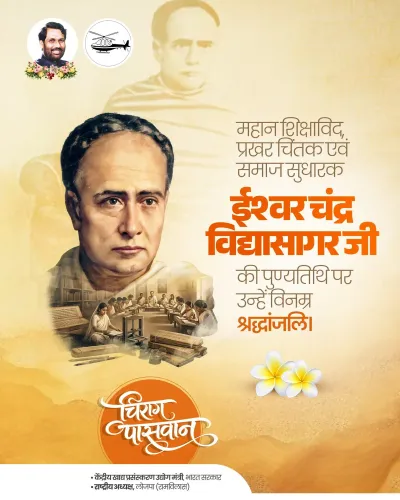
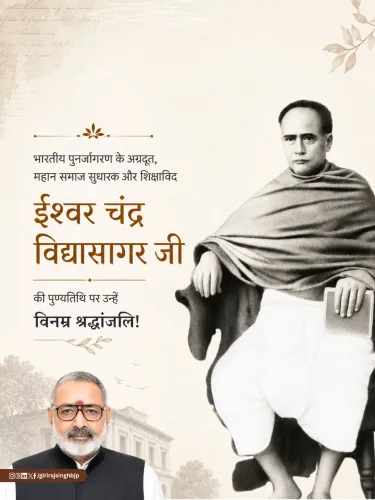
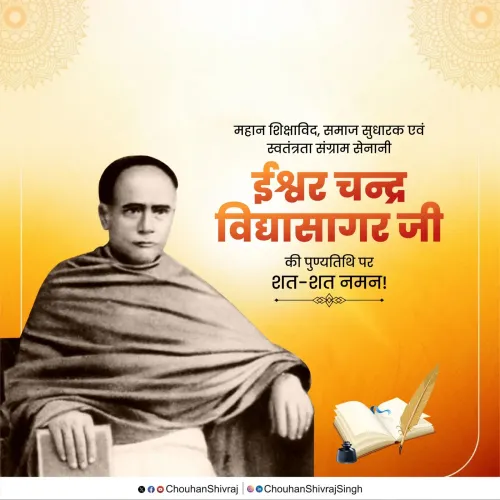
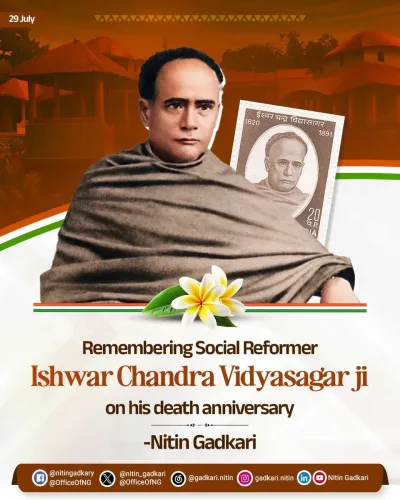
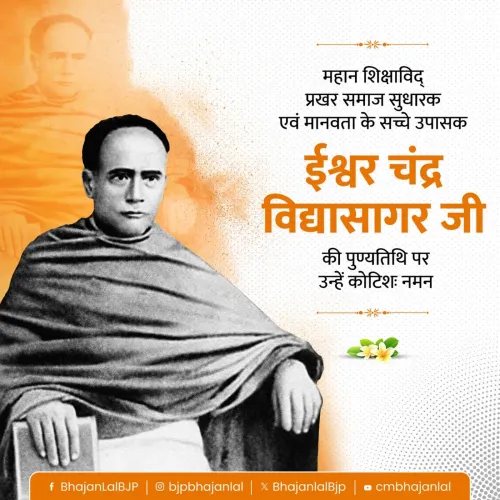
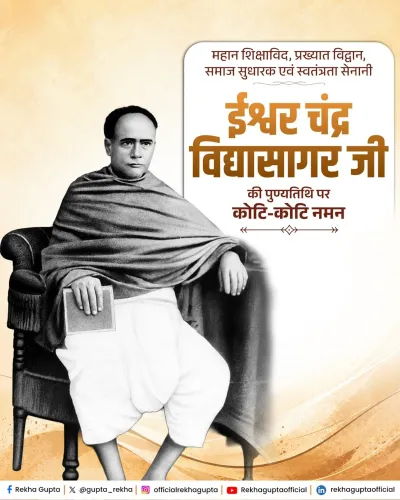
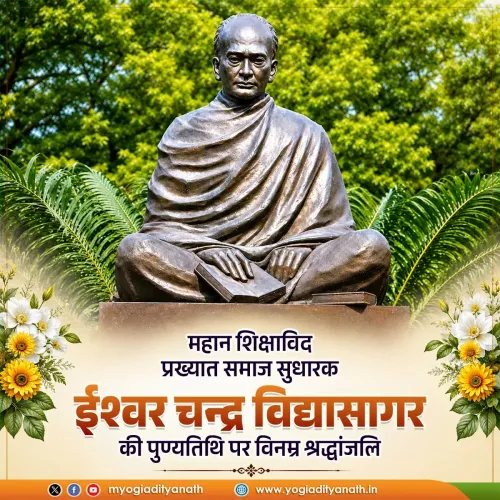
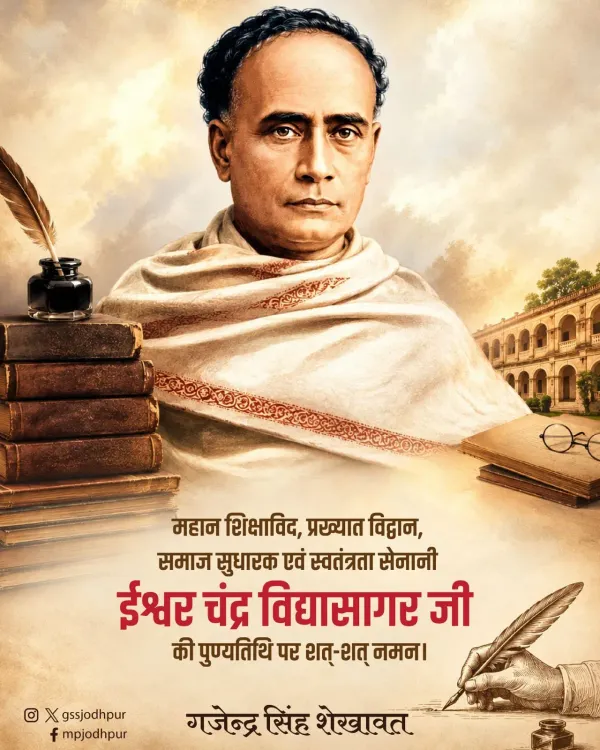
On the death anniversary of one of India's most consequential 19th-century reformers, Union Culture and Tourism Minister Gajendra Singh Shekhawat offered homage to Ishwar Chandra Vidyasagar, saluting the Bengali polymath as a towering educationist, scholar, social reformer, and pioneer of the Indian Renaissance.
Shekhawat's post, written in Hindi, read: 'Mahan shikshavid, prakhyat vidwan, samaj sudharak evam Bharatiya punarjagaran ke agradoot Ishwar Chandra Vidyasagar ji ki punyatithi par shat-shat naman' — 'Heartfelt salutations on the death anniversary of the great educationist, eminent scholar, social reformer and pioneer of the Indian Renaissance, Ishwar Chandra Vidyasagar.'
Who Was Ishwar Chandra Vidyasagar?
Ishwar Chandra Vidyasagar stands as one of the defining figures of the Bengal Renaissance — that extraordinary 19th-century intellectual and social awakening that reshaped modern India. Born in 1820 in Bengal, he earned the title 'Vidyasagar' (ocean of knowledge) for his command of Sanskrit scholarship, but his legacy rests equally on his fierce social activism. He led the campaign that resulted in the landmark Hindu Widows' Remarriage Act of 1856, a legislative milestone that challenged centuries of social orthodoxy. He championed women's education at a time when it was actively discouraged, founding dozens of schools for girls across Bengal. His reform of Sanskrit pedagogy and his contributions to Bengali prose — including a simplified Bengali primer still in use — cemented his place as a builder of modern Indian education.Ministers, Reformers, and the Politics of Memory
Shekhawat's tribute fits a broader pattern in Indian public life: Union ministers and senior political figures regularly mark the birth and death anniversaries of 19th-century social reformers on social media, weaving these figures into the national narrative of progress and cultural pride. For the Ministry of Culture, such commemorations carry institutional weight — signalling which legacies the government chooses to honour and amplify. Vidyasagar's death anniversary on 29 July is observed each year, particularly in West Bengal, where his memory remains deeply embedded in public life, education, and civic identity. A reformer who bent the arc of Indian social history — Vidyasagar deserves to be remembered not just in verse, but in the unfinished work he left behind.Point of View
A state that remains politically significant. By claiming reformist icons across regional and linguistic lines, the BJP signals an inclusive civilisational narrative. Whether such commemorations translate into substantive cultural programming — seminars, school curricula, institutional recognition — is the question that separates symbolism from policy.
NationPress
29 Jul 2026
Frequently Asked Questions
Who was Ishwar Chandra Vidyasagar?
Ishwar Chandra Vidyasagar was a 19th-century Bengali polymath, educationist, and social reformer born in 1820 . He is celebrated as a pioneer of the Bengal Renaissance, known for championing widow remarriage, women's education, and reforms in Sanskrit studies.
When is Ishwar Chandra Vidyasagar's death anniversary?
Ishwar Chandra Vidyasagar's death anniversary falls on 29 July each year. It is widely observed in West Bengal and commemorated by scholars, institutions, and public figures across India.
What did Ishwar Chandra Vidyasagar do for women's rights?
Vidyasagar led the campaign that resulted in the Hindu Widows' Remarriage Act of 1856 , which legally permitted Hindu widows to remarry. He also founded dozens of schools for girls at a time when women's education was actively discouraged.
Why did Gajendra Singh Shekhawat pay tribute to Vidyasagar?
As Union Culture and Tourism Minister , Shekhawat posted a tribute on Vidyasagar's death anniversary, honouring him as a great educationist, scholar, social reformer, and pioneer of the Indian Renaissance — a practice common among senior ministers on such anniversaries.
What is the Bengal Renaissance?
The Bengal Renaissance was a 19th-century intellectual and social reform movement centred in Bengal that challenged social orthodoxies and modernised Indian thought in areas including education, women's rights, and literature. Vidyasagar was one of its most influential figures.