Shekhawat: President Murmu honours artists at 65th National Art Exhibition
Synopsis
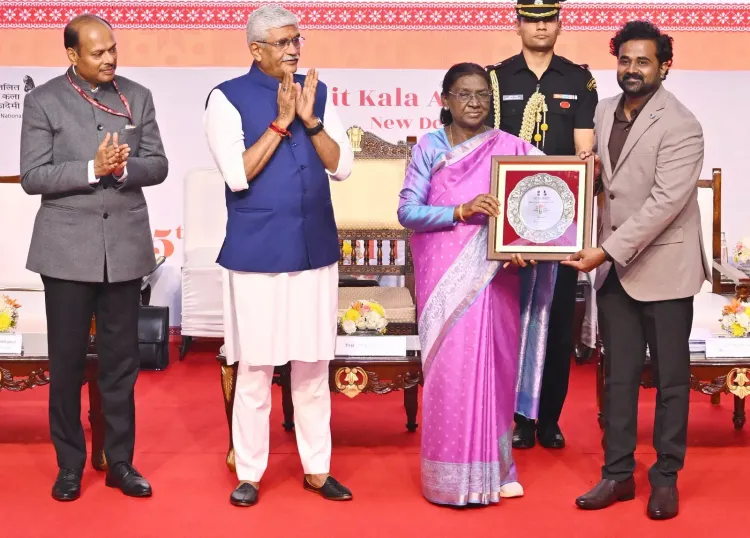
President Draupadi Murmu presented Lalit Kala Akademi awards to artists selected for the 65th National Exhibition of Art and honoured 3rd Print Biennale India 2026 winners in New Delhi, with Culture Minister Gajendra Singh Shekhawat calling it a landmark moment for Indian art.
Key Takeaways
President Draupadi Murmu conferred Lalit Kala Akademi awards at the 65th National Exhibition of Art in New Delhi on 21 October 2026 .
Winners of the 3rd Print Biennale India 2026 were also honoured at the same ceremony.
Lalit Kala Akademi , established in 1954 , has run the National Exhibition of Art annually — making this the 65th consecutive edition .
Culture Minister Gajendra Singh Shekhawat framed the event as part of the Modi government's commitment to art reaching all sections of society and empowering artists economically.
The government has stated its goal of preserving India's rich artistic heritage while securing greater global recognition for Indian art forms.
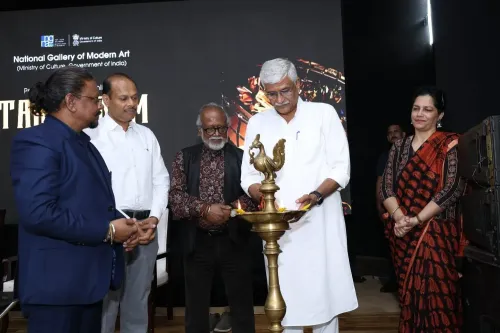
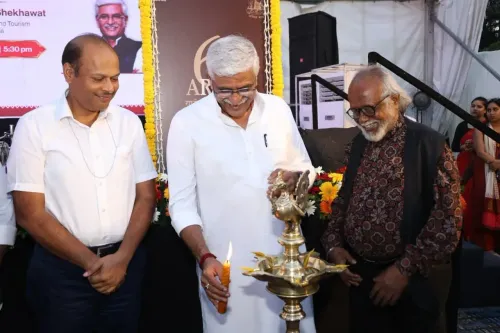
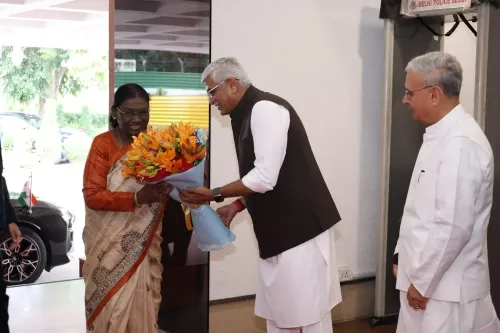
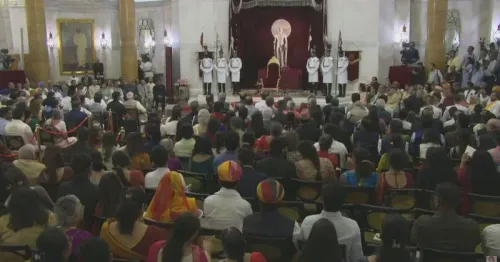
In a ceremony steeped in the weight of seven decades of Indian artistic tradition, President Draupadi Murmu on Wednesday, 21 October 2026, conferred the Lalit Kala Akademi awards on selected artists of the 65th National Exhibition of Art in New Delhi — and handed out honours to the winners of the 3rd Print Biennale India 2026 in the same sitting. Union Culture and Tourism Minister Gajendra Singh Shekhawat hailed the occasion as a moment of deep dignity for Indian art and its creators.
Shekhawat described the event on X as 'ek atyant mahatvapurn aur garimamay avasar' — 'an extremely important and dignified occasion' — for the recognition of Indian art and artists. He linked the ceremony directly to the broader cultural policy vision of Prime Minister Narendra Modi's government: that art must reach every section of society and simultaneously strengthen artists economically.
Lalit Kala Akademi at 72 — and still the country's biggest stage
The Lalit Kala Akademi, established in 1954 as an autonomous body under the Government of India, has run the National Exhibition of Art every year since its founding — making the 65th edition a marker of unbroken institutional continuity spanning more than seven decades. The exhibition remains the single most prestigious national platform for practising visual artists, with the Akademi's awards carrying both prestige and a degree of financial support through fellowships and exhibition opportunities.
The Print Biennale India, a newer recurring showcase organised by the Akademi specifically for the discipline of printmaking, is in only its third edition in 2026 — reflecting a deliberate institutional push to spotlight a medium that often sits outside mainstream art-market attention. Together, the two events running under one presidential ceremony send a signal about scale and intent.
The government's push to link artistic practice with economic empowerment
Shekhawat's post was explicit about the policy ambition behind the ceremony: art is not merely heritage to be preserved but a livelihood to be secured. The Ministry of Culture's mandate, reinforced in recent years, has focused on widening the geographic and social reach of such programmes — pulling artists from smaller cities and marginalised communities into the national spotlight — while simultaneously seeking greater international visibility for Indian art forms.
The minister's reference to PM Modi's leadership framed the ceremony as part of a continuum: safeguarding India's rich artistic heritage while giving it a global identity. That twin goal — preservation paired with projection — has shaped the government's cultural diplomacy posture at multilateral forums and in bilateral exchanges where Indian art has been deployed as soft power.
For the artists walking up to receive their awards from the President, though, the moment was simpler and more personal than any policy document: a head of state, in the capital of a billion-plus-person republic, putting a prize in their hands. The next question is whether the welfare and market-linkage measures that flanked Wednesday's celebration will match the ceremony's ambition.
Point of View
Where Indian art forms are positioned as soft-power assets for global projection. Whether concrete welfare measures — market linkages, fellowship expansions, international touring shows — follow the ceremonial symbolism will determine whether the policy ambition holds.
NationPress
21 Oct 2026
Frequently Asked Questions
What is the 65th National Exhibition of Art?
The National Exhibition of Art is an annual showcase organised by the Lalit Kala Akademi since 1954 to present contemporary Indian visual arts; the 65th edition was held in New Delhi in 2026 , with awards conferred by President Draupadi Murmu.
What is the Print Biennale India 2026?
The Print Biennale India is a recurring exhibition focused on the discipline of printmaking, organised by the Lalit Kala Akademi; the 3rd edition was held in 2026 and its winners were honoured at the same ceremony as the 65th National Exhibition awards.
What is Lalit Kala Akademi?
Lalit Kala Akademi is India's national academy of fine arts, established by the Government of India in 1954 as an autonomous body to promote and coordinate activities in visual arts across the country.
What did Gajendra Singh Shekhawat say about the art awards ceremony?
Culture and Tourism Minister Gajendra Singh Shekhawat called the event an 'extremely important and dignified occasion' and said the government's aim is to ensure art reaches every section of society while also economically empowering artists.
Who conferred the Lalit Kala Akademi awards in 2026?
President Draupadi Murmu conferred the Lalit Kala Akademi awards to selected artists of the 65th National Exhibition of Art on 21 October 2026 in New Delhi .