Shekhawat Pays Tribute to Mangal Pandey on Birth Anniversary
Synopsis
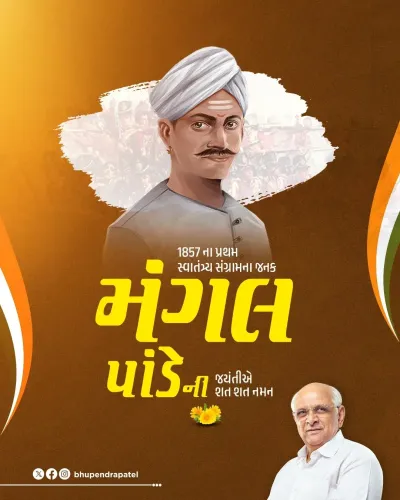
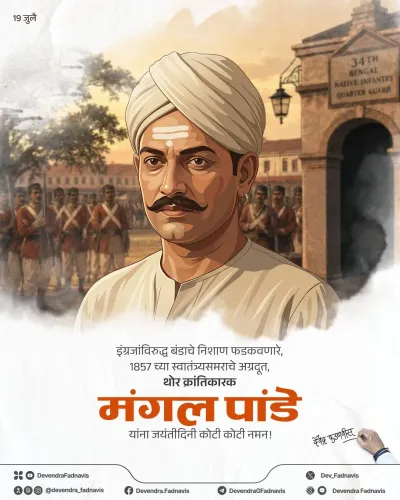
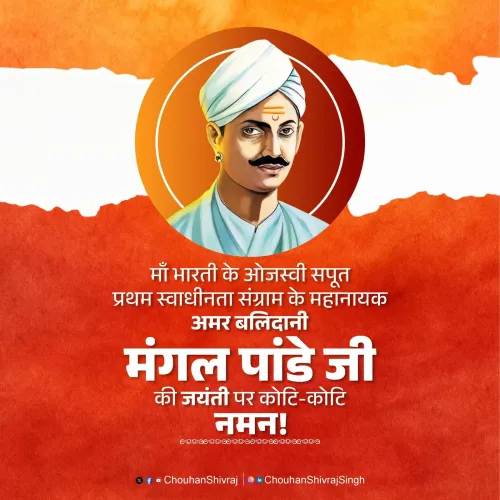
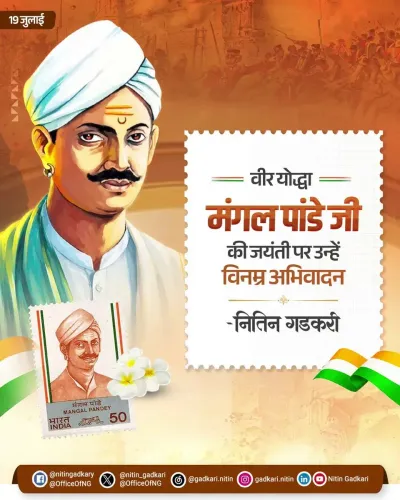
Union Culture and Tourism Minister Gajendra Singh Shekhawat on 19 July 2026 paid tribute to Mangal Pandey, the 1857 sepoy whose defiance at Barrackpore is widely seen as the first spark of India's freedom struggle, honouring him on his birth anniversary with a post on X.
Key Takeaways
Union Culture and Tourism Minister Gajendra Singh Shekhawat paid tribute to Mangal Pandey on his birth anniversary on 19 July 2026 .
Mangal Pandey was a sepoy in the 34th Bengal Native Infantry who attacked British officers at Barrackpore on 29 March 1857 , triggering the Indian Rebellion.
The 1857 Rebellion is officially recognised in India as the First War of Independence .
The Culture Ministry holds a formal mandate to promote early resistance leaders as part of the national heritage narrative.
In 2007 , the Government of India held nationwide events marking the 150th anniversary of the 1857 revolt, cementing Pandey's place in official commemoration.
Similar tributes from senior BJP ministers to 1857-era figures have been a consistent pattern since at least the 2010s .
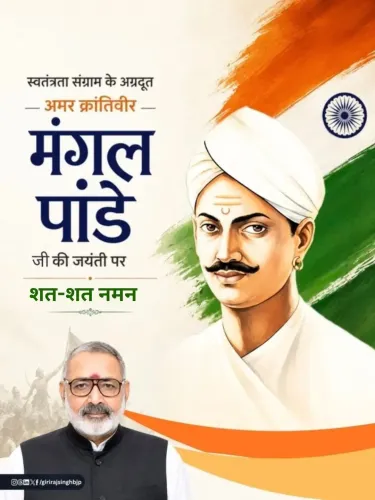
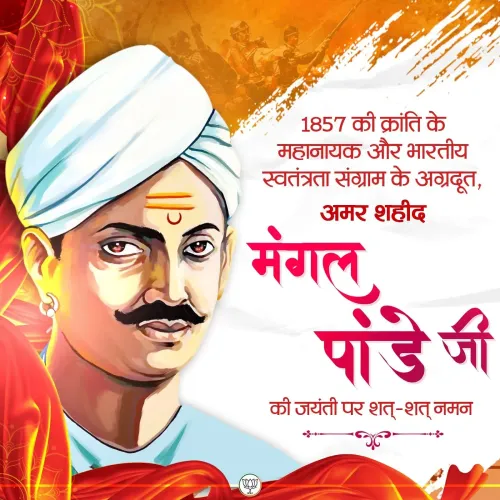
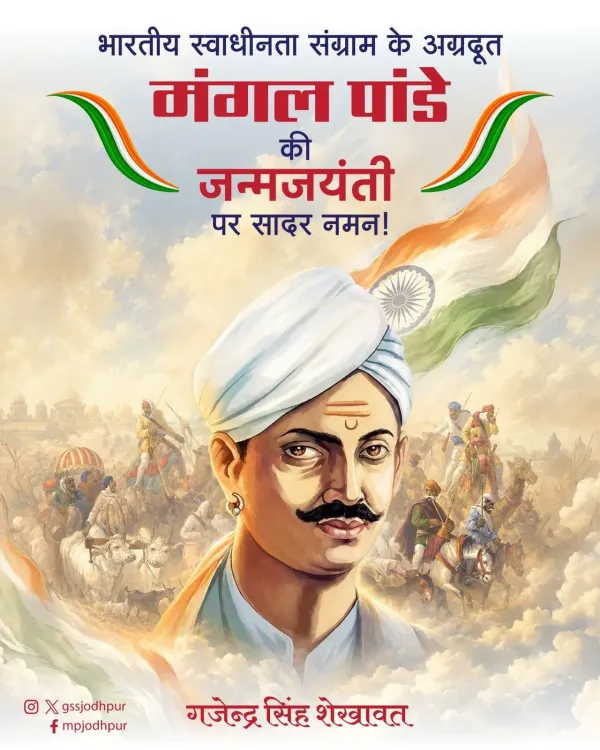
Union Culture and Tourism Minister Gajendra Singh Shekhawat on Sunday, 19 July 2026, paid tribute to Mangal Pandey, honouring the 1857 freedom fighter on his birth anniversary with a post on X.
Shekhawat's post, written in Hindi, read: 'Bhartiya Swadheenta Sangram ke Agradoot Mangal Pandey ji ki Janmajayanti par Sadar Naman!' — translating to 'Respectful salutations on the birth anniversary of Mangal Pandey, the pioneer of India's freedom struggle!'
Context
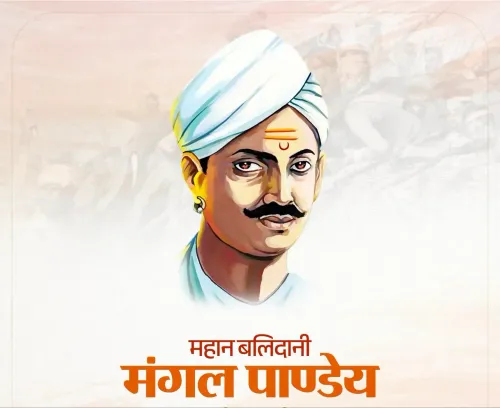
Mangal Pandey was a sepoy in the 34th Bengal Native Infantry of the East India Company. On 29 March 1857, he attacked British officers at Barrackpore, an act widely regarded as the first spark of the Indian Rebellion of 1857. He was subsequently court-martialled and executed on 8 April 1857.
The 1857 Rebellion — also referred to as the First War of Independence — spread across northern and central India and marked a decisive rupture in the relationship between Indian soldiers and East India Company rule. Pandey's defiant stand at Barrackpore has since been enshrined in national memory as an act of early anti-colonial resistance.
Policy Backdrop
The Culture Ministry, which Shekhawat heads, carries a formal mandate to promote early resistance leaders as part of India's national heritage narrative. Tributes to 1857-era figures have been a consistent feature of official government messaging, particularly from BJP-led administrations, since at least the 2010s.
In 2007, the Government of India organised nationwide events to mark the 150th anniversary of the 1857 revolt, underscoring Mangal Pandey's central role in official commemorations. That institutional recognition has carried forward into annual birth and martyrdom anniversary observances.
Stakeholders and Impact
Such tributes resonate with historians, heritage scholars, and a broad section of the Indian public for whom the 1857 uprising holds foundational significance in the country's independence narrative. For the Culture Ministry, publicly honouring figures like Pandey reinforces its stated goal of keeping pre-independence resistance movements visible in civic discourse.
Pandey's home state of Uttar Pradesh — he was born in Nagwa village, Ballia district — has historically observed his birth anniversary with local commemorations, making such national-level tributes from senior ministers an important signal of continued federal recognition.
What's Next
The Culture Ministry is expected to intensify heritage programming as 15 August 2026 approaches, with 1857-related sites, archives, and public memory projects likely to feature in upcoming announcements. Shekhawat's tribute to Mangal Pandey signals the ministry's continued framing of early revolt leaders as foundational figures in India's freedom story — a narrative thread that is likely to run through Independence Day messaging and beyond.
Point of View
These observances serve a dual purpose: fulfilling a heritage mandate and reinforcing a political messaging framework that elevates early anti-colonial fighters to foundational status. With Independence Day approaching, such tributes are likely to intensify, forming the groundwork for larger commemorative programming. The consistency of this practice across years signals institutional intent, not merely individual sentiment.
NationPress
18 Oct 2026
Frequently Asked Questions
Who was Mangal Pandey?
Mangal Pandey was a sepoy in the 34th Bengal Native Infantry of the East India Company who attacked British officers at Barrackpore on 29 March 1857, an act widely regarded as the first spark of the Indian Rebellion of 1857, also called the First War of Independence.
Why is Mangal Pandey's birth anniversary observed?
Mangal Pandey's birth anniversary is observed to honour his role as one of the earliest figures to openly resist British colonial rule, and the Indian government has officially recognised him in national commemorations, including the 150th anniversary of the 1857 revolt in 2007.
What did Gajendra Singh Shekhawat post about Mangal Pandey?
On 19 July 2026, Union Culture and Tourism Minister Gajendra Singh Shekhawat posted on X paying respectful tribute to Mangal Pandey on his birth anniversary, calling him a 'pioneer of India's freedom struggle.'
What is the Culture Ministry's role in honouring freedom fighters?
The Union Culture Ministry has a formal mandate to promote early resistance leaders as part of India's national heritage narrative, and it regularly issues tributes and organises commemorative events for 1857-era and other pre-independence figures.
Where was Mangal Pandey from?
Mangal Pandey was born in Nagwa village in Ballia district of present-day Uttar Pradesh, and his home state has historically observed his birth anniversary with local commemorations alongside national-level tributes.