Shekhawat calls Yoga India's eternal message for world peace
Synopsis
On International Yoga Day 2026, Union Culture and Tourism Minister Gajendra Singh Shekhawat described yoga as India's eternal message for world peace, crediting PM Modi's leadership in using the ancient practice to promote global harmony amid rising geopolitical tensions.
Key Takeaways
Union Culture and Tourism Minister Gajendra Singh Shekhawat posted on 21 June 2026 — International Day of Yoga — calling yoga India's eternal message for world peace.
He credited PM Narendra Modi for leading India's peace efforts and for championing yoga as a vehicle of global harmony.
The 2026 International Yoga Day theme is 'Yoga for Healthy Ageing' , continuing the annual tradition of focused wellness themes.
International Day of Yoga was established by UNGA Resolution 69/131 in December 2014 following PM Modi's proposal at the UN General Assembly.
India uses the annual observance as a key instrument of cultural diplomacy and soft power, aligning with its 'Vishwa Bandhu' global positioning.
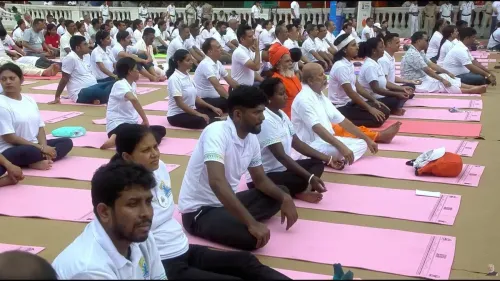
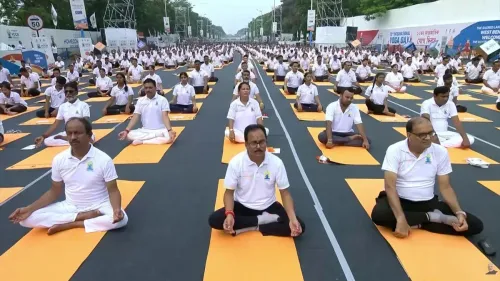
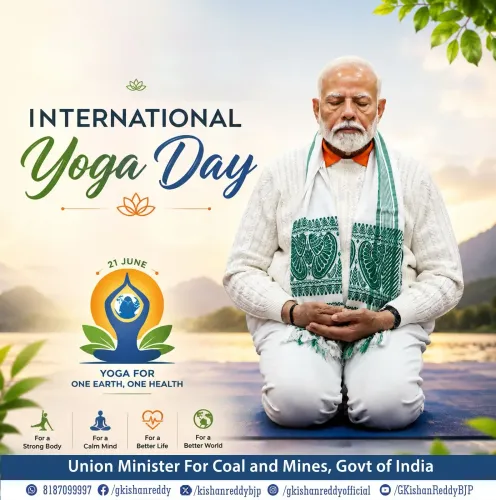
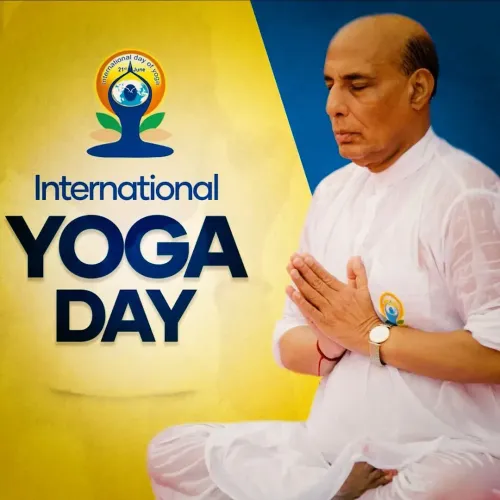
Union Culture and Tourism Minister Gajendra Singh Shekhawat on Sunday, 21 June 2026 invoked International Day of Yoga to describe yoga as India's 'shashvat sandesh' — eternal message — for global peace, posting his message as the world marked the annual observance.
Context
In his post, Minister Shekhawat wrote: 'Yog vishwa shanti ke liye Bharat ka shashvat sandesh hai' — 'Yoga is India's eternal message for world peace.' He framed International Yoga Day as proof that India can bind the world into a 'peaceful and happy family' through its heritage, at a time when, in his words, 'an atmosphere of tension and conflict prevails in the world.'
Shekhawat specifically credited Prime Minister Narendra Modi for leading India's continuous efforts to establish peace, noting that Modi believes yoga carries an eternal message of harmony. He added that yoga 'can become the foundation of a world that is harmonious in body and mind.'
Policy Backdrop
The observance traces directly to a proposal PM Modi made at the UN General Assembly in September 2014, which led to UNGA Resolution 69/131 in December 2014 unanimously designating 21 June as International Day of Yoga. The first global celebration followed in June 2015, coordinated by India's Ministry of AYUSH.
The 2026 edition carries the theme 'Yoga for Healthy Ageing', continuing a pattern of annual themes that have ranged from 'Yoga for Wellness' to 'Yoga for Humanity.' Each year, Indian missions worldwide coordinate mass yoga sessions, positioning the day as a flagship exercise in cultural diplomacy.
Stakeholders and Impact
India has consistently used International Yoga Day as a soft-power instrument, projecting yoga — a practice rooted in ancient Indian tradition — as a universal contribution to public health and global harmony. The messaging aligns with the Modi government's broader 'Vishwa Bandhu' (world friend) foreign-policy positioning, which seeks to present India as a stabilising, peace-oriented presence amid geopolitical tensions.
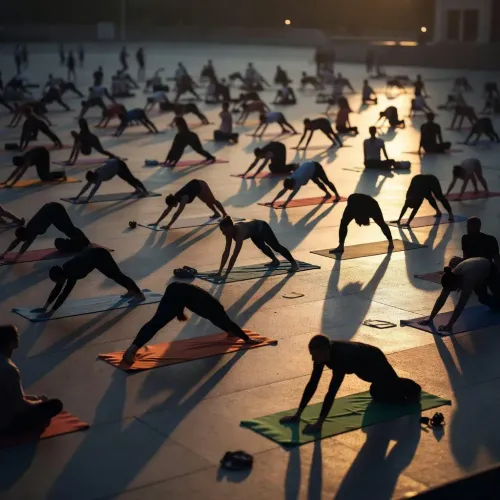
Millions of practitioners across India and the global Indian diaspora participate each year, with government-coordinated events held at iconic sites. As Culture and Tourism Minister, Shekhawat's framing of yoga as intangible cultural heritage also reinforces the ministry's mandate to promote India's civilisational legacy on the world stage.
What's Next
Attention will now turn to the scale and reach of IDY 2026 events organised through Indian diplomatic missions, the Ministry of AYUSH, and state governments. The 'Yoga for Healthy Ageing' theme is expected to dovetail with public-health outreach programmes targeting senior citizens and ageing populations globally. Shekhawat's post signals that the Culture Ministry will remain active in amplifying the day's diplomatic and heritage dimensions through the remainder of 2026.
Point of View
Timed to maximum symbolic effect on the day itself. By anchoring the message in 'tension and conflict' in the world, the minister positions India — and by extension the Modi government — as a civilisational counter-weight to geopolitical disorder. The explicit attribution to PM Modi reinforces the BJP's electoral and diplomatic branding around yoga as a Modi-era achievement. Taken together with the 'Vishwa Bandhu' foreign-policy arc, the post reflects a deliberate, long-running strategy to convert ancient heritage into contemporary global influence.
NationPress
19 Sept 2026
Frequently Asked Questions
What is International Day of Yoga and when is it celebrated?
International Day of Yoga is an annual global observance held on 21 June each year, established by the UN General Assembly in December 2014 through Resolution 69/131 following a proposal by PM Narendra Modi .
What did Gajendra Singh Shekhawat say on Yoga Day 2026?
Minister Shekhawat called yoga India's 'eternal message for world peace,' saying it can bind the world into a peaceful family through India's heritage, and credited PM Modi for championing yoga's role in global harmony.
What is the theme of International Yoga Day 2026?
The theme for International Yoga Day 2026 is 'Yoga for Healthy Ageing' , focusing on yoga's benefits for older populations and long-term wellness.
Who proposed International Day of Yoga at the United Nations?
Prime Minister Narendra Modi proposed International Day of Yoga at the UN General Assembly in September 2014 , leading to its unanimous adoption by member states later that year.
How does India use Yoga Day as soft power?
India coordinates mass yoga events through its diplomatic missions worldwide, positions yoga as an ancient civilisational contribution to global health and peace, and uses the day to reinforce its 'Vishwa Bandhu' — world friend — foreign-policy identity.