When Will Work on the Water Supply Project to Shekhawati Region Commence?

Synopsis
Exciting news for the Shekhawati region! The Rajasthan government is set to initiate a crucial water supply project, bringing Yamuna water to areas suffering from water scarcity. This project, backed by significant funding and political support, promises to revolutionize the region's water access and improve living conditions.
Key Takeaways
Water supply project initiated for Shekhawati region.
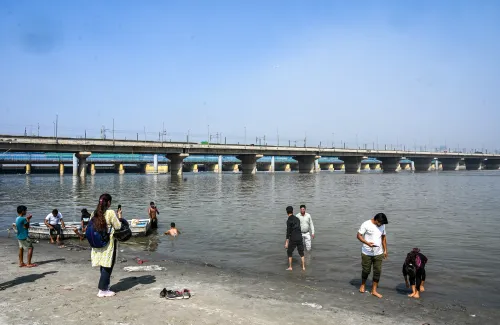
Yamuna water to be transported from Hathinikund Barrage.
Project commencement planned for 2026-27.
Rs 32,000 crore allocated for the initiative.
Significant improvement in living standards anticipated.
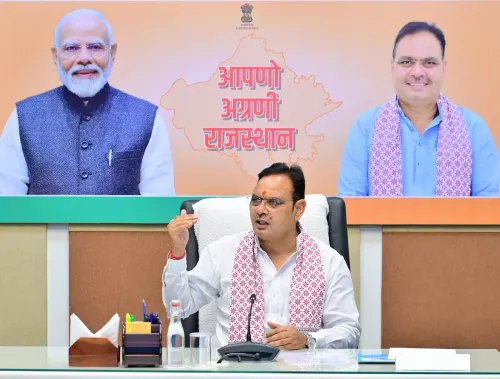
Jaipur, Feb 19 (NationPress) Water Resources Minister Suresh Singh Rawat announced that the Rajasthan government is dedicated to transporting Yamuna water from the Hathinikund Barrage to the Shekhawati region. This initiative, championed by Chief Minister Bhajan Lal Sharma and backed by the Central Government, has achieved a significant milestone with the signing of a Memorandum of Understanding (MoU) with Haryana, securing Rajasthan’s rightful share of water.
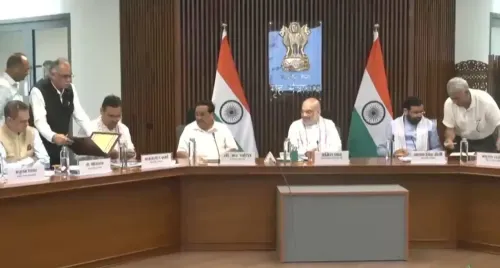
Minister Rawat elaborated that, in alignment with the vision of Prime Minister Narendra Modi, the MoU between Rajasthan and Haryana was formalized on February 17, 2024, chaired by the Union Jal Shakti Minister, to develop a joint Detailed Project Report (DPR). Both states have established a collaborative task force, and Haryana has granted written consent for the alignment proposed by the consultants.
The collaborative DPR will soon be submitted to the Central Water Commission. Following the acquisition of necessary approvals from various departments, the project is set to commence in the 2026-27 financial year.
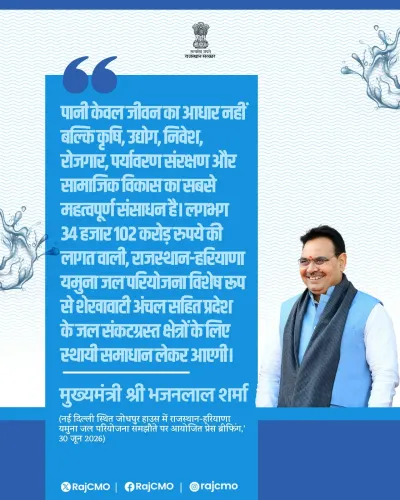
A budget allocation of Rs 32,000 crore has been dedicated to this long-anticipated project.
Minister Rawat highlighted that this project is vital for fulfilling the 30-year-old drinking water and other needs of Sikar, Churu, Jhunjhunu, and adjacent areas. It aims to significantly enhance social, educational, economic, and health standards in the region.
To ensure continuous access to Yamuna water, the initiative plans to construct three dams in the Yamuna basin above the Hathinikund Barrage, with construction already underway for two of these dams, Renukaji and Lakhwar.
The Shekhawati region of Rajasthan encompasses the districts of Sikar, Jhunjhunu, and Churu.
This semi-arid area is renowned for its decorated havelis, robust trading communities, and a rich tradition of migration to urban centers both domestically and internationally.
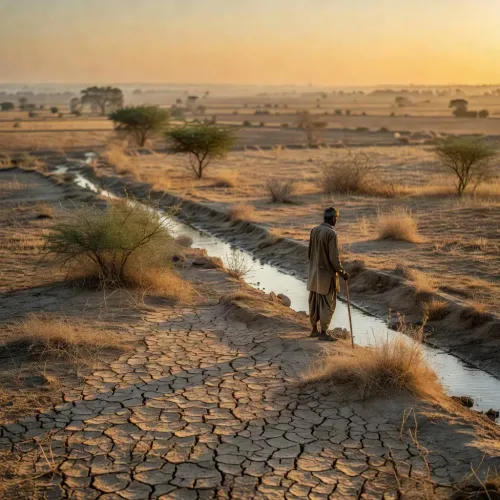
Notwithstanding its cultural significance, Shekhawati has historically battled drinking water shortages due to scant rainfall and dwindling groundwater levels.
A significant portion of the region relies on tanker deliveries and groundwater extraction.
Agriculture predominantly depends on rainfall, leaving farmers susceptible to drought cycles.
Over the years, the demand for a reliable surface water source, including Yamuna water, has emerged as a pressing public concern in the region.
Point of View
It is essential to highlight the significance of the Rajasthan government’s commitment to addressing water scarcity in the Shekhawati region. This project not only represents a vital step towards ensuring sustainable water access but also reflects a broader national strategy to improve living conditions and support agricultural resilience in semi-arid areas.
NationPress
19 Sept 2026
Frequently Asked Questions
What is the purpose of the water supply project?
The project aims to provide a reliable source of drinking water to the Shekhawati region, which has faced chronic water shortages.
When is the project expected to start?
Work on the project is set to begin in the 2026-27 financial year , following necessary approvals.
How much funding is allocated for this initiative?
Rs 32,000 crore has been allocated in the state budget for this significant project.
How will this project impact the local communities?
It is expected to improve social, educational, economic, and health standards in Sikar, Churu, Jhunjhunu, and surrounding areas.
What measures are being taken to ensure water availability?
Construction of three dams in the Yamuna basin is proposed to ensure a year-round supply of water.