BJP wins 26 of 28 North Bengal seats: Shekhawat's 93% strike rate
Synopsis
Union Minister Gajendra Singh Shekhawat's 15-day ground campaign in North Bengal delivered 26 wins from 28 seats — a 93% strike rate — with margins topping 1 lakh votes in Matigara–Naxalbari. The sweep signals the BJP's deepening grip on the border belt and raises the stakes for how the party leverages North Bengal in a TMC-dominated state.
Key Takeaways
Gajendra Singh Shekhawat secured victories in 26 of 28 North Bengal constituencies he campaigned in, a strike rate of 93% .
Largest margin: Matigara–Naxalbari at 1,04,265 votes ; followed by Dabgram–Phulbari at 97,715 votes .
Campaign focused on border security , infiltration , development , and regional identity across districts including Cooch Behar , Alipurduar , Jalpaiguri , and Siliguri .
Shekhawat spent more than 15 days on the ground, combining rallies with booth-level mobilisation and engagement with the Marwari community .
This is Shekhawat's second consecutive major North Bengal assignment, having also played a key role in the 2021 West Bengal elections .
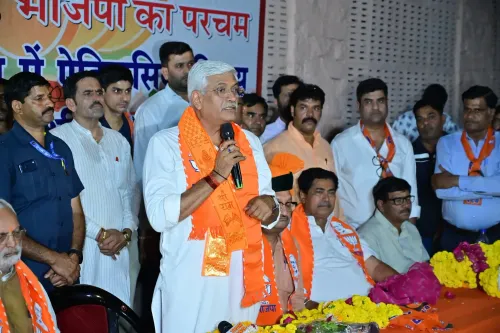
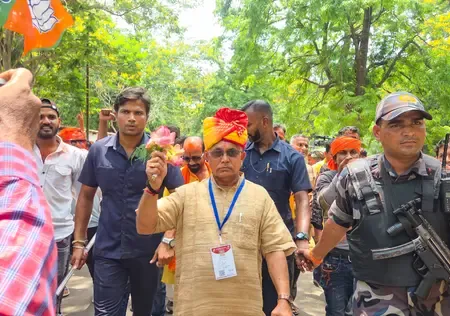
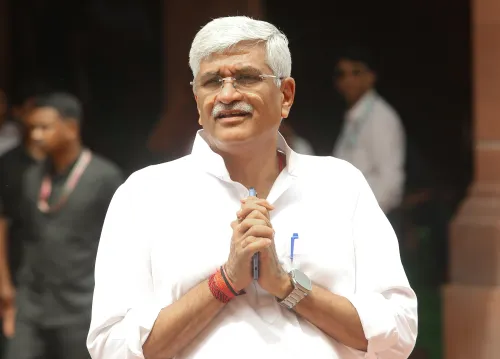
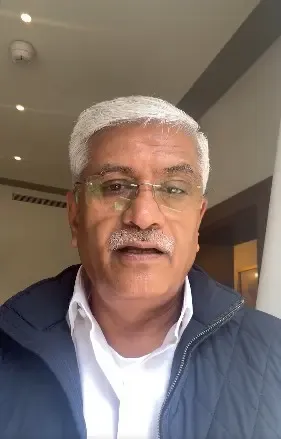
Union Minister and Jodhpur Bharatiya Janata Party (BJP) Member of Parliament Gajendra Singh Shekhawat delivered a commanding electoral performance in North Bengal during the West Bengal Assembly elections, securing victories in 26 out of 28 constituencies he campaigned in — a strike rate of 93 per cent. Shekhawat spent more than 15 days on the ground, leading a structured, booth-level campaign across the region's most politically sensitive districts.
Key Districts and Margins
Shekhawat's campaign was concentrated across the strategically significant belt of Cooch Behar, Alipurduar, Jalpaiguri, Darjeeling, and Siliguri — border districts that have historically held outsized electoral importance in state politics. The BJP's wins in these areas were not narrow; several were emphatic.
In Matigara–Naxalbari, the victory margin stood at 1,04,265 votes. Dabgram–Phulbari recorded a margin of 97,715 votes, while Siliguri saw the BJP win by 73,192 votes. Alipurduar and Cooch Behar North followed closely, with margins of 70,420 and 70,384 votes respectively.
Several other constituencies, including Jalpaiguri, Mathabhanga, Maynaguri, and Kumargram, recorded margins exceeding 50,000 votes. Seats like Madarihat, Phansidewa, and Falakata each posted margins above 40,000 votes.
Campaign Strategy and Ground Presence
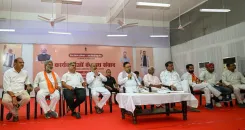
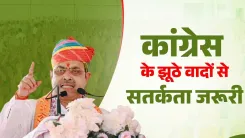
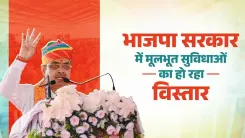
Unlike conventional top-down campaigning, Shekhawat's approach centred on direct voter engagement at the booth level. His team combined high-energy roadshows and public rallies with door-to-door mobilisation and worker coordination, according to officials from his office.
Shekhawat also actively engaged with key social groups, including the Marwari community, helping the BJP consolidate a broad support base in the region. Officials credited his focus on booth management and the building of local networks as decisive factors in the scale of the victory.
Issues That Shaped the Narrative
The campaign raised issues of border security, infiltration, development, and regional identity — concerns that reportedly resonated strongly with voters in North Bengal's border districts. This issue-based framing helped distinguish the BJP's outreach from more generic state-level messaging.
Notably, Shekhawat had also played a significant role in the 2021 West Bengal Assembly elections in the same region, making this his second consecutive major assignment in North Bengal. Political observers, according to reports, view his North Bengal strategy as a cornerstone of the BJP's broader performance in the state — a demonstration of how sustained ground presence and micro-level planning can translate into sweeping electoral gains.
Significance for BJP's Bengal Calculus
North Bengal has increasingly emerged as a BJP stronghold in a state otherwise dominated by the All India Trinamool Congress (TMC). The scale of the 2025 results in this region underlines the party's deepening roots in the area. How the BJP consolidates these gains — and whether they translate into leverage in state-level politics — will be closely watched in the months ahead.
Point of View
But the more significant number is the consistency of margins — multiple seats won by over 50,000 votes suggests structural entrenchment, not just a wave. The border-security and infiltration narrative has proven durable in these districts, and the BJP's ability to activate the Marwari community points to a coalition-building discipline that the party has struggled to replicate elsewhere in Bengal. Whether this North Bengal fortress translates into state-level power remains the unanswered question.
NationPress
26 Sept 2026
Frequently Asked Questions
What was Gajendra Singh Shekhawat's strike rate in North Bengal?
Gajendra Singh Shekhawat achieved a 93% strike rate, winning 26 of the 28 West Bengal Assembly constituencies he campaigned in during the state elections. He spent over 15 days on the ground across key northern districts.
Which North Bengal constituencies recorded the highest BJP victory margins?
Matigara–Naxalbari saw the highest margin at 1,04,265 votes, followed by Dabgram–Phulbari at 97,715 votes, Siliguri at 73,192 votes, Alipurduar at 70,420 votes, and Cooch Behar North at 70,384 votes.
What issues did Shekhawat's campaign focus on in North Bengal?
The campaign centred on border security, infiltration, development, and regional identity — issues that reportedly resonated strongly with voters in North Bengal's sensitive border districts.
Why is North Bengal politically significant for the BJP?
North Bengal's border districts — including Cooch Behar, Alipurduar, Jalpaiguri, Darjeeling, and Siliguri — are considered strategically and politically sensitive. The BJP has been building a stronghold here as a counterweight to the TMC's dominance elsewhere in the state.
Has Shekhawat campaigned in West Bengal before?
Yes, Shekhawat played a key role in the 2021 West Bengal Assembly elections in the same North Bengal region, making the 2025 campaign his second consecutive major assignment there.