Shiv Sena UBT at 60: Fake Senas built on deals, real Sena on sacrifice
Synopsis
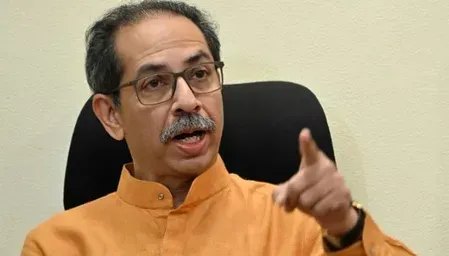
On its 60th anniversary, Shiv Sena UBT used its mouthpiece Saamana to draw the starkest possible contrast: rival factions are commercial constructs; the original Sena was built on blood, service, and sacrifice. The editorial is less a history lesson and more a battle cry — framing the post-2022 split not as a democratic schism but as a moral failure by opportunists who could never face the Sena head-on.
Key Takeaways
Shiv Sena (UBT) marked its 60th anniversary on 19 June with a combative editorial in party mouthpiece Saamana .
The editorial described rival factions as 'imitation outfits driven by a commercial mindset,' without naming the Shinde camp directly.
It cited the party's grassroots record — from water-tap disputes to blood donation drives — as proof of genuine public service that breakaway groups cannot match.
The piece invoked Balasaheb Thackeray's words on betrayal: 'So many wounds have been inflicted on my back that there is no space left to take a new one.' The UBT faction challenged rivals' Hindutva credentials, citing the Sena's role in campaigns for Malanggad and Ayodhya .
The editorial declared the Shiv Sena 'immortal' and reaffirmed 'Nation First' as its permanent mantra.
Shiv Sena (Uddhav Balasaheb Thackeray) marked its 60th anniversary on 19 June with a combative editorial in party mouthpiece Saamana, asserting that rival factions born of political opportunism have repeatedly failed to dent the movement founded by Balasaheb Thackeray. The piece drew a sharp line between what it called 'imitation outfits driven by a commercial mindset' and the original Sena, which, it argued, was built on public service and sacrifice.
The Anniversary Message
Without directly naming the rebel faction led by Eknath Shinde or the six MPs who broke away, the Saamana editorial stated that 'opportunistic elements and deal-making contractors were shown the exit door at regular intervals to keep the movement pure.' It described the Shiv Sena as 'a flowing stream of Marathi and Hindutva pride that continues to echo through the valleys of Maharashtra.'
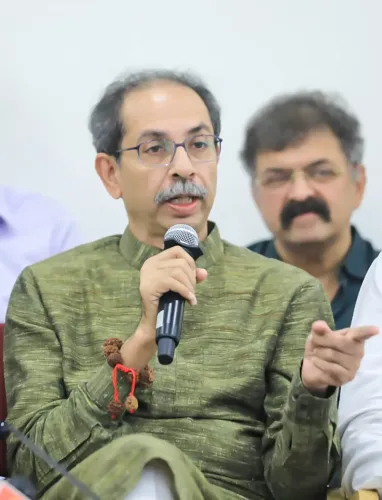
The editorial invoked Balasaheb Thackeray's own words to convey the pain of repeated betrayals: 'So many wounds have been inflicted on my back that there is no space left to take a new one.' The Thackeray camp framed these defections not as ideological splits but as morally bankrupt acts driven by personal gain.
Legacy of Grassroots Service
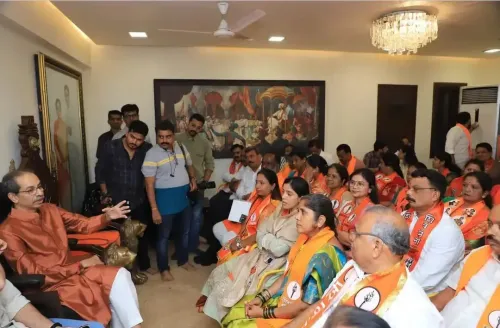
A significant portion of the editorial recounted the party's grassroots record — from resolving street-tap water disputes and managing school admissions to running blood donation drives and health camps. 'Shiv Sainiks sat day in and day out to serve the people, rushing to any spot where injustice occurred,' the piece noted. The editorial credited this ground-level work with propelling the party from local Shakhas (branch offices) to control of municipal corporations, the state Assembly, and Parliament.
The Thackeray camp also highlighted what it described as the Sena's unique ability to transform ordinary citizens into MLAs, MPs, and Ministers — a democratic achievement it said no rival faction had replicated.
Hindutva and National Identity
The editorial challenged the Hindutva credentials of breakaway groups, asking: 'Have today's counterfeit champions of Hindutva achieved even a fraction of that work?' It cited the Sena's role in campaigns for Malanggad and Ayodhya as evidence of genuine commitment, contrasting it with what it termed performative allegiance by newer outfits.
Drawing a parallel with Chhatrapati Shivaji Maharaj, the editorial argued that Balasaheb Thackeray carried forward a legacy of protecting Hindu identity while upholding national territorial integrity. 'Nation First is the mantra the Shiv Sena has permanently upheld,' it declared, adding that the party is 'immortal.'
Political Context
The anniversary editorial arrives at a politically charged moment for the Thackeray faction. Since the 2022 split — when the Shinde group broke away with a majority of MLAs and subsequently secured the 'Shiv Sena' name and party symbol from the Election Commission of India — the UBT camp has been fighting on both legal and electoral fronts to reclaim its identity. The Saamana piece is as much a morale-building exercise for the rank and file as it is a public statement of ideological continuity.
As the party enters its seventh decade, the Thackeray camp faces the dual challenge of retaining its voter base in Maharashtra while contesting the legitimacy of the rival faction in the courts and on the ground.
Point of View
Not mere nostalgia. By framing the 2022 split in moral rather than electoral terms, the Thackeray camp is attempting to reoccupy the ideological high ground it lost when the Election Commission awarded the party name and symbol to the Shinde faction. The Hindutva credibility challenge is particularly pointed — if the UBT can convince its base that the rival faction is a hollow imitation, it neutralises the Shinde group's biggest asset: institutional legitimacy. Whether that argument resonates with Maharashtra's voters, who backed the Mahayuti alliance in the 2024 Assembly elections, remains the real test of the Thackeray camp's revival.
NationPress
22 Sept 2026
Frequently Asked Questions
Why did Shiv Sena UBT publish a special Saamana editorial on 19 June?
19 June marks the 60th anniversary of the Shiv Sena's founding, and the Thackeray-led faction used the occasion to publish a landmark editorial in Saamana asserting the party's legacy and attacking rival factions as opportunistic and commercially driven. The piece served both as a commemoration and a political statement ahead of ongoing legal and electoral battles.
Who are the 'fake Senas' referred to in the Saamana editorial?
The editorial did not name any faction directly, but the reference is widely understood to target the Eknath Shinde-led Shiv Sena, which broke away in 2022 and was subsequently recognised by the Election Commission as the official Shiv Sena. The piece described these groups as 'imitation outfits driven by a commercial mindset' that emerged and dissolved over the decades.
What is the significance of the Shiv Sena's 60th anniversary?
The Shiv Sena was founded by Balasaheb Thackeray in 1966 as a movement championing Marathi identity and Hindutva. Sixty years on, the party is legally split between the Uddhav Thackeray-led UBT faction and the Eknath Shinde faction, making the anniversary a politically charged milestone for both sides.
What claims did the Saamana editorial make about the Shiv Sena's grassroots work?
The editorial credited Shiv Sainiks with resolving everyday disputes over water taps and school admissions, running blood donation drives and health camps, and distributing free books — work it said transformed ordinary citizens into elected representatives. It argued this record of selfless service is what distinguishes the original Sena from rival outfits.
How does the editorial address the Hindutva credentials of rival factions?
The editorial directly challenged breakaway groups, asking whether 'today's counterfeit champions of Hindutva' had achieved even a fraction of what the original Sena did in campaigns for Malanggad and Ayodhya. It framed the Shiv Sena as the authentic custodian of Hindutva, contrasting genuine sacrifice with what it called performative allegiance.