Mekedatu project: K'taka CM Shivakumar open to talks with TN CM Vijay
Synopsis
Karnataka CM D.K. Shivakumar has extended an open invitation to Tamil Nadu CM C. Joseph Vijay for talks on the Mekedatu Balancing Reservoir — a project stalled for decades by inter-state politics. His pitch: the reservoir actually protects Tamil Nadu's 177 TMC Cauvery entitlement during droughts, generates 400 MW of power, and costs Tamil Nadu nothing. The ball is now in Chennai's court.
Key Takeaways
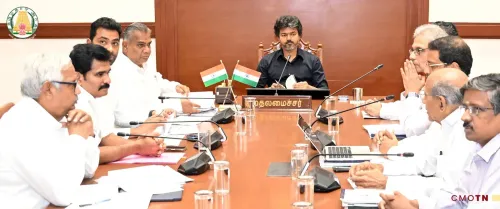
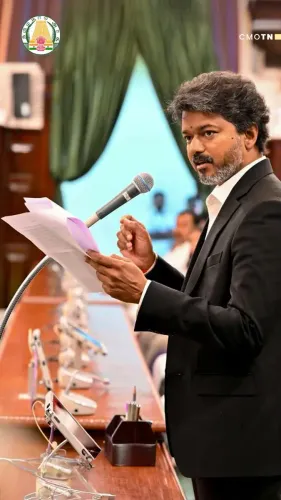
Shivakumar on 18 June expressed readiness to hold talks with Tamil Nadu CM C.
Joseph Vijay on the Mekedatu Balancing Reservoir and Drinking Water Project .
The project would guarantee Tamil Nadu its court-mandated 177 TMC of Cauvery water even during drought years, according to Shivakumar.
The reservoir would also generate approximately 400 MW of electricity and address Bengaluru 's growing drinking water needs.
A three-judge Supreme Court Bench has already rejected Tamil Nadu's review petitions; the matter is now with the Central Water Commission .
Shivakumar said Karnataka seeks no financial contribution from Tamil Nadu and accused some Tamil Nadu parties of prolonging the dispute for electoral reasons.
The Congress party's presence in both state governments is seen as a potential channel for renewed dialogue.
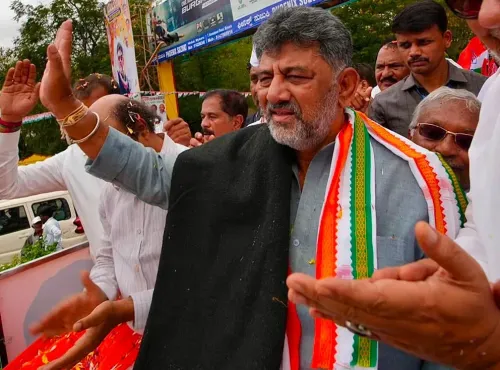
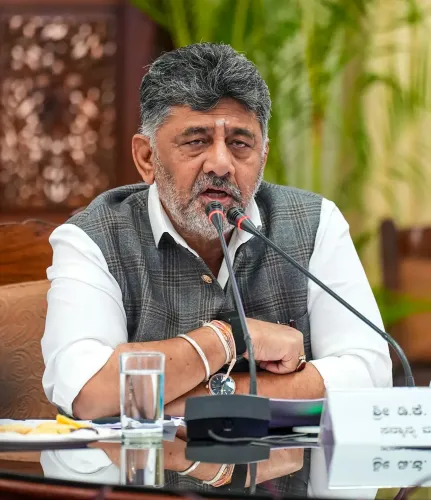
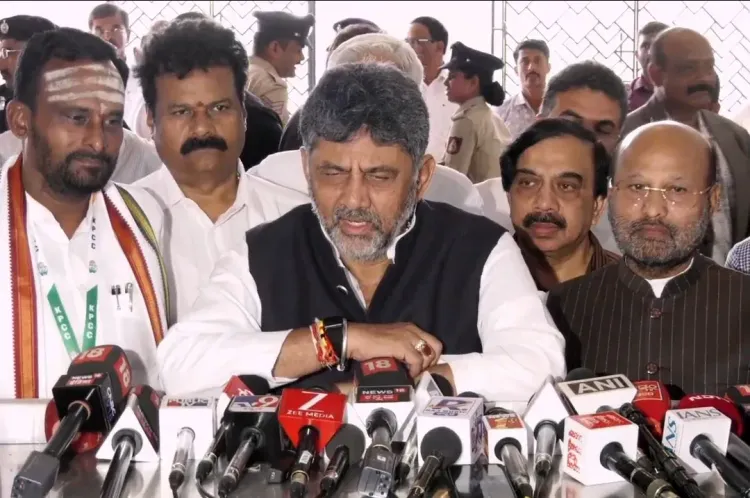
Karnataka Chief Minister D.K. Shivakumar on Thursday, 18 June declared his readiness to hold talks with Tamil Nadu Chief Minister C. Joseph Vijay on the long-pending Mekedatu Balancing Reservoir and Drinking Water Project, urging both states to set aside political considerations and prioritise the welfare of their people. The remarks came after Shivakumar cast his vote in the Legislative Council elections in Bengaluru.
What Shivakumar Said
'I am ready to talk to Tamil Nadu at any point regarding the Mekedatu project. I have no reservations in this regard. Whether it is Tamil Nadu or Karnataka, we are one nation and one people. We all depend on the waters of the same river. Water is needed for irrigation, drinking purposes and industrial use,' CM Shivakumar told reporters.
He underscored the deep economic and social ties between the two states. 'Many people from Tamil Nadu work in Karnataka, and many from Karnataka live and work there. We cannot view this issue through a narrow lens,' he added.
How the Project Benefits Both States
Shivakumar argued that the proposed balancing reservoir would actually serve Tamil Nadu's interests as much as Karnataka's. The project, he said, would enable Karnataka to guarantee Tamil Nadu its court-mandated allocation of 177 TMC of Cauvery water even during periods of distress, while also meeting the fast-growing drinking water needs of Bengaluru.
'The advantage of constructing a balancing reservoir is that it will help us guarantee Tamil Nadu's share of 177 TMC of water even during times of crisis. Water for districts such as Mandya, Hassan, Chamarajanagar and Tumakuru could be released when required,' he said. He also noted the project would generate approximately 400 MW of electricity alongside its primary drinking water function.
Shivakumar was categorical that the reservoir would not divert water for irrigation beyond permitted limits. 'Not a single TMC of water or even a bucket of water can be diverted for irrigation beyond what is permitted. The project is primarily intended for drinking water purposes,' he said, pointing to Bengaluru's rapidly growing population and its dependence on the Cauvery as the only viable source.
The Legal and Political Context
The Mekedatu project has been mired in inter-state dispute for decades, with Tamil Nadu opposing it on grounds that the reservoir could impede water flows downstream. However, Shivakumar noted that a three-judge Bench of the Supreme Court had already heard Tamil Nadu's arguments, rejected review petitions, and referred the matter to the Central Water Commission for further technical evaluation.
'After a judgment by a three-judge Bench of the Supreme Court, what more remains to be discussed? Have we not already agreed to release 177 TMC of water to Tamil Nadu?' he asked, accusing some political parties in Tamil Nadu of prolonging the controversy for electoral reasons.
He also pointed out that last year alone, more than 400 TMC of water flowed into the sea — underscoring, in his view, that Karnataka was not seeking to withhold Tamil Nadu's share. Karnataka, he noted, had raised no objection to dams constructed by Tamil Nadu within its own territory, and expected the same reciprocity.
Congress Alliance as a Bridge
Shivakumar highlighted that the Indian National Congress (Congress) is part of the ruling alliance in Tamil Nadu, positioning the party as a potential diplomatic bridge. 'The Congress is an ally in the Tamil Nadu government and we will certainly hold discussions. This project will benefit both states. We must move forward patiently, keeping the interests of the people of Karnataka and Tamil Nadu in mind,' he said.
MPs from the Congress, Bharatiya Janata Party (BJP), and Janata Dal (Secular) (JD(S)) would continue to advocate for Karnataka's position on the issue, he added.
What Comes Next
With the Supreme Court process ongoing and the Central Water Commission conducting technical review, the immediate next step is whether Tamil Nadu responds to Shivakumar's overture for direct bilateral talks. The Congress's shared presence in both state governments could facilitate back-channel dialogue, though Tamil Nadu has historically been cautious about the project ahead of state elections. Karnataka maintains it requires no financial contribution from Tamil Nadu and will implement the project entirely within its own territory.
Point of View
And no amount of Supreme Court clarity has dissolved that calculus. The 177 TMC guarantee argument is Karnataka's strongest card, but it has been on the table before without moving Chennai. What is different this time is the Congress connection; whether the party uses it as a bridge or keeps it dormant to avoid Tamil Nadu voter backlash will determine whether these talks move beyond a press statement.
NationPress
17 Sept 2026
Frequently Asked Questions
What is the Mekedatu Balancing Reservoir and Drinking Water Project?
The Mekedatu project is a proposed balancing reservoir on the Cauvery river within Karnataka's territory, designed primarily to secure drinking water for Bengaluru and to regulate Cauvery water releases to Tamil Nadu. Karnataka argues it would help guarantee Tamil Nadu's Supreme Court-mandated share of 177 TMC even during lean years, while also generating around 400 MW of electricity.
Why has Tamil Nadu opposed the Mekedatu project?
Tamil Nadu has historically opposed the project, fearing that a reservoir upstream could allow Karnataka to control or reduce water flows to the state. According to Karnataka CM Shivakumar, the opposition has often been driven by political considerations rather than legal or technical grounds, particularly given that the Supreme Court has already rejected Tamil Nadu's review petitions on the matter.
What is the current legal status of the Mekedatu project?
A three-judge Bench of the Supreme Court has heard Tamil Nadu's arguments and dismissed its review petitions. The matter has been referred to the Central Water Commission for further technical evaluation. Karnataka maintains that the court's orders are beneficial to both states.
How does the Congress party factor into the Mekedatu dispute?
The Congress is part of the ruling alliance in Tamil Nadu, while also governing Karnataka. CM Shivakumar has indicated that this shared political presence will be used to facilitate discussions between the two states on the project.
What districts in Karnataka would benefit from the Mekedatu project?
Besides Bengaluru, Karnataka CM Shivakumar specifically named Mandya, Hassan, Chamarajanagar, and Tumakuru as districts that would receive water releases from the proposed balancing reservoir when required.