TN CM chairs legal meet on Mettur Dam, Mekedatu project
Synopsis
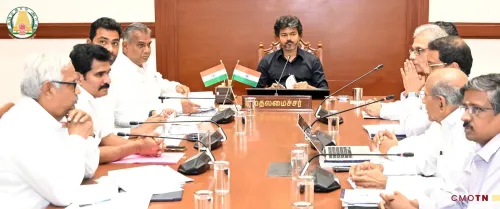
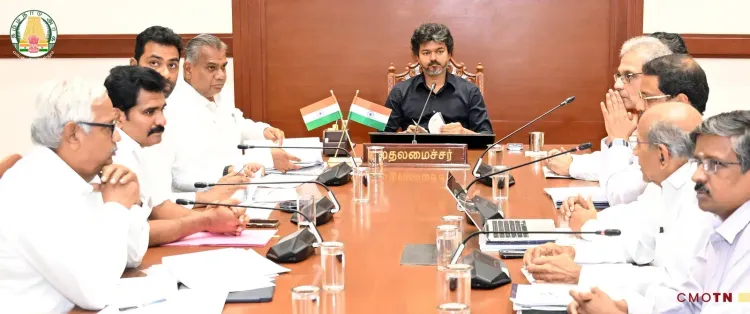
Chief Minister Joseph Vijay on 20 July 2026 convened legal experts and Cauvery Technical Committee officers at the Tamil Nadu Secretariat to plan action on Karnataka's halted water releases to Mettur Dam and to address the Mekedatu Dam dispute.
Key Takeaways
CM Joseph Vijay chaired the consultation at the Tamil Nadu Secretariat on 20 July 2026 .
The meeting was triggered by the absence of water inflows from Karnataka to Mettur Dam .
Both legal experts and Cauvery Technical Committee officers participated, indicating a dual legal-technical response is being prepared.
The Mekedatu Dam project — Karnataka's proposed Cauvery reservoir — was a separate agenda item at the meeting.
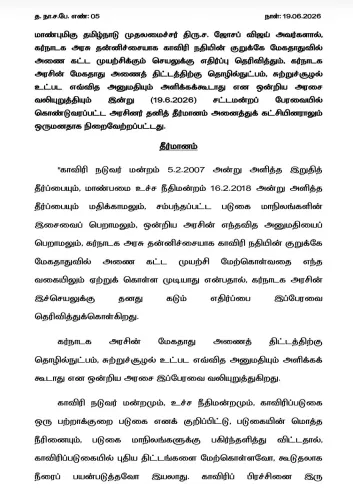
The Supreme Court's 2018 order specifies monthly release schedules Karnataka must follow, forming the legal basis for Tamil Nadu's claims.
Delta farmers across the Cauvery basin face direct risk to sowing schedules if inflows remain inadequate.
The Chief Minister's Office of Tamil Nadu announced on Monday, 20 July 2026 that Chief Minister Joseph Vijay chaired a high-level consultation at the Secretariat in Chennai, bringing together legal experts and officers of the Cauvery Technical Committee to deliberate on steps to be taken in the absence of water inflows from Karnataka to Mettur Dam, and on matters related to the Mekedatu Dam project.
Context
The CMO's post, in Tamil, states that the meeting was convened 'மேட்டூர் அணைக்கு கர்நாடகத்திலிருந்து நீர்வராத நிலையில்' — meaning 'in a situation where water is not flowing from Karnataka to Mettur Dam.' The consultation covered both the immediate crisis of inadequate inflows and the longer-term concern over Karnataka's proposed Mekedatu reservoir on the Cauvery river. Legal experts and Cauvery Technical Committee officers attended the session, signalling that Tamil Nadu is preparing a coordinated legal and technical response.
Policy Backdrop
The Supreme Court, in its 2018 modification of the Cauvery Water Disputes Tribunal award of 2007, laid down monthly water release schedules that Karnataka is bound to follow. Tamil Nadu has consistently relied on these schedules to demand its allocated share during lean inflow periods. The state has opposed the Mekedatu project — a proposed balancing reservoir in Karnataka — since the mid-2010s, arguing that it would give Karnataka greater control over downstream flows and undermine Tamil Nadu's tribunal-guaranteed allocation.
Mettur Dam is the lifeline for delta districts across the Cauvery basin, and delayed or reduced inflows directly affect the kuruvai (short-term) and samba (long-term) cultivation seasons for millions of farmers. Convening legal and technical consultations at the Secretariat is a step Tamil Nadu governments have repeatedly taken during such seasonal stress periods.
Stakeholders and Impact
The most directly affected are delta farmers in districts such as Thanjavur, Tiruvarur, Nagapattinam and Ariyalur, who depend on Mettur releases for irrigation. Any shortfall in inflows from Karnataka threatens sowing schedules and crop yields across hundreds of thousands of acres. The Cauvery Water Management Authority (CWMA), the central body monitoring compliance with the Supreme Court order, is a key institutional actor whose next directives will shape the state's options.
Karnataka's position on Mekedatu — framed by that state as a drinking-water and power project — remains a point of diplomatic and legal friction. Tamil Nadu's decision to involve legal experts alongside technical officers suggests the state is simultaneously preparing representations to the CWMA and potential legal filings.
What's Next
Attention will now focus on directives from the Cauvery Water Management Authority regarding Karnataka's release obligations for the current season. Any follow-up legal action on the Mekedatu project — whether through fresh petitions or representations to the Union government — is likely to emerge from the deliberations of this meeting. The outcome of these consultations will determine whether Tamil Nadu escalates the matter before the Supreme Court or pursues diplomatic channels first.
Point of View
The Tamil Nadu government is signalling that it intends to pursue both litigation and regulatory pressure simultaneously — a dual-track strategy the state has used effectively in past Cauvery standoffs. The explicit inclusion of the Mekedatu Dam on the agenda alongside the immediate inflow crisis suggests Chennai is treating the two issues as linked, potentially to strengthen its case before the Cauvery Water Management Authority. This meeting fits a well-established pattern: seasonal low inflows catalyse institutional responses that often culminate in Supreme Court interventions. The political optics are also deliberate — a new Chief Minister demonstrating early resolve on a perennially emotive issue for Tamil Nadu's farming communities.
NationPress
20 Oct 2026
Frequently Asked Questions
Why is water not flowing from Karnataka to Mettur Dam?
Karnataka's upstream reservoirs receive reduced inflows during lean monsoon periods, which can result in the state releasing less water into the Cauvery, cutting supplies to Mettur Dam in Tamil Nadu. The Supreme Court's 2018 order mandates monthly release schedules, but enforcement depends on actual reservoir levels and compliance.
What is the Mekedatu Dam project and why does Tamil Nadu oppose it?
Mekedatu is Karnataka's proposed balancing reservoir on the Cauvery river. Tamil Nadu opposes it because the project would give Karnataka greater control over downstream flows, potentially reducing the water Tamil Nadu receives under its tribunal-allocated share.
What did the Tamil Nadu CM's meeting on 20 July 2026 decide?
The meeting, chaired by CM Joseph Vijay, brought together legal experts and Cauvery Technical Committee officers to plan steps in response to halted inflows to Mettur Dam and to discuss the Mekedatu Dam issue. Specific decisions from the meeting have not yet been publicly announced.
What is the Cauvery Water Management Authority?
The Cauvery Water Management Authority is the central body set up following the Supreme Court's 2018 order to oversee and enforce the monthly water release schedules among Cauvery basin states — Karnataka, Tamil Nadu, Kerala and Puducherry.
How does Mettur Dam shortage affect Tamil Nadu farmers?
Mettur Dam is the primary source of irrigation water for delta districts such as Thanjavur, Tiruvarur and Nagapattinam. Delayed or reduced releases disrupt the kuruvai and samba cultivation seasons, threatening crop yields across hundreds of thousands of acres and the livelihoods of farmers dependent on Cauvery irrigation.