TN Governor wrong to deny TVK majority chance: Shivakumar
Synopsis
Karnataka Deputy CM D. K. Shivakumar has directly challenged Tamil Nadu Governor Rajendra Vishwanath Arlekar's reported refusal to allow Vijay's TVK a chance to prove its majority — invoking Yediyurappa, Vajpayee, and two former Presidents as precedents. The rebuke adds Congress's voice to a growing constitutional debate about Governors overstepping their mandate.
Key Takeaways
Shivakumar , Karnataka Deputy CM, on 7 May called Tamil Nadu Governor Rajendra Vishwanath Arlekar's reported decision to deny TVK a chance to prove majority "not right" and undemocratic.
Shivakumar cited precedents including B.
Yediyurappa , Atal Bihari Vajpayee , and former Presidents K.
Abdul Kalam as examples of allowing parties to seek a floor test.
He argued that "one vote can decide the majority or the minority" and that the floor of the House is the only legitimate test.
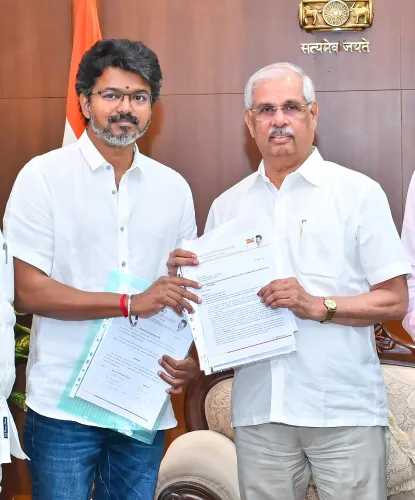
Tamilaga Vettri Kazhagam (TVK) , led by actor Vijay , has reportedly been denied the opportunity to stake a claim to form the government.
Shivakumar also addressed plans for a new Bengaluru North Corporation office and irrigation discussions in Belagavi district .
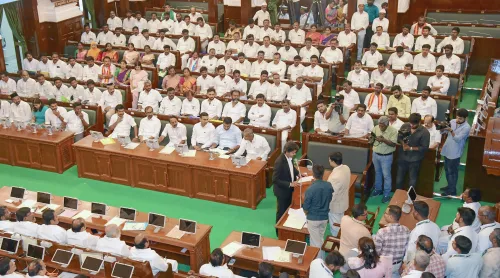
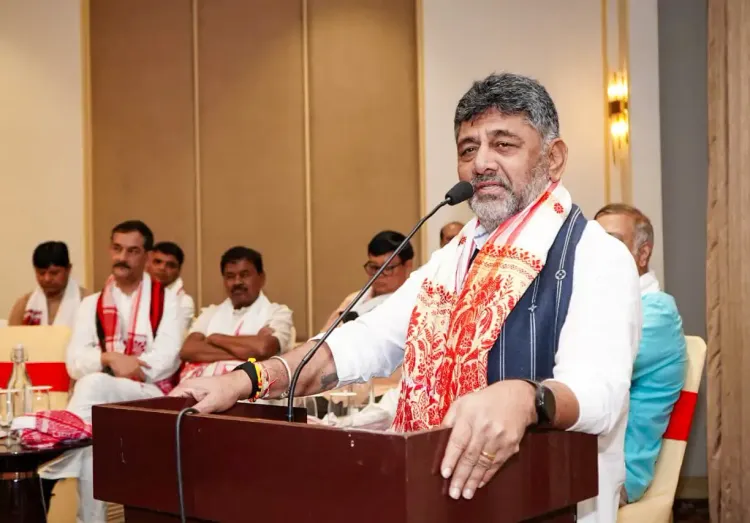
Karnataka Deputy Chief Minister and State Congress President D. K. Shivakumar on Thursday, 7 May criticised the reported decision of Tamil Nadu Governor Rajendra Vishwanath Arlekar to deny actor Vijay-led Tamilaga Vettri Kazhagam (TVK) an opportunity to form the government and prove its majority in the Assembly. Speaking at Vidhana Soudha in Bengaluru, Shivakumar called the move undemocratic and constitutionally untenable.
Shivakumar's Core Argument
The Deputy Chief Minister was unequivocal in his assessment: a Governor has no constitutional authority to block a party from staking a claim to power if it believes it commands the numbers. "The Governor of Tamil Nadu has no authority whatsoever to prevent Vijay from forming the government and proving his majority. The Governor's conduct is not right," Shivakumar told reporters.
He further stressed the primacy of the floor test as the ultimate democratic arbiter. "This is democracy. One vote can decide the majority or the minority. If they fail to prove the majority, then the next option can be considered," he said.
Historical Precedents Cited
Shivakumar drew on a series of precedents to buttress his argument, pointing to instances where Governors and Presidents had extended the opportunity to form governments to single largest parties even amid political uncertainty.
"In Karnataka, too, former Chief Minister B. S. Yediyurappa was allowed to form the government. Former Presidents K. R. Narayanan and A. P. J. Abdul Kalam had also followed the same approach. Even Atal Bihari Vajpayee was allowed to form the government and prove a majority on the floor of the House," he said.
These references span decades of constitutional practice, signalling that Shivakumar views the Tamil Nadu Governor's reported stance as a departure from an established, cross-party norm.
Mandate of the People Must Be Respected
Beyond the constitutional dimension, Shivakumar invoked the democratic principle of honouring the electorate's verdict. "One must respect the sentiments of the people of the state," he said, maintaining that Tamilaga Vettri Kazhagam should be given a fair chance to demonstrate its majority on the floor of the House.
This comes amid a broader pattern of friction between Opposition-aligned state governments and Governors appointed by the Centre — a tension that has played out in states including Tamil Nadu, Kerala, West Bengal, and Telangana in recent years.
Other Matters Addressed
On civic infrastructure, Shivakumar said proposals had been received for constructing a new Bengaluru North Corporation office at three to four different locations, with a final decision to be taken after site inspections. He clarified that there was no proposal to house the office at the University of Agricultural Sciences, GKVK.
He also confirmed that a meeting with Ministers Satish Jarkiholi and Lakshmi Hebbalkar was focused on irrigation projects in Belagavi district.
With the Governor's reported decision drawing criticism from multiple political quarters, the question of whether TVK will be extended a constitutional opportunity to form the government in Tamil Nadu is likely to intensify in the days ahead.
Point of View
And Tamil Nadu is only the latest flashpoint. If the Governor's reported stance is accurate, it raises serious questions about the selective application of constitutional conventions — a concern that transcends party lines and strikes at the credibility of Raj Bhavan as a neutral constitutional office.
NationPress
21 Sept 2026
Frequently Asked Questions
Why is Tamil Nadu Governor Rajendra Vishwanath Arlekar under criticism?
The Governor is reportedly facing criticism for denying actor Vijay's party Tamilaga Vettri Kazhagam (TVK) an opportunity to form the government and prove its majority in the Tamil Nadu Assembly. Critics, including Karnataka Deputy CM D. K. Shivakumar, have called this move undemocratic and constitutionally unsound.
What did D. K. Shivakumar say about the Tamil Nadu Governor's decision?
Shivakumar said the Governor had no authority to prevent TVK from forming the government if it had the numbers, stating: "The Governor's conduct is not right." He cited multiple historical precedents where parties were allowed to seek a floor test.
What precedents did Shivakumar cite to support his argument?
He referenced former Karnataka CM B. S. Yediyurappa, former Prime Minister Atal Bihari Vajpayee, and former Presidents K. R. Narayanan and A. P. J. Abdul Kalam — all of whom, he argued, were allowed to form governments and prove majority on the floor of the House.
Who leads Tamilaga Vettri Kazhagam (TVK)?
Tamilaga Vettri Kazhagam is led by Tamil actor Vijay, who launched the party to contest Tamil Nadu politics. The party has reportedly claimed it has the numbers to form the government in the state.
What is the constitutional position on a Governor's role in government formation?
Constitutionally, a Governor is expected to invite the single largest party or a coalition with majority support to form the government and prove its majority on the floor of the House. Critics argue that denying this opportunity without a floor test is a departure from established constitutional convention.