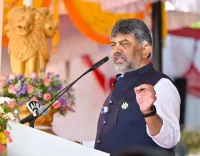
Shivakumar credits Kharge, Sonia Gandhi for Article 371J at Kalyan Karnataka Utsav
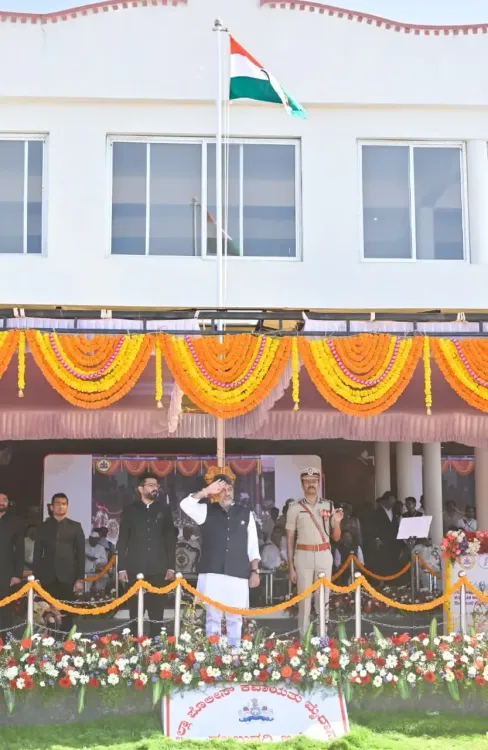
Synopsis
At Kalyan Karnataka Liberation Day celebrations in Kalaburagi, CM D.K. Shivakumar attributed Article 371J — the constitutional provision that has unlocked ₹25,000 crore in grants and nearly 80,000 jobs for the region — squarely to Congress leaders Sonia Gandhi, Manmohan Singh and Mallikarjun Kharge. The speech doubles as a political inventory of what the party claims it has delivered, with 72,000 more recruitments currently under way.
Key Takeaways
Shivakumar addressed the Kalyan Karnataka Utsav in Kalaburagi on 17 September 2026 , Kalyan Karnataka Liberation Day.
He credited Sonia Gandhi , Manmohan Singh , and Mallikarjun Kharge for securing Article 371J ; Sonia Gandhi reportedly secured 404 Lok Sabha members’ support for the constitutional amendment.
The region has received around ₹25,000 crore in special grants over 12 years , with ₹14,000 crore already spent on 41,103 development works .
79,383 youths have secured employment under Article 371J; recruitment for 72,000 posts is currently under way, with 32,000 reserved for the region.
The government has allocated ₹1,000 crore for 1,150 km of rural roads under the Kalyanapatha scheme; a special Cabinet meeting cleared projects worth ₹11,770 crore .
Super-speciality hospitals are being established in Yadgir , Koppal , and Bidar , with ₹423 crore allocated for healthcare infrastructure upgrades.
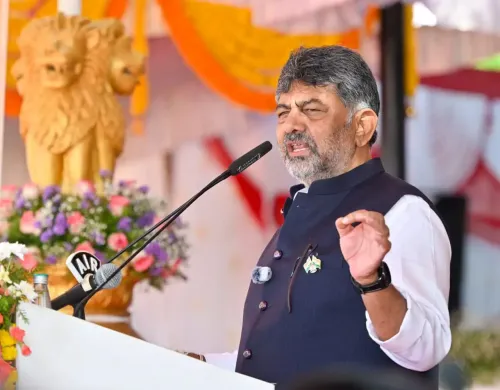
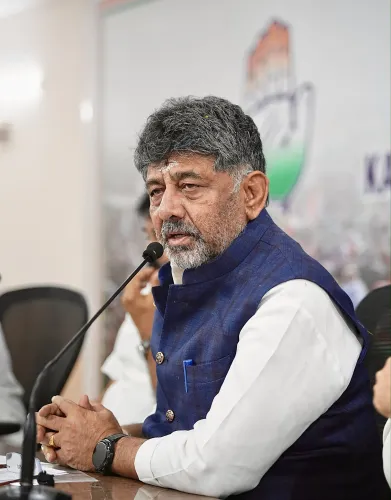
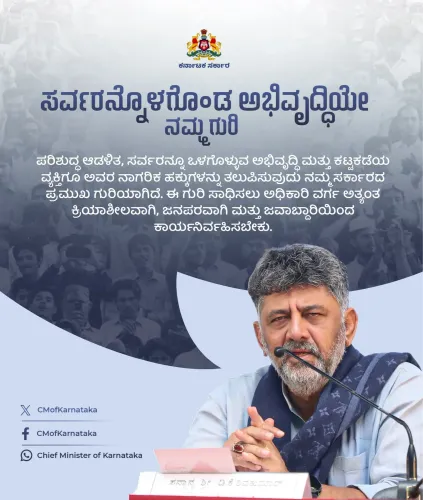
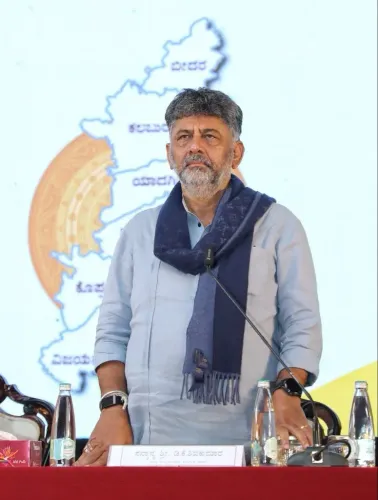
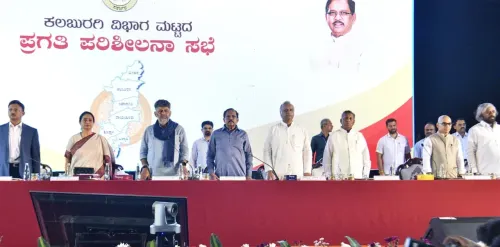
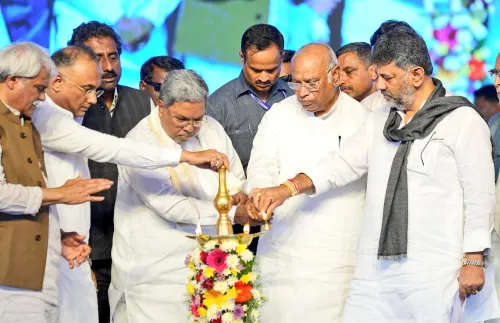
Karnataka Chief Minister D.K. Shivakumar on Thursday, 17 September 2026, called on the people of Kalyan Karnataka to acknowledge the pivotal role played by Indian National Congress (INC) leaders — including former Congress president Sonia Gandhi and All India Congress Committee (AICC) President Mallikarjun Kharge — in securing Article 371J, the constitutional provision that grants special status and protections to the historically under-developed Hyderabad-Karnataka region. Shivakumar made the remarks while addressing the Kalyan Karnataka Utsav in Kalaburagi on the occasion of Kalyan Karnataka Liberation Day.
Article 371J: What It Means for the Region
Article 371J, Shivakumar underscored, has created tangible pathways for residents in education and public employment. “People of Kalyan Karnataka should not forget Mallikarjun Kharge, who worked to build the lives of the people of this region,” he said. The Chief Minister recalled that Sonia Gandhi had mobilised the support of 404 Lok Sabha members to pass the constitutional amendment, crediting former Prime Minister Manmohan Singh alongside Kharge for shepherding the provision into law.
Shivakumar articulated the stated intent of the provision: “The real objective of Article 371J was to ensure that every family could have at least one government employee, every village could have a doctor, and villages could have engineers.”
Employment and Development Numbers
The Chief Minister cited a series of figures to illustrate the region’s progress under the special constitutional status. He said ₹25,000 crore in special grants had been released over the past 12 years, of which ₹14,000 crore had already been utilised. A total of 41,103 development works had been initiated, with 32,985 completed and 8,118 at various stages of implementation.
On jobs, Shivakumar said 79,383 youths had secured employment under Article 371J provisions, and that the government was currently running recruitment for 72,000 posts, of which 32,000 were reserved for candidates from the region. More than 10,000 medical and over 31,000 engineering admission opportunities had also been made available to students from Kalyan Karnataka through the provision.
Infrastructure and Healthcare Push
Shivakumar highlighted Kharge’s contribution to the region’s railway and healthcare infrastructure, specifically citing the Gulbarga-Wadi and Bidar-Gulbarga railway lines and the development of a major ESI hospital. “Kalyan Karnataka is emerging as a healthcare hub,” he said, noting that super-speciality hospitals were being set up in Yadgir, Koppal, and Bidar.
An outlay of ₹423 crore is being directed toward strengthening the Indira Gandhi Mother and Child Hospital, Kidwai, and Jayadeva hospitals. A special Cabinet meeting held in Kalaburagi had also cleared projects worth ₹11,770 crore, and the government has set a target of constructing 350 KPS schools.
Roads, Governance and Youth Schemes
On roads, the government launched the Kalyanapatha scheme to improve rural connectivity, allocating around ₹1,000 crore for developing 1,150 km of rural roads across 38 Assembly constituencies, with ₹120 crore earmarked per constituency.
Shivakumar said governance was being brought to the grassroots through the Praja Seva campaign, under which ministers, legislators and officials hold programmes at district, taluk and hobli levels on the second and fourth Saturdays of each month. Additionally, 10,000 Bharat Jodo Yuva Sanghas are being established to develop leadership among youth and provide opportunities in sports, art and music.
This comes amid the Congress government’s broader effort to consolidate support in the Kalyan Karnataka region, historically one of the most deprived in the state. The political framing — crediting Sonia Gandhi, Kharge, and Manmohan Singh prominently — reflects the party’s approach ahead of future electoral cycles in a region where Kharge holds significant personal influence. Whether the development metrics cited translate into durable political goodwill will become clearer as the recruitment drives and infrastructure projects reach completion.
Point of View
A deliberate strategy in a region where Kharge’s personal standing remains the party’s strongest local asset. The figures cited — ₹25,000 crore in grants, 79,383 jobs, 41,103 works — are creditable if verified, but the gap between works initiated and works completed (roughly 8,000 still pending) deserves scrutiny. More broadly, Kalyan Karnataka’s development lag predates and exceeds what Article 371J alone can remedy; the provision opened a channel, but translating it into structural economic change requires consistent multi-decade investment that no single government can claim as its own.
NationPress
17 Sept 2026
Frequently Asked Questions
What is Article 371J and why does it matter for Kalyan Karnataka?
Article 371J is a constitutional provision that grants special status to the Hyderabad-Karnataka region — now known as Kalyan Karnataka — ensuring reservation in education and government employment for local residents. It was inserted into the Constitution to address the region’s longstanding developmental disadvantage relative to the rest of Karnataka.
What role did Sonia Gandhi and Mallikarjun Kharge play in Article 371J?
According to Karnataka CM D.K. Shivakumar, Sonia Gandhi secured the support of 404 Lok Sabha members for the constitutional amendment that introduced Article 371J, while Kharge played a sustained role in advocating for the region’s railway, healthcare and employment needs. Former PM Manmohan Singh was also credited for the provision’s enactment.
How many jobs has Article 371J created in Kalyan Karnataka?
Shivakumar said 79,383 youths have secured employment under Article 371J provisions to date. The government is additionally running a recruitment drive for 72,000 posts, of which 32,000 are to be filled by candidates from the Kalyan Karnataka region.
How much has been spent on development in Kalyan Karnataka under special grants?
Around ₹25,000 crore in special grants has been released over the past 12 years, of which ₹14,000 crore has been spent. A total of 41,103 development works have been initiated, with 32,985 completed and 8,118 still in progress, according to Shivakumar.
What infrastructure projects were announced for Kalyan Karnataka in 2026?
Key announcements include the Kalyanapatha road scheme (₹1,000 crore for 1,150 km of rural roads), super-speciality hospitals in Yadgir, Koppal and Bidar, ₹423 crore for upgrading Indira Gandhi Mother and Child Hospital, Kidwai and Jayadeva hospitals, and projects worth ₹11,770 crore cleared at a special Cabinet meeting in Kalaburagi.