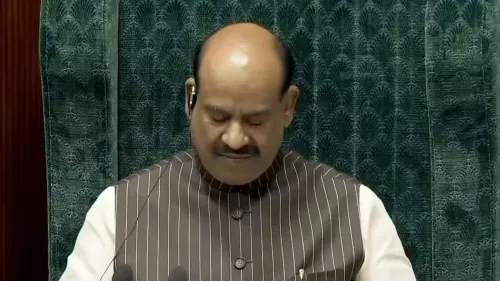
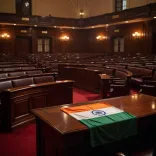
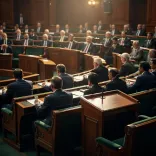
Shivraj hails Lok Sabha passage of exam anti-cheat bill

Synopsis
Lok Sabha passed the Public Examinations (Prevention of Unfair Means) Amendment Bill, 2026 on 29 July, introducing fast-track courts, a two-month investigation deadline, and STF deployment powers to combat paper leaks. Union Minister Shivraj Singh Chouhan called it a landmark step for crores of exam aspirants.
Key Takeaways
Lok Sabha passed the Public Examinations (Prevention of Unfair Means) Amendment Bill, 2026 on 29 July 2026 .
The bill mandates completing investigations within two months and trials within three months of chargesheet filing.
Dedicated special fast-track courts will hear paper-leak and exam fraud cases.
A special STF can be deployed against organised exam malpractice networks when required.
The amendment strengthens the earlier Public Examinations (Prevention of Unfair Means) Act, 2024 , India's first central anti-paper-leak law.
Union Minister Shivraj Singh Chouhan described the bill as a step toward a more transparent, accountable, and credible examination system for crores of aspirants .
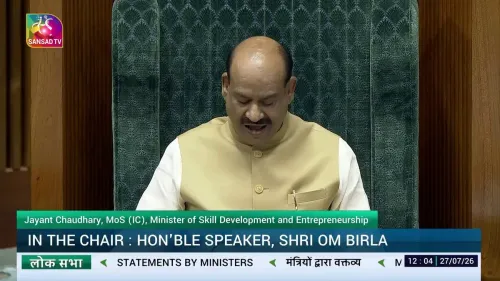
A new chapter in India's fight against exam fraud opened in Lok Sabha on Wednesday, 29 July 2026, as Parliament passed the 'Public Examinations (Prevention of Unfair Means) Amendment Bill, 2026' — legislation that promises crores of competitive exam aspirants a faster, tougher response to the paper-leak menace that has repeatedly shaken public trust in national-level tests. Union Agriculture Minister Shivraj Singh Chouhan welcomed the development on X, calling it a critical step toward a more transparent and accountable examination system under Prime Minister Narendra Modi's leadership.
What the 2026 amendment actually changes
Chouhan, posting in Hindi, outlined the bill's core provisions: harsher penalties for paper leaks and other unfair means, a mandatory two-month investigation deadline, a three-month trial target after chargesheet filing, dedicated special fast-track courts, and the option to deploy a special STF (Special Task Force) when the situation demands it. Taken together, the provisions aim to close the gap between a scandal breaking and justice being delivered — a gap that has historically stretched into years.
The amendment builds directly on the Public Examinations (Prevention of Unfair Means) Act, 2024, which was the first dedicated central law to criminalise organised malpractice and paper leaks in recruitment and entrance examinations. The 2024 law established the legal architecture; the 2026 amendment now bolts on speed and enforcement muscle.
Why paper leaks became a political flashpoint
Successive central governments have faced pressure over recurring paper-leak scandals in high-stakes national exams — tests that determine government jobs and college admissions for millions of aspirants, many from small towns and rural households who spend years preparing. Each scandal triggers public anger, court interventions, and fresh demands for systemic reform. The pattern turned paper-leak legislation into a political priority that cuts across party lines, because the victims are universally seen as deserving.
The fast-track court provision is particularly significant. India's general criminal courts carry enormous backlogs; without a dedicated track, even convicted paper-leak racketeers can remain free on bail for years, eroding the deterrent effect of stiff penalties. The STF option signals that the government is prepared to treat organised exam fraud as a serious criminal enterprise, not a bureaucratic irregularity.
What comes next for aspirants and states
The immediate watch-point is the notification of rules that will operationalise the special courts and STF provisions — the legislation creates the mandate, but the timeline for setting up these structures will determine how quickly the new framework reaches ground level. State education boards and state-level recruitment agencies, which conduct their own examinations, will also face pressure to align with or complement the central framework.
For the crores of exam aspirants Chouhan invoked in his post, the bill's value will ultimately be measured not in Parliament but in courtrooms and examination halls — in how fast a leak is prosecuted, and how long it stays before it happens again.
Point of View
Championing this bill also serves a clear electoral logic: competitive exam aspirants are a vast, politically engaged demographic concentrated in states that matter deeply to the party. The real test of the law's impact will come in how swiftly the subordinate rules are notified and whether states follow with complementary frameworks.
NationPress
29 Jul 2026
Frequently Asked Questions
What is the Public Examinations Amendment Bill 2026?
It is a legislative amendment passed in Lok Sabha on 29 July 2026 that strengthens the 2024 anti-paper-leak law by adding harsher penalties, a two-month investigation deadline, a three-month trial target after chargesheet, special fast-track courts, and the option to deploy a special STF against organised exam malpractice.
What was the original Public Examinations Act 2024?
The Public Examinations (Prevention of Unfair Means) Act, 2024 was India's first dedicated central law criminalising paper leaks and organised malpractice in public recruitment and entrance examinations. The 2026 amendment builds on that foundation.
What are fast-track courts for exam paper leak cases?
Under the 2026 amendment, special fast-track courts will be set up to hear paper-leak and exam fraud cases, with a target of completing trials within three months of chargesheet filing, bypassing the lengthy backlog in regular criminal courts.
What is the STF provision in the new exam bill?
The amendment allows the government to deploy a Special Task Force (STF) to investigate organised paper-leak networks when ordinary investigative agencies need additional support, treating exam fraud as a serious criminal enterprise.
Why has India introduced stricter exam laws?
Repeated paper-leak scandals in high-stakes national exams for government jobs and college admissions have eroded public trust and triggered widespread protests by aspirants, forcing successive governments to tighten criminal provisions and speed up prosecutions.