Smriti Irani Backs Anti-Cheating Bill Passed in Lok Sabha
Synopsis
The Lok Sabha passed the Public Examinations (Prevention of Unfair Means) Amendment Bill, 2026 on 29 July, strengthening India's anti-cheating law first enacted in 2024. BJP leader Smriti Irani called it a landmark step to protect students' aspirations, as the bill now moves to the Rajya Sabha for final approval.
Key Takeaways
The Lok Sabha passed the Public Examinations (Prevention of Unfair Means) Amendment Bill, 2026 on 29 July 2026 .
BJP leader Smriti Irani welcomed the passage, saying it protects the aspirations of millions of students and their families.
The bill amends the original 2024 Act introduced in response to reported irregularities in exams including NEET-UG and UGC-NET .
The legislation must still pass the Rajya Sabha before it can receive Presidential assent and become law.
The Ministry of Education will subsequently frame enforcement rules to operationalise the penalties.
The move is part of a broader government push for transparency, technological safeguards, and centralised oversight in public examinations.
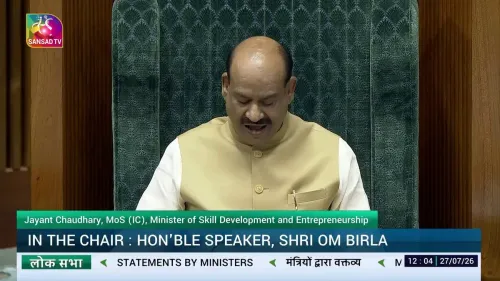
Millions of Indian students who have lost sleep over paper leaks and rigged examinations got a legislative answer on Wednesday, 29 July 2026, when the Lok Sabha passed the Public Examinations (Prevention of Unfair Means) Amendment Bill, 2026. BJP leader and former Union Minister Smriti Irani hailed the passage as a defining moment for examination integrity in India.
What the 2026 Amendment Adds to a Law Already in Motion
The bill is an amendment to the Public Examinations (Prevention of Unfair Means) Act, 2024, which was first introduced to Parliament to crack down on paper leaks and malpractices in national-level competitive examinations. That original legislation emerged from a crisis of confidence: irregularities in high-stakes tests had shaken the faith of students and families who invest years of preparation and significant financial resources into a single examination cycle.
The 2026 amendment tightens that framework further, with Irani stating it 'sends a clear message that those who resort to unfair means will face stringent legal consequences.' The specific provisions of the amendment have not yet been formally notified, but the legislative intent is unambiguous: deterrence through law.
The NEET-UG Shadow and Why This Bill Exists
The political urgency behind this legislation is inseparable from the controversy that engulfed competitive examinations beginning in 2024. Reported irregularities in NEET-UG and UGC-NET triggered nationwide protests and parliamentary debate, forcing the government to confront systemic vulnerabilities in how India conducts its most consequential public tests. Students, many from small towns and modest households, bore the cost of those failures — in lost time, lost money, and lost trust.
Irani framed the bill in precisely those human terms: 'The hard work of millions of students and the sacrifices made by their families must never be undermined by those who attempt to manipulate the system.' That framing — students and families as the aggrieved party — is deliberate and politically significant. It positions the legislation not as bureaucratic reform but as a social contract.
Next Stop: Rajya Sabha and the Enforcement Rules
The bill's passage in the Lok Sabha is the first of two parliamentary hurdles. It must clear the Rajya Sabha before it can be sent for Presidential assent and notified into law. The Ministry of Education will then be responsible for framing the enforcement rules that give the legislation its operational teeth — the mechanisms by which penalties are actually imposed on those found guilty of malpractice.
Until those rules are notified, the law's real-world impact remains a promise. What is already clear is the government's stated direction: centralised oversight, technological safeguards, and legislative deterrence as the three pillars of examination reform under the Modi government.
For the student sitting her next competitive examination, the question is no longer whether the law exists — it does. The question is whether the system built around it will hold.
Point of View
The BJP is attempting to reclaim the narrative on meritocracy and institutional trust. The real test will come not in Parliament but in enforcement: previous legislative frameworks on examination integrity have often faltered at the implementation stage. Rajya Sabha passage and the speed of rule notification will signal how serious the government is about converting political intent into operational reality.
NationPress
29 Jul 2026
Frequently Asked Questions
What is the Public Examinations (Prevention of Unfair Means) Amendment Bill, 2026?
It is a bill passed by the Lok Sabha on 29 July 2026 that amends the 2024 law on examination malpractice, strengthening legal penalties for cheating and paper leaks in public examinations across India.
Why was this anti-cheating bill introduced in India?
The legislation follows reported irregularities in high-stakes exams such as NEET-UG and UGC-NET in 2024, which triggered protests and raised serious concerns about the integrity of India's public examination system.
What did Smriti Irani say about the exam bill?
Smriti Irani called the bill's passage 'a significant step towards safeguarding the dreams and aspirations of millions of students,' and said it sends a clear message that those using unfair means will face stringent legal consequences.
Has the exam bill become law yet?
Not yet. The bill was passed in the Lok Sabha but must still clear the Rajya Sabha and receive Presidential assent before it becomes enforceable law. The Ministry of Education will then need to notify the enforcement rules.
What was the original Public Examinations (Prevention of Unfair Means) Act?
The original Act was passed in 2024 to address paper leaks and malpractices in national-level competitive examinations. The 2026 amendment builds on that framework with stronger deterrents.