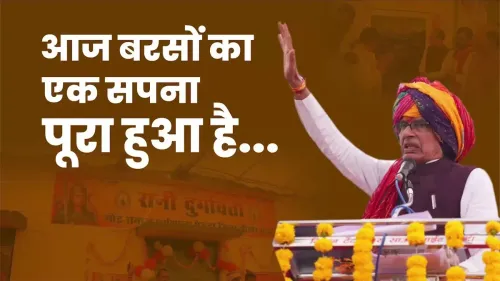
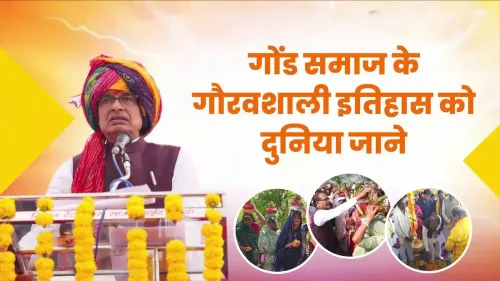
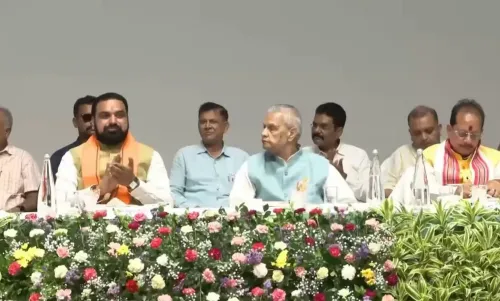
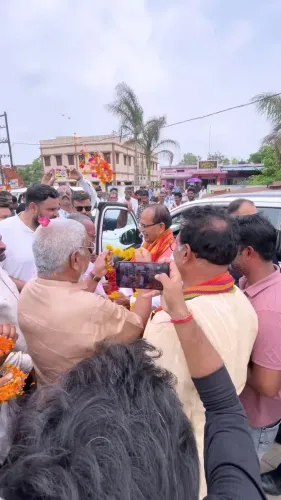
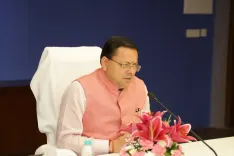
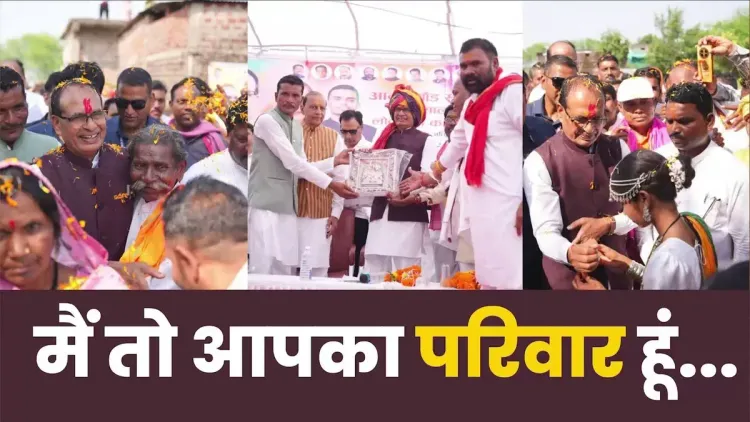
Shivraj Singh Chouhan honoured with pagdi by Gond community
Synopsis
Union Agriculture Minister Shivraj Singh Chouhan received a ceremonial pagdi from the Gond community on September 27, 2026, and publicly pledged to work for the community's dignity and pride, reinforcing his long-standing engagement with tribal groups.
Key Takeaways
Union Agriculture Minister Shivraj Singh Chouhan was honoured with a ceremonial pagdi (turban) by members of the Gond community on September 27, 2026 .
Chouhan declared himself a 'servant of his people' as minister and promised to uphold the respect and pride of the Gond community in return for the honour.
The Gond community is one of India's largest tribal groups, with a major presence in Madhya Pradesh , where Chouhan served as Chief Minister for four terms.
The pagdi ceremony is a culturally significant gesture of trust and recognition across central Indian tribal traditions.
Chouhan's current portfolio as Union Minister of Agriculture and Rural Development directly impacts tribal and rural communities, including Gond farmers.
A traditional turban — the pagdi — and a public promise. Union Agriculture Minister Shivraj Singh Chouhan received the ceremonial honour from members of the Gond community on Sunday, September 27, 2026, and responded with a pledge to protect and elevate the pride of one of central India's most significant tribal groups.
Posting in Hindi on X, Chouhan said: 'As a minister, I am a servant of my people. Today you have honoured me by tying a pagdi — in return, I will work to uphold your respect, your dignity, and the pride of the Gond community.'
What the pagdi means — and why it was offered
The pagdi ceremony is no ceremonial footnote. Across central India, conferring a turban on a leader is a profound expression of trust — a community's declaration that it sees itself in the person being honoured. For the Gond community, one of India's largest tribal groups with a strong presence across Madhya Pradesh, Chhattisgarh, and Telangana, such rituals carry deep social weight. Chouhan, who governed Madhya Pradesh for four terms and built enduring ties with tribal constituencies across the state, accepted the honour in the spirit it was given — not as a photo opportunity, but as an obligation. His response was direct: the honour creates a duty.Chouhan's history with Gond identity and tribal outreach
As a four-term Chief Minister of Madhya Pradesh — a state where Scheduled Tribes make up roughly 21 percent of the population — Chouhan developed a reputation for sustained engagement with tribal communities. That history follows him into his current role as Union Minister of Agriculture and Rural Development, portfolios that directly touch the livelihoods of millions of Gond farmers and rural households. Ministerial participation in community-level cultural ceremonies is a well-established pattern in Indian political life, particularly in tribal belts. What distinguishes moments like this one is the specificity of the commitment: Chouhan did not offer a generic salute — he named the community, named the honour, and named the obligation back. The Gond community will now be watching whether the words earn the weight of the pagdi that carried them.Point of View
These interactions extend a political identity forged across four CM terms into his new national role, keeping him visible and relevant within tribal constituencies even from Delhi. The moment is ceremonial in form but strategic in function: a minister reminding a community that the relationship did not end when the state office did. Whether the pledge translates into measurable policy action for Gond welfare — in agriculture, rural development, or cultural recognition — will determine its lasting value.
NationPress
27 Sept 2026
Frequently Asked Questions
What is a pagdi ceremony in Indian tribal culture?
A pagdi ceremony involves the conferring of a ceremonial turban on a respected individual as a mark of honour, trust, and recognition. In central Indian tribal communities, including the Gond community, the gesture carries deep social significance and implies a reciprocal duty of service and respect.
Who are the Gond people and where do they live?
The Gond are one of India's largest tribal communities, primarily concentrated in Madhya Pradesh, Chhattisgarh, Maharashtra, and Telangana. They have a distinct cultural heritage, language traditions, and social structure. In Madhya Pradesh, Scheduled Tribes including the Gond account for roughly 21 percent of the state's population.
What did Shivraj Singh Chouhan promise the Gond community?
Chouhan pledged to work for the honour, respect, and pride of the Gond community, framing his ministerial role as that of a servant of the people who honoured him.
What is Shivraj Singh Chouhan's current role in the central government?
Shivraj Singh Chouhan is the Union Minister of Agriculture and Farmers Welfare and Rural Development. He is a senior BJP leader and served as Chief Minister of Madhya Pradesh for four terms before joining the Union Cabinet.
Why does Shivraj Singh Chouhan have strong ties with tribal communities?
As Chief Minister of Madhya Pradesh for four terms, Chouhan governed a state with one of India's largest tribal populations. His sustained engagement with Gond and other tribal communities during that period built lasting political and social ties that he continues to draw on in his national ministerial role.