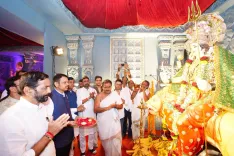
Shivraj Singh Chouhan Meets Women Farmers at Sanchi
Synopsis
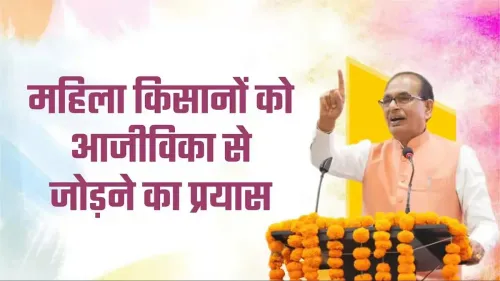
Union Agriculture Minister Shivraj Singh Chouhan engaged with women farmers at a programme in Sanchi, Madhya Pradesh, reiterating the government's commitment to making women cultivators empowered, prosperous, and self-reliant.
Key Takeaways
Shivraj Singh Chouhan held a dialogue with women farmers at a programme in Sanchi, Madhya Pradesh on 16 October 2026 .
He pledged to strengthen women's role in farming and make them 'empowered, prosperous, and self-reliant.' The Mahila Kisan Sashaktikaran Pariyojana (MKSP) , launched in 2011 , provides the existing policy framework for women farmer empowerment.
Chouhan's four terms as Chief Minister of Madhya Pradesh saw state-level women farmer programmes that fed into national schemes.
The Ministry's current mandate explicitly includes gender inclusion in agriculture, covering training, credit, and market access for women cultivators.
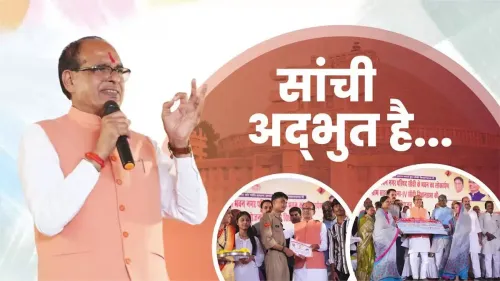
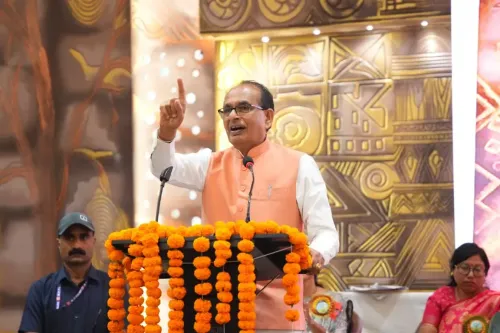
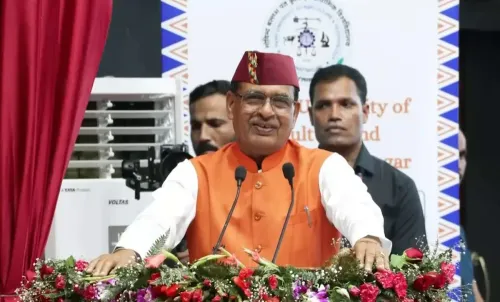
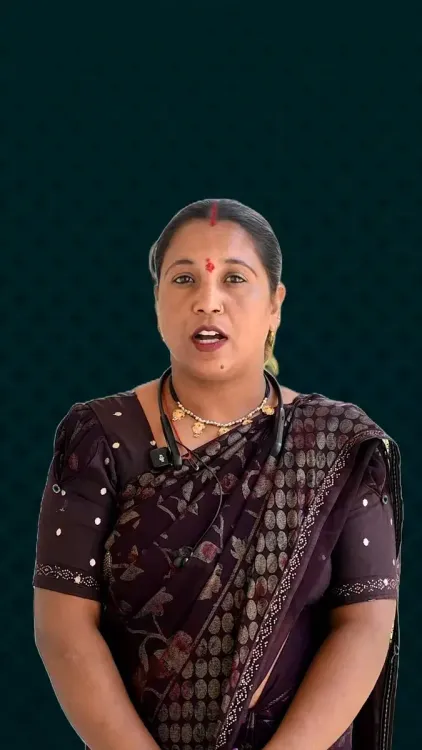
Across India's farms, women till, sow, and harvest — yet their voice in agricultural policy has long lagged behind their labour. Union Agriculture Minister Shivraj Singh Chouhan moved to close that gap on Friday, 16 October 2026, holding a direct dialogue with women farmers at a programme in Sanchi, Madhya Pradesh, reaffirming the government's pledge to make them 'empowered, prosperous, and self-reliant.'
Chouhan posted on X: 'Aaj Sanchi mein aayojit karyakram mein kisan bahano se samvad kiya.' ('Today I held a dialogue with farmer sisters at the programme organised in Sanchi.') He added that the government's resolve is to strengthen the role of women in farming and to bring happiness into their lives — a pointed articulation of intent rather than a routine ceremonial statement.
Sanchi as a Stage for Rural Women's Empowerment
Sanchi, the ancient town in Madhya Pradesh famed for its UNESCO-listed Buddhist Stupa complex, served as the backdrop for the outreach. The choice of venue — a symbolic cultural landmark deep in the heartland — underscores the government's framing of women farmer welfare as a mission with civilisational weight, not just a line item in a welfare budget.
Chouhan's history with this constituency runs deep. As Chief Minister of Madhya Pradesh for four terms, he championed targeted programmes for female farmers in the state that were later folded into national frameworks. That institutional memory now informs his tenure at the Union Ministry.
The Policy Architecture Behind the Pledge
The policy scaffolding for this kind of outreach traces back to the Mahila Kisan Sashaktikaran Pariyojana (MKSP), launched in 2011 under the National Rural Livelihoods Mission. The scheme was designed to strengthen women farmers through capacity building, access to sustainable farming practices, and market linkages — a framework that successive governments have expanded upon.
Central government initiatives have consistently pushed gender inclusion in agriculture, widening access to training, credit, and markets for women cultivators. The Ministry of Agriculture's current mandate explicitly carries this forward, and Chouhan's direct field engagement — sitting with kisan bahanen ('farmer sisters') rather than addressing them from a dais — signals a hands-on approach to implementation.
Women farmers remain a critical but underserved segment of India's agricultural workforce. When they gain better access to schemes, credit, and knowledge, productivity outcomes improve across entire village economies. That is the chain reaction this kind of outreach is designed to trigger.
The question now is whether field dialogues translate into measurable policy updates — expanded scheme coverage, faster credit disbursals, or dedicated training calendars for women cultivators. The pledge has been made, loudly and in public. The harvest will be counted in delivery.
Point of View
He signals a values-based electoral pitch ahead of any potential state or rural-constituency mobilisation. The reference to self-reliance ('aatmanirbhar') deliberately echoes the Prime Minister's broader economic vocabulary, tying local outreach to national branding. Watch for whether concrete scheme amendments or new women-focused agricultural guidelines follow these field interactions.
NationPress
16 Oct 2026
Frequently Asked Questions
What did Shivraj Singh Chouhan do at Sanchi on 16 October 2026?
He held a direct dialogue with women farmers at a programme organised in Sanchi, Madhya Pradesh, and reaffirmed the government's commitment to making women cultivators empowered, prosperous, and self-reliant.
What is the Mahila Kisan Sashaktikaran Pariyojana?
The Mahila Kisan Sashaktikaran Pariyojana (MKSP) is a scheme launched in 2011 under the National Rural Livelihoods Mission to strengthen women farmers through capacity building, sustainable farming practices, and improved market access.
What is Shivraj Singh Chouhan's role in agriculture?
Shivraj Singh Chouhan is India's Union Minister of Agriculture and Farmers Welfare and Rural Development. He is also a senior BJP leader and former four-term Chief Minister of Madhya Pradesh.
Why is Sanchi significant for this event?
Sanchi is a town in Madhya Pradesh known for its UNESCO-listed ancient Buddhist Stupa complex. It served as the venue for Chouhan's women farmer dialogue, lending cultural symbolism to the rural outreach event.
What is the government's stated goal for women farmers?
According to Chouhan's post, the government's resolve is for women to play a stronger role in agriculture, become empowered, prosperous, and self-reliant, and see greater happiness in their lives.