Shivraj Singh Chouhan pledges financial, tech support for women farmers
Synopsis
Union Agriculture Minister Shivraj Singh Chouhan on World Food Day pledged to ensure women farmers receive maximum financial services, technical assistance and livelihood opportunities — signalling a potential push to expand existing schemes like the Mahila Kisan Sashaktikaran Pariyojana.
Key Takeaways
Shivraj Singh Chouhan pledged on 16 October 2026 to expand financial services, technical support and livelihood access for women farmers.
The post was made on World Food Day , framing India's commitment within a global food-security conversation.
The Mahila Kisan Sashaktikaran Pariyojana (MKSP) , launched in 2011 under DAY-NRLM, already provides a policy framework for supporting women cultivators.
Women form a major share of India's agricultural workforce but face documented gaps in credit, extension services and land rights.
No specific scheme, timeline or budget figure was announced — concrete details are expected in forthcoming ministry guidelines or the Union Budget .
Chouhan holds both the Agriculture and Rural Development portfolios, giving him broad administrative reach to align farm-support and financial-inclusion pipelines.
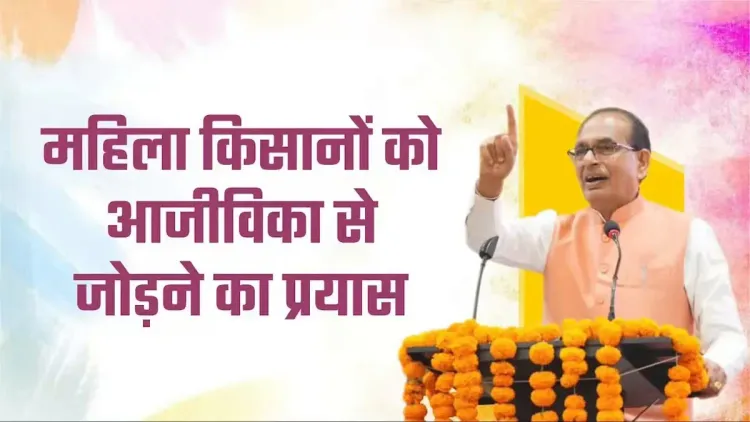
Millions of women who till India's fields — and often go uncounted in official records — got a direct commitment on Friday, 16 October 2026, when Union Agriculture Minister Shivraj Singh Chouhan vowed to ensure they receive maximum access to financial services, technical assistance and livelihood opportunities.
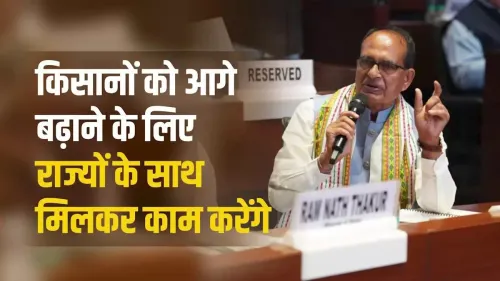
Posting in Hindi on World Food Day, Chouhan wrote: 'Mahila kisanon ko vitteeya sevaon, takniki sahayata aur aajivika ke adhiktam avsar milen, iske liye hum kaam karenge' — 'We will work to ensure that women farmers get financial services, technical assistance and maximum livelihood opportunities.'
The gap that the pledge is responding to
The statement lands against a well-documented backdrop. Women constitute a significant share of India's agricultural workforce — working as cultivators, farm labourers and household-level food producers — yet consistently face steeper barriers to institutional credit, government extension services and formal land titles than their male counterparts. Policy documents and successive budget statements have flagged this structural gap for years without fully closing it.
The architecture for addressing it already exists on paper. The Mahila Kisan Sashaktikaran Pariyojana (MKSP), launched in 2011 as a sub-component of the Deendayal Antyodaya Yojana – National Rural Livelihoods Mission (DAY-NRLM), was specifically designed to strengthen women farmers' access to agricultural inputs, credit and markets through capacity-building and resource linkages. The question has never been whether a scheme exists — it is how consistently it reaches the last woman in the last village.
Chouhan's track record and what this signals
Chouhan, a four-term former Chief Minister of Madhya Pradesh, built much of his political identity around targeted welfare for farmers and women — most visibly through schemes like Ladli Laxmi at the state level. As Union Agriculture Minister, he now controls both the agriculture and rural development portfolios, giving him rare administrative leverage to stitch financial inclusion and farm-support pipelines together at the national scale.
The timing — World Food Day — adds deliberate framing: women's role in food security is a global conversation, and the minister is planting India's commitment on that stage. The post carries no specific scheme name or budget figure, which means the concrete design work still lies ahead. Watch the next Union Budget and agriculture ministry guidelines for any expanded MKSP components or new financial-linkage mandates for women cultivators.
If the commitment translates into policy, the women who grow India's food may finally get the same financial scaffolding that the rest of the economy is built on. That would be overdue — and transformative.
Point of View
And holding both the Agriculture and Rural Development portfolios gives Chouhan the institutional leverage to actually close that gap rather than merely announce it. The absence of a concrete number or scheme name, however, means the pledge sits closer to direction-setting than to a policy commitment — the real test will come at Budget time. For the BJP's rural outreach, visibly championing women cultivators also carries clear electoral logic ahead of state-cycle elections.
NationPress
16 Oct 2026
Frequently Asked Questions
What did Shivraj Singh Chouhan say about women farmers on 16 October 2026?
He pledged that the government would work to ensure women farmers receive maximum access to financial services, technical assistance and livelihood opportunities, posting the commitment on World Food Day.
What is the Mahila Kisan Sashaktikaran Pariyojana?
The Mahila Kisan Sashaktikaran Pariyojana (MKSP) is a sub-component of the Deendayal Antyodaya Yojana – National Rural Livelihoods Mission (DAY-NRLM), launched in 2011 to strengthen women farmers' access to inputs, credit and markets through capacity-building.
Why is financial support for women farmers important in India?
Women form a large share of India's agricultural workforce but consistently face greater barriers to institutional credit, extension services and land rights than male farmers — a gap that limits productivity and income at the household level.
What portfolios does Shivraj Singh Chouhan hold as a Union Minister?
Chouhan serves as Union Minister of Agriculture and Farmers Welfare and Rural Development, giving him oversight of both farm-support programmes and rural livelihood missions.
When will specific schemes or funds for women farmers be announced?
No specific scheme name, timeline or budget figure was mentioned in the post; concrete implementation details are expected in the next Union Budget or forthcoming agriculture ministry guidelines.