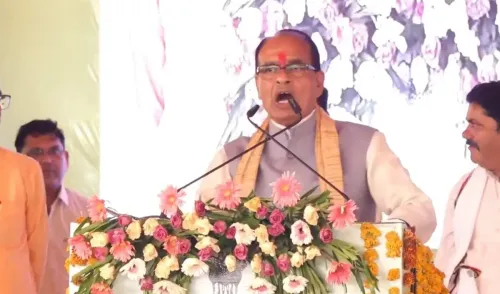
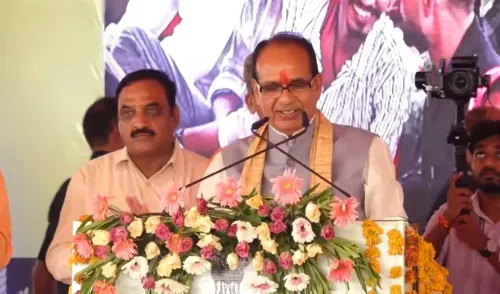
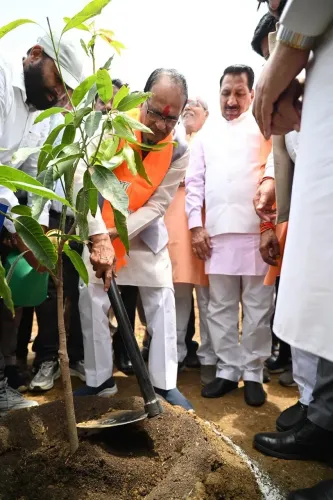
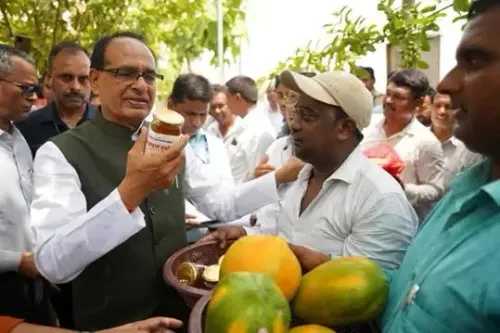
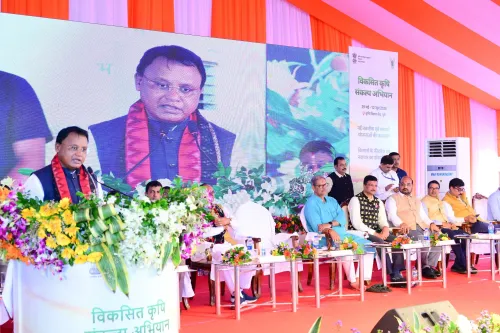
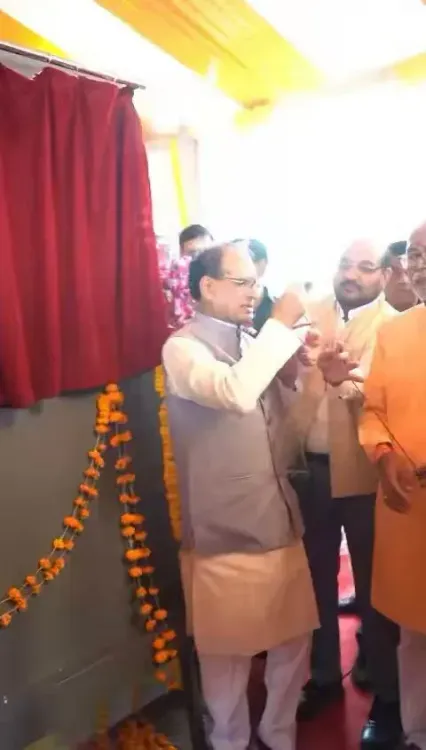
Shivraj lays foundation of Krishi Vigyan Kendra in Vidisha
Synopsis
Union Agriculture Minister Shivraj Singh Chouhan laid the foundation of a new Krishi Vigyan Kendra in Vidisha, Madhya Pradesh, on 14 June 2026. The centre will offer AI-based advisory, drip irrigation, soil testing, food processing, and beekeeping facilities to boost farmer incomes and rural youth employment.
Key Takeaways
Union Agriculture Minister Shivraj Singh Chouhan announced the foundation-laying of a Krishi Vigyan Kendra in Vidisha, Madhya Pradesh on 14 June 2026 .
The new KVK will offer soil and plant testing, modern farming training, expert advisory, a machine bank, quality seeds, and fruit-vegetable nurseries under one roof.
Facilities will include AI-based agricultural advisory , drip irrigation , food processing infrastructure, and beekeeping support.
The centre aims to raise farmer incomes, make rural youth self-reliant, and connect agriculture with innovation in the Vidisha region.
India's KVK network, established since 1974 under ICAR , now covers more than 700 centres nationwide and forms the backbone of agricultural extension services.
The drip irrigation component aligns with the Pradhan Mantri Krishi Sinchayee Yojana , launched in 2015 to expand micro-irrigation across India.
Union Agriculture Minister Shivraj Singh Chouhan on Sunday, 14 June 2026, announced the foundation-laying of a new Krishi Vigyan Kendra (KVK) in Vidisha, Madhya Pradesh, describing it as a milestone that will open fresh avenues for farmers in the region. The minister shared the development on X, expressing that his heart was filled with joy at the event on the 'sacred soil of Vidisha' (Vidisha ki pavan dharti par).
Context
In his post, Chouhan outlined that the new centre will offer farmers scientific soil and plant testing, modern farming training, information on new technologies, and expert advisory services — all under one roof. He specifically highlighted facilities such as drip irrigation, AI-based agricultural advisory, a machine bank, quality seeds, fruit and vegetable nurseries, food processing infrastructure, and beekeeping as services that will make farming more profitable.
Translating his words directly: 'Now farmers will get scientific testing of soil and plants, training in modern farming, information on new technologies, and expert advice at one place.' The minister expressed confidence that the centre would 'write a new chapter of skill and prosperity with new thinking, new knowledge, and a new identity.'
Policy Backdrop
The Krishi Vigyan Kendra network was first established in 1974 at Puducherry under the Indian Council of Agricultural Research (ICAR) with the mandate of delivering location-specific technology assessment, training, and advisory services to farmers. The network has since expanded to more than 700 centres nationwide, serving as the primary bridge between agricultural research institutions and farmers at the field level.
The emphasis on drip irrigation at the new Vidisha KVK aligns with the Pradhan Mantri Krishi Sinchayee Yojana, launched in 2015, which specifically targets expansion of micro-irrigation systems including drip and sprinkler technologies across states. The integration of AI-based advisory tools reflects a broader national push to digitise agricultural extension services and reduce dependence on input-intensive farming.
Madhya Pradesh, with its large agrarian population and a farming economy centred on wheat, soybean, and pulses, has historically been a testing ground for agricultural modernisation initiatives. Vidisha district in particular has a predominantly rural economy, making access to consolidated scientific and technical support a significant development for local farmers.
Stakeholders and Impact
The primary beneficiaries of the new KVK will be the farming communities of Vidisha and surrounding areas, who currently lack consolidated access to soil testing, agri-tech training, and market-linked value-addition infrastructure. Chouhan specifically mentioned that the centre would help 'increase the income of Vidisha's farmers, make youth self-reliant, and connect agriculture with innovation.'
Rural youth stand to benefit from the machine bank and food processing facilities, which can generate non-farm employment and support agri-entrepreneurship. The beekeeping and nursery components add a diversification dimension that could reduce farmers' vulnerability to crop price volatility.
What's Next
Attention will now turn to the operationalisation timeline, staffing, and budgetary allocations for the Vidisha KVK, as the gap between foundation-laying and functional service delivery has historically been a challenge for infrastructure projects in the agricultural extension space. Any state-level budgetary commitments in the next Madhya Pradesh agriculture budget will be closely watched as an indicator of how quickly the centre becomes operational. If the Vidisha KVK is operationalised with its full suite of AI and precision-irrigation tools, it could serve as a replicable model for similar centres across the state.
Point of View
As Union Agriculture Minister, to a district he represented in Parliament and governed as Chief Minister, reinforcing his political identity as a farmer-centric leader. The bundling of AI advisory tools and drip irrigation within a single KVK signals the Centre's intent to position these centres as one-stop modernisation hubs rather than just training facilities. This move fits a broader pattern of the BJP government expanding the KVK network while layering in digital and precision-agriculture components to demonstrate policy evolution. The real test will be whether the Vidisha centre is staffed and operationalised swiftly — a gap that has undermined similar announcements in the past.
NationPress
13 Sept 2026
Frequently Asked Questions
What is a Krishi Vigyan Kendra and what does it do?
A Krishi Vigyan Kendra (KVK) is a farm science centre run under the Indian Council of Agricultural Research (ICAR) that provides farmers with location-specific technology assessment, training, soil testing, and expert advisory services. India has more than 700 such centres nationwide.
Where is the new Krishi Vigyan Kendra being set up?
The new Krishi Vigyan Kendra is being established in Vidisha district of Madhya Pradesh, following the foundation-laying ceremony attended by Union Agriculture Minister Shivraj Singh Chouhan on 14 June 2026.
What facilities will the Vidisha KVK offer to farmers?
The Vidisha KVK will offer soil and plant testing, modern farming training, AI-based agricultural advisory, drip irrigation support, a machine bank, quality seeds, fruit and vegetable nurseries, food processing infrastructure, and beekeeping facilities.
How does the new KVK benefit rural youth in Vidisha?
The centre is designed to make rural youth self-reliant by providing skill development, agri-entrepreneurship support through the machine bank and food processing units, and training in modern and technology-driven farming practices.
What is Pradhan Mantri Krishi Sinchayee Yojana and how does it relate to this KVK?
Pradhan Mantri Krishi Sinchayee Yojana, launched in 2015, aims to expand micro-irrigation including drip and sprinkler systems across India. The drip irrigation facility planned at the Vidisha KVK is aligned with this national scheme's goals.