Shivraj Singh Chouhan observes Tulsi Vivah, Dev Uthani Ekadashi
Synopsis
Union Agriculture Minister Shivraj Singh Chouhan observed Dev Uthani Ekadashi and Tulsi Vivah on 20 November 2026, performing the traditional Tulsi-Shaligram wedding with his wife and invoking blessings for the peace and prosperity of all Indians, calling Sanatan culture a vessel of public welfare.
Key Takeaways
Union Agriculture Minister Shivraj Singh Chouhan observed Dev Uthani Ekadashi and Tulsi Vivah on 20 November 2026 .
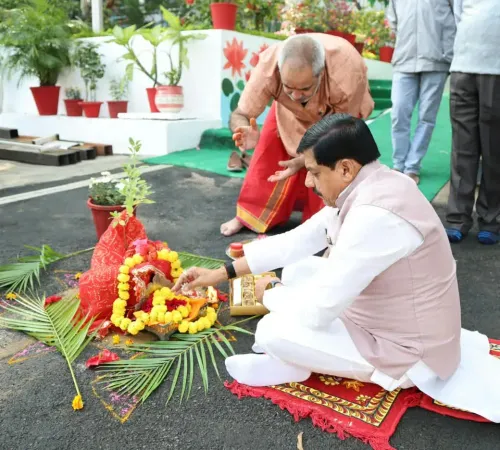
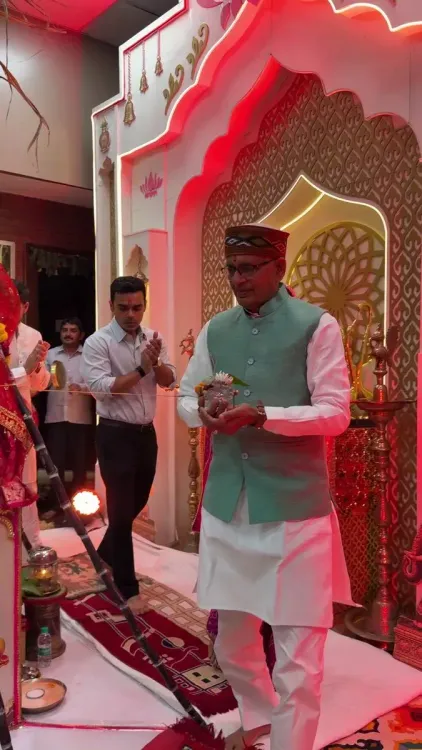
He performed the traditional ceremonial wedding of Mata Tulsi and Bhagwan Shaligram alongside his wife with full ritual rites.
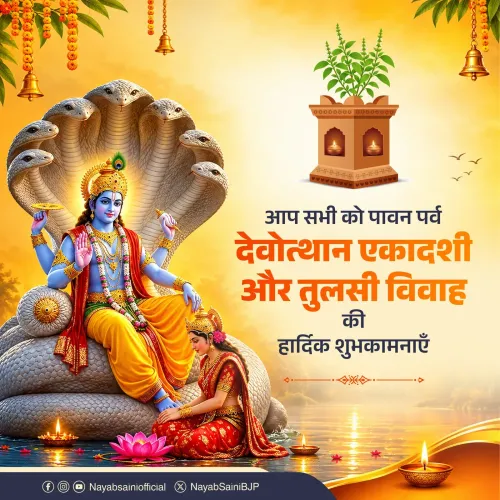
Dev Uthani Ekadashi marks the awakening of Lord Vishnu from four months of Yoganidra (yogic sleep), ending the Chaturmas period.
The end of Chaturmas traditionally signals the resumption of auspicious ceremonies including weddings across Hindu households.
Chouhan invoked the philosophy that Sanatan culture finds the divine in nature and embeds public welfare in every act of worship.
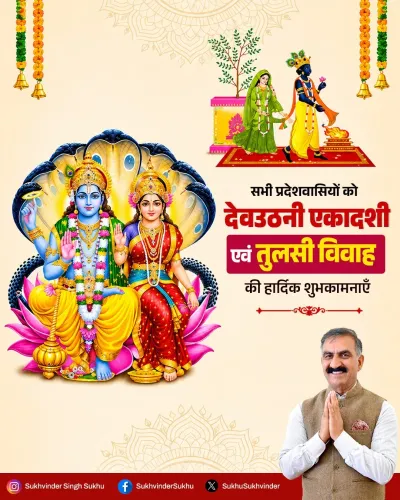
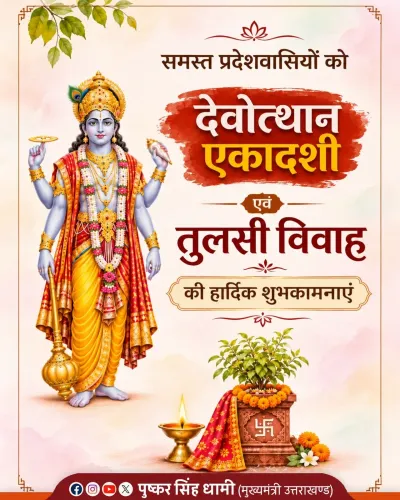
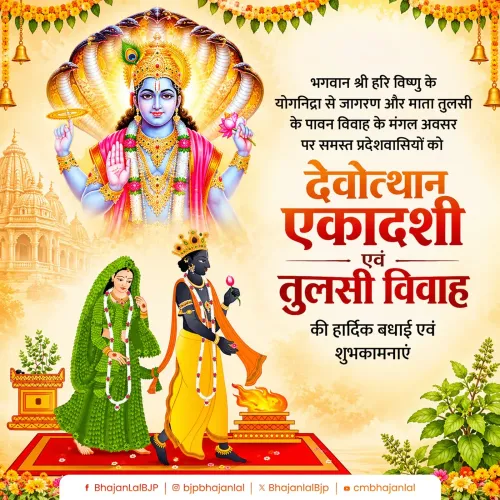
On the auspicious occasion of Dev Uthani Ekadashi and Tulsi Vivah, Union Agriculture Minister Shivraj Singh Chouhan performed the traditional ceremonial wedding of Mata Tulsi and Bhagwan Shaligram alongside his wife on Friday, 20 November 2026, offering prayers for the happiness, peace, and prosperity of citizens across India.
Sharing his reflections in Hindi, the Minister wrote: 'देवउठनी एकादशी एवं तुलसी विवाह हमारी समृद्ध सनातन परंपरा, आस्था और आध्यात्मिक चेतना का अद्भुत पर्व है' — 'Dev Uthani Ekadashi and Tulsi Vivah is a wonderful festival of our rich Sanatan tradition, faith, and spiritual consciousness.' He noted that according to ancient belief, Lord Shri Hari Vishnu awakens today from four months of yogic sleep, marking the resumption of all auspicious and celebratory rites.
What Dev Uthani Ekadashi marks — and why it matters
Dev Uthani Ekadashi falls on the eleventh day of the bright fortnight of the Hindu month of Kartik and signals the end of Chaturmas — the four-month period during which Lord Vishnu is believed to rest in a state of yogic sleep called Yoganidra. Weddings, housewarming ceremonies, and other auspicious events are traditionally paused during Chaturmas and resume only after this day. For millions of Hindu families across India, Dev Uthani Ekadashi is effectively the green light for the wedding season.
The Tulsi Vivah ritual and its significance
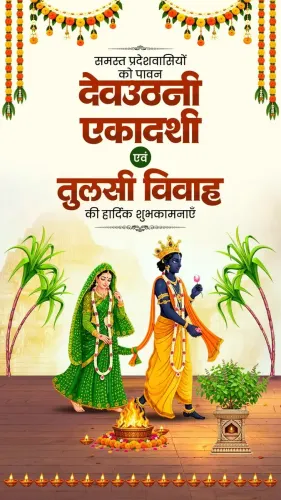
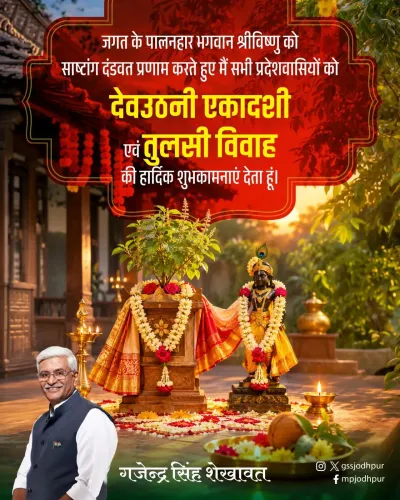
Performed on the same evening, Tulsi Vivah is the symbolic marriage of the sacred Tulsi plant — revered as a manifestation of the goddess Vrinda — with the Shaligram stone, which represents Lord Vishnu. The ceremony is conducted with full wedding rites: the Tulsi plant is decorated as a bride, the Shaligram is placed as the groom, and mantras are chanted as family members would for an actual wedding. The ritual is considered deeply meritorious and is observed in homes, temples, and public spaces throughout India.
Chouhan captured the philosophical heart of the occasion in his post: 'हमारी सनातन संस्कृति अद्भुत है। यहाँ प्रकृति में परमात्मा का दर्शन है, परंपराओं में संस्कार हैं और प्रत्येक पूजा में लोककल्याण का भाव समाहित है' — 'Our Sanatan culture is extraordinary. Here, the divine is seen in nature, values are embedded in traditions, and every act of worship carries within it the spirit of public welfare.' He concluded with the salutations: 'जय श्रीहरि! जय माँ तुलसी' — 'Hail Lord Shri Hari! Hail Mother Tulsi.'
For a politician who built a reputation over four terms as Chief Minister of Madhya Pradesh on deep cultural connect with rural and devout constituencies, the personal observance — performed saptnik, with his wife — reinforces an identity that travels well beyond the ministerial portfolio.
Point of View
Whose four-term chief ministership in Madhya Pradesh was built on grassroots religious and rural connect, this is as much a part of his political identity as any agricultural scheme. The philosophical framing — equating Sanatan ritual with 'public welfare' — is deliberate: it positions cultural practice not as private piety but as a form of governance ethos, blurring the line between spiritual duty and political messaging ahead of any future electoral cycle.
NationPress
20 Nov 2026
Frequently Asked Questions
What is Dev Uthani Ekadashi?
Dev Uthani Ekadashi is a Hindu festival falling on the eleventh day of the bright fortnight of the month of Kartik, marking the awakening of Lord Vishnu from four months of yogic sleep known as Yoganidra. It signals the end of the Chaturmas period and the resumption of auspicious ceremonies like weddings.
What is Tulsi Vivah and how is it performed?
Tulsi Vivah is the symbolic ceremonial wedding of the sacred Tulsi plant — revered as a form of the goddess Vrinda — with the Shaligram stone representing Lord Vishnu. It is performed with full wedding rituals including decorating the Tulsi plant as a bride, placing the Shaligram as the groom, and reciting sacred mantras.
Why do weddings resume after Dev Uthani Ekadashi?
During the four-month Chaturmas period, auspicious events including weddings are traditionally paused because Lord Vishnu is believed to be in Yoganidra. Once Dev Uthani Ekadashi marks his awakening, all such celebratory rites are considered auspicious and resume.
What did Shivraj Singh Chouhan do on Dev Uthani Ekadashi 2026?
Union Agriculture Minister Shivraj Singh Chouhan performed the traditional Tulsi Vivah ceremony — the symbolic wedding of Mata Tulsi and Bhagwan Shaligram — alongside his wife on 20 November 2026, praying for the happiness, peace, and prosperity of citizens across India.
What is the spiritual meaning of Tulsi in Hindu tradition?
In Hindu tradition, the Tulsi plant is considered sacred and is revered as a manifestation of the goddess Vrinda, closely associated with Lord Vishnu. It is believed to bring divine blessings, purify the home, and is central to daily worship and festivals like Tulsi Vivah.