Shivraj Singh Chouhan Pays Tribute to Savarkar on Jayanti
Synopsis
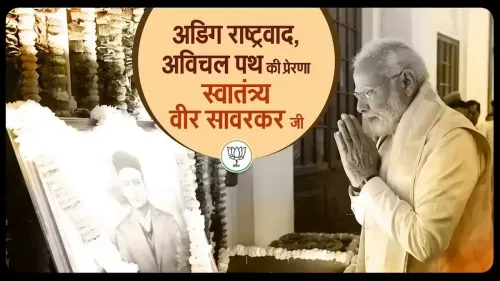
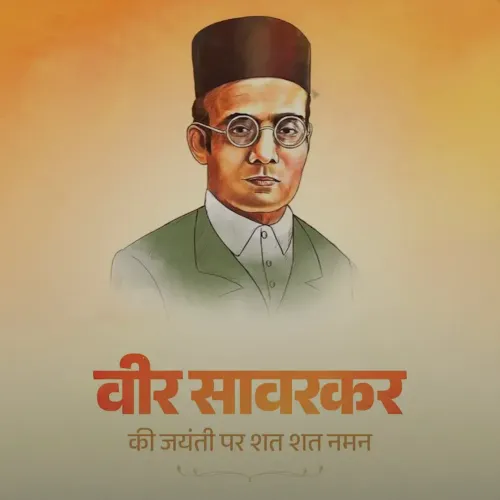
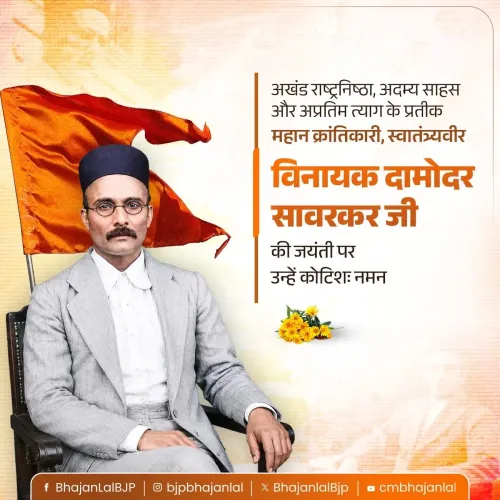
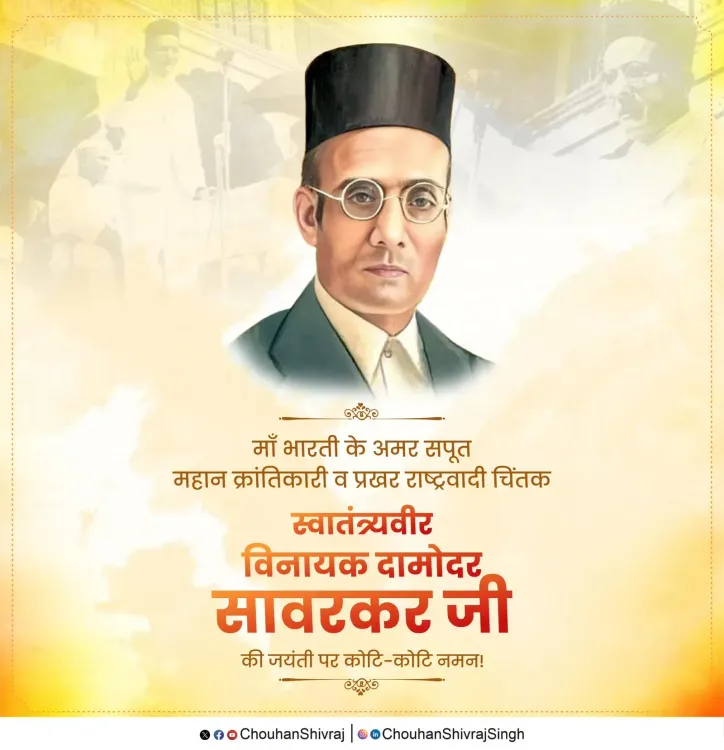
Union Agriculture Minister Shivraj Singh Chouhan on 28 May 2026 paid tribute to Vinayak Damodar Savarkar on his birth anniversary, describing him as an immortal nationalist whose resolve no British torture could break. The post continues a longstanding BJP tradition of honouring Savarkar on his Jayanti.
Key Takeaways
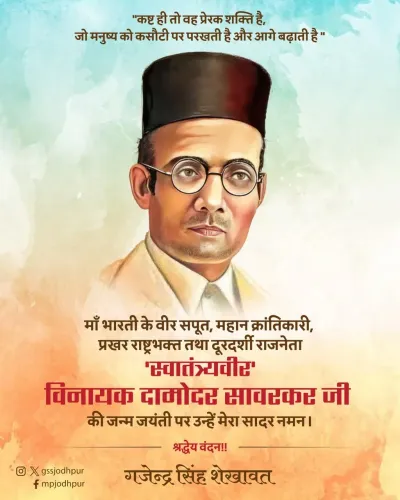
Shivraj Singh Chouhan posted a Hindi tribute to Vinayak Damodar Savarkar on 28 May 2026 , Savarkar Jayanti.
Chouhan hailed Savarkar as an 'immortal son of Mother India' and a 'fearless nationalist thinker' using the title 'Swatantryaveer.' The post specifically referenced Savarkar's endurance of Kala Pani — imprisonment in the Cellular Jail, Andaman Islands — as proof of his unbreakable resolve.
In 2003 , the NDA government unveiled a portrait of Savarkar in the Central Hall of Parliament , a landmark in his formal national recognition.
Annual tributes to Savarkar on 28 May by senior BJP leaders form part of a deliberate pattern of foregrounding revolutionary nationalist figures in official discourse.
Union Agriculture Minister Shivraj Singh Chouhan on Thursday, 28 May 2026, paid tribute to Vinayak Damodar Savarkar on the revolutionary's birth anniversary, hailing him as an immortal son of Mother India and a fearless nationalist thinker whose resolve no colonial torture could break.
Context
Chouhan's post, written in Hindi, opens with the salutation 'Maa Bharati ke amar sapoot' (immortal son of Mother India) and addresses Savarkar by his honorary title 'Swatantryaveer' — Veer of Freedom. He writes that 'Angrezon ki asankhya yataanaein va Kala Pani ki saza bhi desh ko swatantra karane ke unke sankalp ko nahin diga pai' — meaning: 'Countless British tortures and the sentence of Kala Pani could not shake his resolve to free the nation.' The minister closes with a repeated salutation to Savarkar as a 'true servant of the nation.'
Savarkar Jayanti falls on 28 May each year, marking the birth in 1883 of Vinayak Damodar Savarkar in Bhagur, Nashik district, Maharashtra. Senior leaders of the Bharatiya Janata Party (BJP) routinely issue tributes on this date, a practice that has become a fixture in the party's annual commemorative calendar.
Policy Backdrop
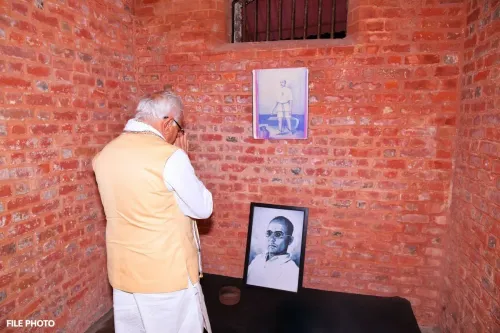
Savarkar was sentenced to two concurrent life terms of imprisonment by the British colonial administration and was held in the Cellular Jail — popularly called Kala Pani — in the Andaman Islands, where political prisoners were subjected to hard labour and isolation. He is widely regarded within the BJP and allied organisations as a symbol of uncompromising nationalist resistance.
In 2003, the then NDA government unveiled a portrait of Savarkar in the Central Hall of Parliament, marking a formal step towards national recognition of his role in the freedom struggle. Since then, tributes by Union ministers and BJP chief ministers on 28 May have become a recurring feature of official political discourse, reflecting the party's effort to foreground particular strands of the independence movement in public memory.
Stakeholders and Impact
Chouhan, a four-term former Chief Minister of Madhya Pradesh and one of the BJP's most prominent mass leaders, carries significant weight when he invokes figures central to the Hindutva ideological tradition. His tribute is likely to resonate with BJP supporters and nationalist youth organisations that look to Savarkar as an inspiration.
The post also underscores the broader commemorative ecosystem around Savarkar: tributes from state governments, references in school curricula in BJP-ruled states, and periodic parliamentary mentions all form part of an ongoing effort to embed his legacy in mainstream national discourse.
What's Next
Similar tributes from other Union ministers, BJP chief ministers, and allied organisations are expected to follow through the day, as is customary on Savarkar Jayanti. Observers will watch whether any of these statements are accompanied by fresh policy announcements — such as new commemorative schemes, educational initiatives, or infrastructure projects — bearing Savarkar's name. Parliamentary sessions and state education programme reviews remain venues where his legacy may be formally invoked in the months ahead.
Point of View
A framing the party has cultivated since at least the 2003 portrait installation in Parliament. For Chouhan specifically, such posts serve a dual function — signalling ideological solidarity with the Hindutva base while projecting statesmanlike reverence for historical figures. The broader arc points toward a continuing effort to institutionalise Savarkar's legacy through education, nomenclature, and parliamentary discourse.
NationPress
19 Oct 2026
Frequently Asked Questions
Why is 28 May celebrated as Savarkar Jayanti?
28 May is observed as Savarkar Jayanti because it marks the birth of Vinayak Damodar Savarkar in 1883 in Bhagur, Nashik, Maharashtra . Senior BJP leaders and allied organisations issue tributes and hold events across India on this date each year.
What was Kala Pani and why was Savarkar sent there?
Kala Pani refers to the Cellular Jail in the Andaman Islands , a British colonial prison notorious for its harsh conditions. Savarkar was sentenced to two concurrent life terms and held there for his role in anti-colonial activities, enduring hard labour and solitary confinement.
What did Shivraj Singh Chouhan say about Savarkar on his Jayanti?
Shivraj Singh Chouhan described Savarkar as an 'immortal son of Mother India' and a 'fearless nationalist thinker,' saying that countless British tortures and the sentence of Kala Pani could not shake his resolve to free the nation.
When was Savarkar's portrait installed in Parliament?
The portrait of Vinayak Damodar Savarkar was unveiled in the Central Hall of Parliament in 2003 by the then NDA government , marking formal national recognition of his contribution to the freedom struggle.
Why do BJP leaders regularly pay tribute to Savarkar?
BJP leaders regard Savarkar as a central figure in the Hindutva ideological tradition and as a symbol of uncompromising resistance to British colonial rule. Annual tributes on 28 May are part of a broader effort to foreground his legacy in mainstream national and political discourse.