Shivraj Singh Chouhan Pushes States on Timely Crop Procurement
Synopsis
Union Agriculture Minister Shivraj Singh Chouhan has directed state governments to streamline crop procurement operations and ensure farmers receive MSP payments promptly, warning that prolonged procurement cycles hurt rural liquidity.
Key Takeaways
Union Agriculture Minister Shivraj Singh Chouhan on 29 September 2026 called on states to fix delayed procurement systems.
He specifically flagged that procurement often runs for an excessively long time, delaying cash flow to farmers.
Crop procurement at Minimum Support Price (MSP) covers 23 crops and is anchored by the Food Corporation of India , established in 1965 .
Actual purchase operations are largely a state responsibility, creating a Centre-state coordination challenge.
The directive is timed ahead of the rabi sowing season , when planning for wheat procurement typically begins.
Chouhan's experience as a four-term Chief Minister of Madhya Pradesh gives weight to his administrative push on state agencies.
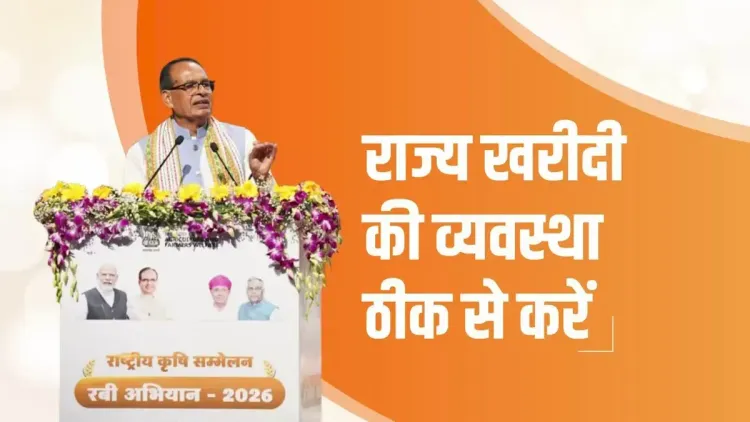
Farmers wait. Sometimes for weeks, sometimes for months — and when the money finally comes, the season has already moved on. Union Agriculture Minister Shivraj Singh Chouhan cut to the heart of that problem on Tuesday, 29 September 2026, directing state governments to build procurement systems that are not just functional, but fast.
Posting on X, the Minister said: 'Kai baar kharidi lambe samay tak chalti hai' — 'Procurement often stretches on for a long time. States must create arrangements where purchases happen on schedule and farmers receive their money quickly.'
The gap between harvest and payment
The concern Chouhan flags is structural. India's agricultural procurement architecture was built in the 1960s — the Food Corporation of India (FCI), established in 1965, anchors central procurement of foodgrains at the Minimum Support Price (MSP), the government-fixed price floor that covers 23 crops. But the actual business of buying grain from the farmer's doorstep is largely a state responsibility.
That Centre-state split has always created friction. The Centre fixes MSP; the state agency runs the mandi. When state logistics lag — insufficient gunny bags, slow quality-testing queues, delayed data reconciliation — the farmer is the one standing in line. And delayed payment hits hardest in the rural economy, where household liquidity tracks closely with crop-sale cycles.
Why Chouhan's directive lands now
The call comes ahead of the rabi sowing season, when wheat farmers across north and central India will begin preparing fields. Procurement planning for that crop typically kicks off months before the April-May harvest window. If state agencies set up faster payment rails now — shorter verification timelines, tighter direct-benefit-transfer pipelines — the benefit lands precisely when it is needed most.
Chouhan, a four-term former Chief Minister of Madhya Pradesh, speaks from both sides of this equation: he governed a major wheat-and-soybean producing state for over a decade before taking charge nationally. That ground-level experience gives his administrative nudge unusual credibility among state-level agriculture departments.
Successive central governments have stressed timely payment as a pillar of rural income stability, but the gap between policy intent and mandi reality has persisted. Chouhan's post signals that the pressure on states to close that gap is not easing — it is intensifying.
The real test will come at the next Agricultural Ministers' conference and in state-level procurement notifications ahead of the season. Words at the top of the chain matter; systems at the bottom of the mandi determine the farmer's reality.
Point of View
And accountability for delays falls in the gap between them. By publicly pressing states on both procurement speed and payment timelines in a single message, the Minister is signalling that the Union government will increasingly frame rural distress as an administrative failure at the state level, not a policy gap at the Centre. For BJP-governed states, the message is a quiet performance benchmark; for Opposition-ruled states, it is potential political ammunition if harvests end in payment backlogs. The real indicator to watch is whether any state publishes revised procurement standard operating procedures before the next kharif or rabi season.
NationPress
29 Sept 2026
Frequently Asked Questions
What did Shivraj Singh Chouhan say about crop procurement?
He directed state governments to create systems that ensure procurement happens on time and farmers receive their MSP payments quickly, noting that procurement often drags on for too long.
Why are MSP payments to farmers sometimes delayed in India?
Procurement operates through a Centre-state split — the Centre fixes the Minimum Support Price but states run the actual purchase operations. Logistical bottlenecks at state agencies, such as slow quality checks or data reconciliation, frequently delay final payments to farmers.
What is the Food Corporation of India and its role in procurement?
The Food Corporation of India (FCI), established in 1965, is the central agency responsible for procuring, storing and distributing foodgrains at MSP. It works alongside state procurement agencies to ensure farmers receive the government-guaranteed price.
How many crops are covered under MSP in India?
The government announces Minimum Support Price for 23 crops, covering major cereals, pulses and oilseeds, to provide a price floor and remunerative returns for farmers.
Why is timely procurement payment important for rural India?
Farmer household liquidity is closely tied to crop-sale cycles. Delayed payments reduce cash flow during critical periods for farm input purchases, loan repayments and household expenses, directly impacting rural economic stability.