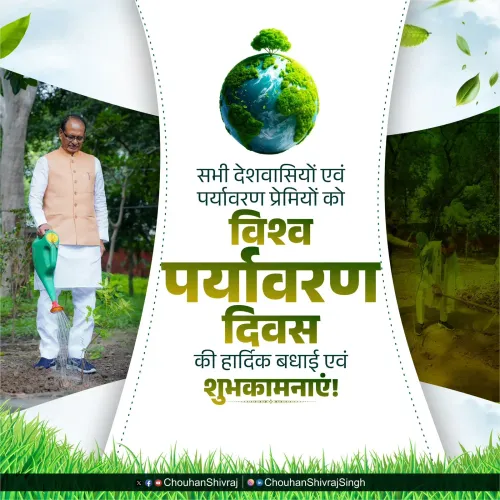
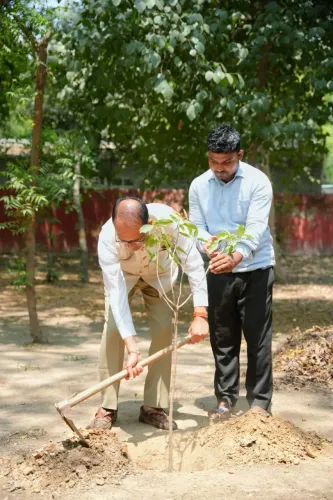
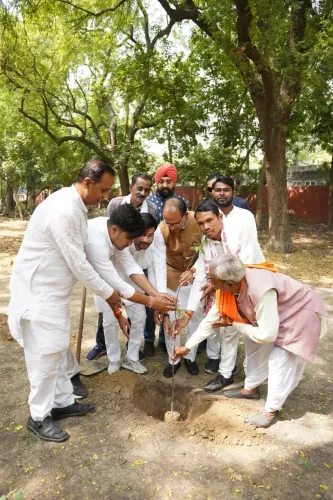
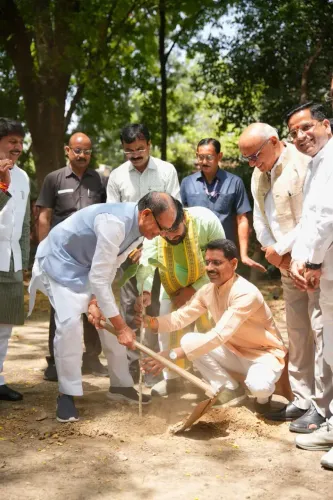
Shivraj Singh Chouhan Calls for Nature Conservation Pledges on World Nature Conservation Day
Synopsis
Union Agriculture Minister Shivraj Singh Chouhan marked World Nature Conservation Day on 28 July by calling on citizens to take individual pledges — from planting trees to keeping rivers clean — arguing that saving the Earth is the only way to secure life for all living beings and future generations.
Key Takeaways
Union Agriculture Minister Shivraj Singh Chouhan posted a conservation appeal on World Nature Conservation Day, 28 July .
He listed five specific pledges: planting trees, avoiding single-use plastic, saving water, saving electricity, and keeping rivers clean.
Chouhan stated that only if the Earth is saved will humans and all living creatures survive — framing ecology as the foundation of all life.
The message aligns with national programmes including the Swachh Bharat Mission and the Namami Gange river rejuvenation initiative, both launched in 2014 .
India's net-zero emissions target by 2070 , pledged at COP26 , forms the broader policy backdrop for such ministerial conservation messaging.
Future generations and farmers — core to Chouhan's portfolio — are the implicit primary stakeholders of sustained environmental protection.
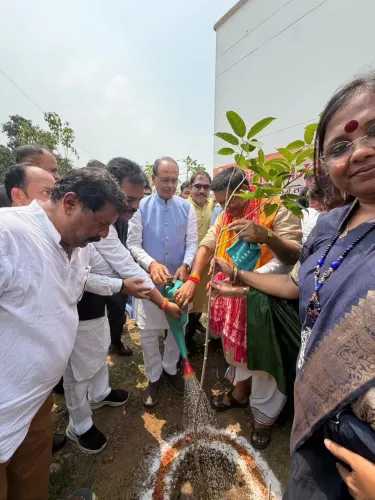
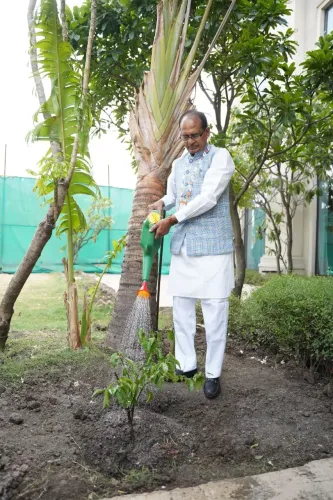
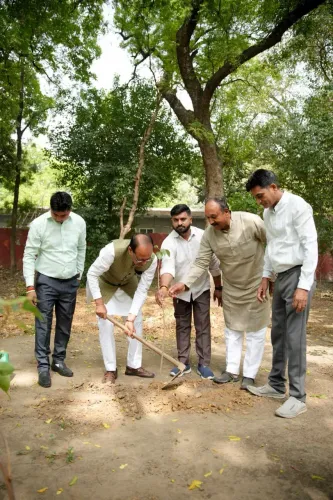
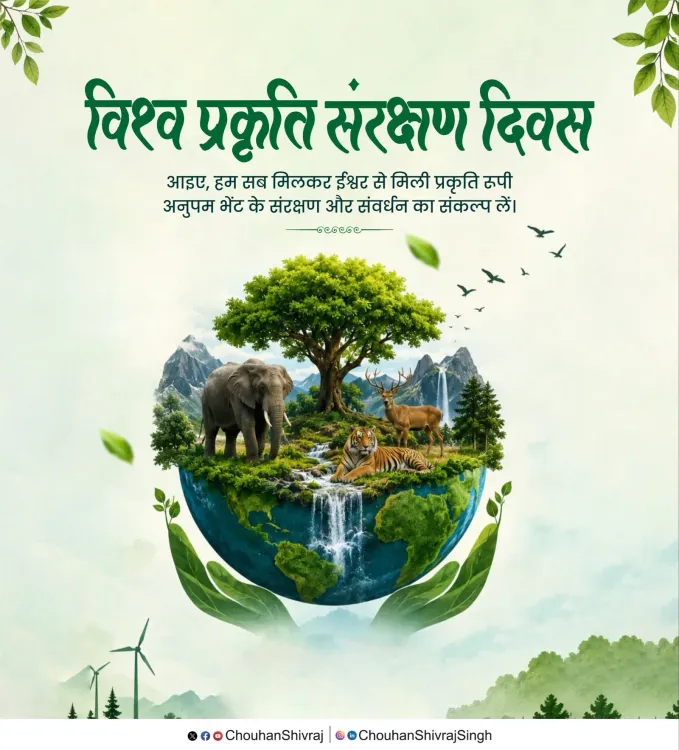
Union Agriculture Minister Shivraj Singh Chouhan on Tuesday, 28 July took to X to mark World Nature Conservation Day, urging citizens to take individual pledges on tree planting, single-use plastic avoidance, water and electricity conservation, river cleanliness and sanitation — calling even a small commitment transformative for the planet.
Posting in Hindi, Chouhan wrote: 'यह धरती बचेगी, तभी मनुष्य और समस्त जीव-जंतुओं का भी जीवन बचेगा' — 'Only if this Earth is saved will the lives of humans and all living creatures be saved.' He framed nature not merely as an environmental concern but as the 'powerful foundation of all our lives', whose prosperity alone can make human existence healthy and fulfilling.
Context
World Nature Conservation Day, observed every year on 28 July, is a global call to action on protecting biodiversity, natural habitats and sustainable resource use. The day draws attention to the accelerating loss of ecosystems and the need for both governmental policy and individual behaviour change. Chouhan's post arrived early morning, signalling an intent to set the tone for public discourse around the observance.
The minister specifically enumerated five actionable pledges: planting trees, refusing single-use plastic, saving water, saving electricity, and keeping rivers clean. By listing concrete, everyday actions, the message bridges the gap between large-scale policy targets and household-level responsibility.
Policy Backdrop
Chouhan's appeal aligns with several flagship national programmes. The Swachh Bharat Mission, launched in 2014, has driven nationwide cleanliness, sanitation and waste reduction — directly echoing his call for hygiene and plastic elimination. Simultaneously, the Namami Gange programme, also initiated in 2014, targets river rejuvenation and pollution control along the Ganga basin, resonating with his emphasis on keeping rivers clean.
At the COP26 climate summit in 2021, India committed to a net-zero emissions target by 2070 alongside pledges on renewable energy expansion and large-scale afforestation. Ministerial messaging on conservation days forms part of the broader public communication strategy that keeps these commitments visible between formal policy announcements and parliamentary sessions.
Stakeholders and Impact
The appeal is directed at citizens broadly — but carries particular resonance for farmers and rural communities, constituencies at the core of Chouhan's portfolio. Agriculture is acutely vulnerable to environmental degradation: depleted water tables, erratic monsoons and soil erosion directly threaten farm incomes and food security. A minister of agriculture invoking nature conservation thus carries an implicit policy signal about the links between ecological health and agrarian welfare.
Future generations are explicitly named in Chouhan's post as the intended beneficiaries — 'aane wali peedhiyon ke liye' ('for generations to come') — underscoring a long-horizon framing that goes beyond electoral cycles. Civil society groups working on plastic waste, river conservation and urban greening are likely to amplify the message as part of their own 28 July campaigns.
What's Next
Observers will watch whether the ministerial nudge translates into departmental circulars, scheme allocations or parliamentary statements in coming weeks. Progress on Namami Gange phase targets, enforcement of plastic waste management rules and updates to national afforestation data in upcoming budget documents will be the concrete benchmarks against which such appeals are measured.
Chouhan's post closes with a dual aspiration — 'Hum desh ko bhi badlein aur duniya ko bhi badlein' ('Let us change our country and change the world') — framing India's environmental choices not as a domestic obligation alone but as a contribution to global sustainability. If individual pledges aggregate into measurable behavioural shifts, they could quietly reinforce India's multilateral commitments on biodiversity and the Sustainable Development Goals.
Point of View
Namami Gange and the COP26 net-zero pledge — through the language of individual moral responsibility rather than top-down mandate. For a minister whose brief covers agriculture and rural development, invoking ecological health is also a subtle acknowledgement that farm livelihoods are inseparable from environmental stability. The dual call to 'change the country and change the world' positions India as an active global actor on sustainability, not merely a developing-economy bystander. Whether such appeals gain traction will depend on whether they are followed by measurable departmental action rather than remaining confined to observance-day rhetoric.
NationPress
28 Jul 2026
Frequently Asked Questions
What is World Nature Conservation Day and when is it observed?
World Nature Conservation Day is observed every year on 28 July to raise awareness about protecting biodiversity, natural habitats and sustainable use of natural resources.
What pledges did Shivraj Singh Chouhan ask citizens to take on World Nature Conservation Day?
Chouhan urged citizens to pledge at least one of the following: planting trees, avoiding single-use plastic, saving water, saving electricity, keeping rivers clean, or practising sanitation.
How does Shivraj Singh Chouhan's conservation message connect to government schemes?
His call echoes the Swachh Bharat Mission (cleanliness and plastic reduction) and the Namami Gange programme (river rejuvenation), both launched in 2014 , as well as India's net-zero by 2070 commitment made at COP26 .
Why does an agriculture minister speak on nature conservation?
Agriculture is directly dependent on environmental health — water availability, soil quality and climate stability all affect farm output — making conservation a core concern of the Agriculture and Rural Development portfolio.
What is India's climate commitment and how does it relate to such conservation appeals?
India pledged to reach net-zero carbon emissions by 2070 at the COP26 summit in 2021 , alongside targets on renewable energy and afforestation; ministerial conservation messaging helps sustain public awareness of these long-term national commitments.