India-US must deepen ties to meet China challenge, says Congressman Raja Krishnamoorthi
Synopsis
Indian American Congressman Raja Krishnamoorthi didn't mince words — he said both India and the US are falling short on the China challenge and need to urgently deepen cooperation on AI, quantum tech, fusion energy and security. He also linked American competitiveness to H-1B reform, warning that a million skilled immigrants stuck in green card queues represent untapped strategic capital.
Key Takeaways
Congressman Raja Krishnamoorthi called the China challenge 'the defining challenge of our time' in an interview on 28 July .
He said both India and the United States are 'not doing enough' and must deepen cooperation on AI , quantum computing , fusion energy , and security .
Krishnamoorthi said there is no evidence China interfered with US vote counting or tabulation , but flagged ongoing concern over subtle influence operations.
He criticised delays in H-1B green card processing, calling for expedited permanent residency for over a million long-waiting Indian professionals.
The Congressman stressed that reducing internal division is essential for both democracies to prevail in strategic competition with China.
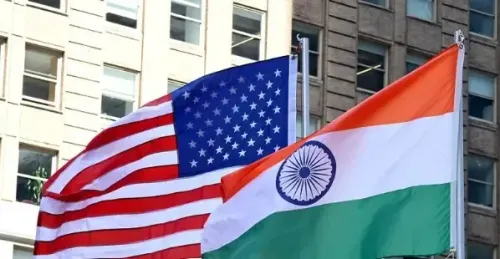
Indian American Congressman Raja Krishnamoorthi has called for significantly deeper cooperation between India and the United States to address what he described as the defining strategic challenge of the era — the rise of China. Speaking in an interview on 28 July, Krishnamoorthi urged both democracies to step up collaboration across artificial intelligence, quantum computing, clean energy, and security.
The China Challenge
'The China challenge is the defining challenge of our time,' Krishnamoorthi said. 'And the question is, are we going to rise to the occasion and be the best version of ourselves as a country? Right now, we are not.' He was equally direct about India's role, stating: 'I think India, like the United States, needs to step up to the challenge. It's not doing enough. It can do more.'
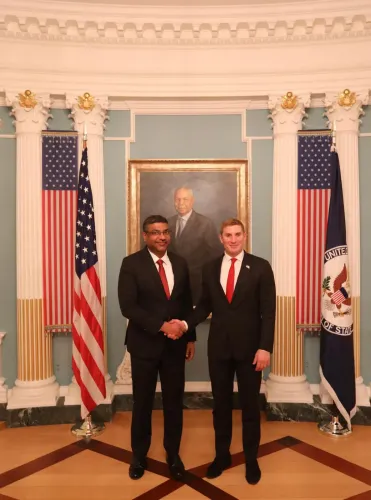
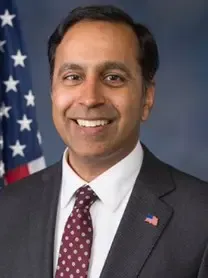
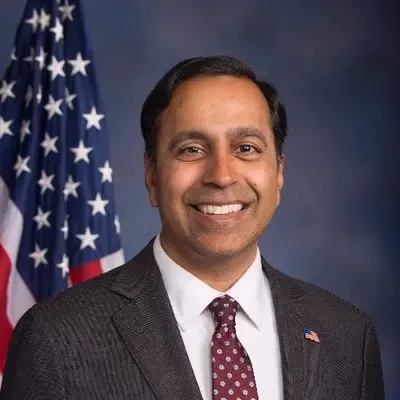
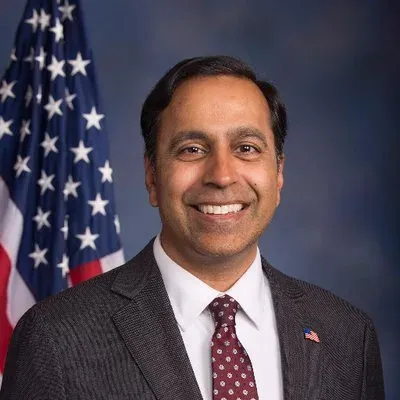
Krishnamoorthi, a Democrat representing Illinois' 8th Congressional District since 2017, has been a prominent congressional voice on strategic competition with China and US technology policy. Born in New Delhi and raised in the United States, he brings a dual perspective to the India-US relationship.
Technology as the Frontier
The Congressman identified emerging technologies as the primary arena where India-US cooperation must deepen. He specifically named fusion energy, solar power, quantum technology, and artificial intelligence as sectors ripe for joint development. 'I think technology's the future,' he said. 'I think we should work together on technologies of the future, whether it's fusion, whether it's solar, whether it's quantum, whether it's artificial intelligence, whether it's on security issues.'
This comes amid growing global competition for dominance in next-generation technologies, with China investing heavily in AI and quantum research. Analysts note that India-US collaboration in these areas could serve as a meaningful counterweight, though execution remains a challenge.
Chinese Influence Operations in the US
Turning to the question of Chinese interference in American democratic processes, Krishnamoorthi said there was no evidence that Beijing had interfered with the counting or tabulation of votes. 'They considered it, but they didn't do it,' he said, adding, 'That being said, it's always a concern.' He warned that Chinese influence operations tend to be subtle, operating at the local level through social media and attempts to shape the views of opinion-makers — a pattern, he suggested, that demands sustained vigilance.
H-1B Visa Reform and American Competitiveness
Krishnamoorthi also drew a direct line between US immigration policy and America's ability to compete with China. He criticised the current treatment of H-1B visa holders — many of whom are Indian professionals — and called for urgent reforms to expedite the path to permanent residency. 'For the million people who've been waiting patiently in queue to get their green card, we should do everything we can to expedite this process, especially again, for those people who've been here for decades,' he said.
He argued that long-term visa holders represent a reservoir of entrepreneurial and technological talent critical to American prosperity, and that any reforms to the immigration system should be pursued on a bipartisan basis.
Strengthening Democracies from Within
Beyond technology and immigration, Krishnamoorthi stressed that both India and the United States must strengthen their democracies internally to prevail in the contest with China. 'We have to do everything we can to reduce division, reduce any form of discrimination toward anybody, anywhere,' he said. 'And if we can do that, then I have no doubt that we will succeed.' He framed internal cohesion as inseparable from external competitiveness — a point that carries weight as both nations navigate domestic polarisation.
As the India-US strategic partnership continues to evolve, Krishnamoorthi's remarks signal growing bipartisan pressure in Washington for both countries to translate shared concerns about China into concrete, coordinated action.
Point of View
And the technology cooperation frameworks between India and the US remain stronger on paper than in practice. The linkage he draws between immigration reform and geopolitical competitiveness is analytically sound, but it is precisely the kind of argument that gets lost in domestic US politics. If the India-US partnership is to be a genuine counterweight to China, the gap between Krishnamoorthi's diagnosis and actual policy delivery needs to close — fast.
NationPress
28 Jul 2026
Frequently Asked Questions
What did Congressman Raja Krishnamoorthi say about India and the China challenge?
Krishnamoorthi said the China challenge is 'the defining challenge of our time' and that both India and the US are not doing enough to meet it. He called for deeper bilateral cooperation across AI, quantum computing, clean energy, and security.
Which technology areas did Krishnamoorthi identify for India-US cooperation?
He specifically named fusion energy, solar power, quantum technology, and artificial intelligence as key areas where India and the United States should work together to stay ahead of China.
Did Krishnamoorthi say China interfered in US elections?
No. He said there was no evidence that Beijing interfered with the counting or tabulation of US votes, though he noted China had 'considered it.' He flagged ongoing concern about subtle Chinese influence operations conducted through social media and local-level engagement.
What did Krishnamoorthi say about H-1B visa holders and green cards?
He criticised the slow pace of green card processing for H-1B holders, many of whom are Indian professionals, and called for expediting the process for over a million people who have waited for decades. He argued these individuals are critical to American competitiveness against China.
Who is Raja Krishnamoorthi?
Raja Krishnamoorthi is a Democratic Congressman representing Illinois' 8th Congressional District since 2017. Born in New Delhi and raised in the United States, he is a leading congressional voice on US-China strategic competition and technology policy.