Is the US-India Relationship Cooling Over Tariffs and China Challenges?
Synopsis
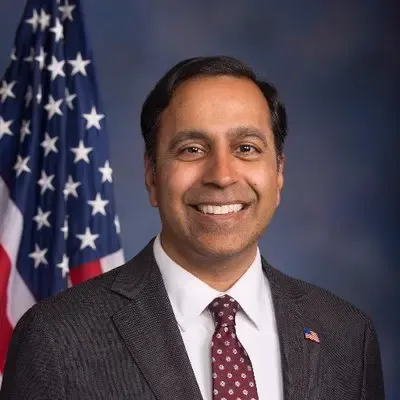
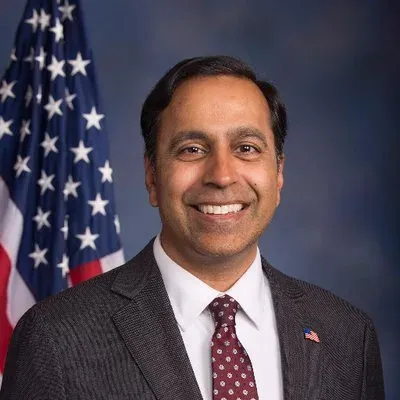
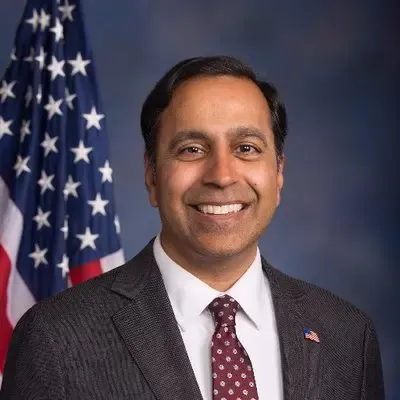
US Congressman Raja Krishnamoorthi raises alarm over the deteriorating US-India relationship, emphasizing the dangers of recent tariff policies and China's aggressive stance. He advocates for stronger ties and warns against rising anti-Indian sentiment, stressing the importance of legal immigration and shared democratic values.
Key Takeaways
US-India relationship is currently strained.
Recent tariff policies may threaten decades of partnership.
China presents a multifaceted threat.
Legal immigration is crucial for economic growth.
Indian Americans play a pivotal role as cultural bridges.
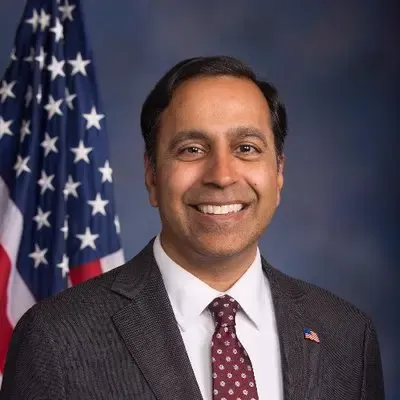
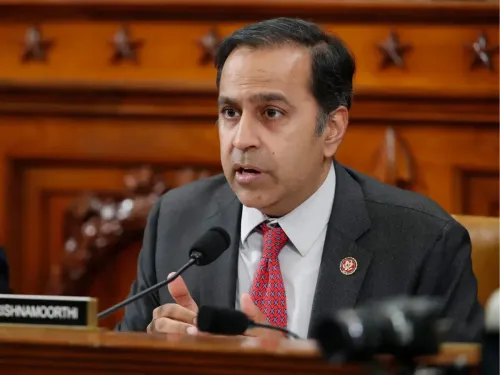
Chicago, Dec 15 (NationPress) Influential American Congressman Raja Krishnamoorthi expressed concern that the US–India relationship has entered a “cold and frigid” phase, warning that recent policy changes could jeopardize a partnership that has been carefully cultivated over three decades. “I think the weather outside matches the best description of the US-India relationship that I can come up with right now — a little bit cold and frigid,” Krishnamoorthi remarked during his keynote address at the India Abroad Dialogue in Chicago.
He emphasized that the relationship “should be warm” and “continuing to rise in importance,” arguing that recent developments have moved it “for the worse,” even though India is recognized as “one of the largest economies” and “the largest democracy” globally.
Krishnamoorthi highlighted that India’s strategic importance extends beyond economics. “It’s also an incredibly important partner and friend,” he asserted, pointing to shared values of “equality, freedom, democracy, minority rights, secularism, free enterprise, and adherence to international norms.”
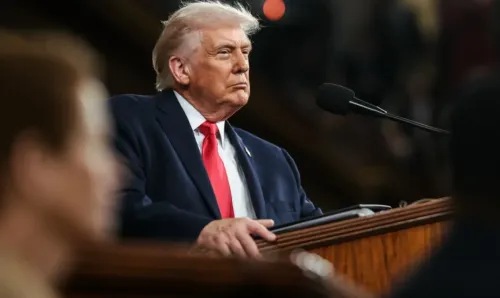
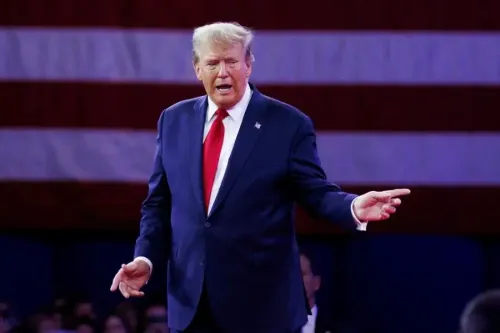
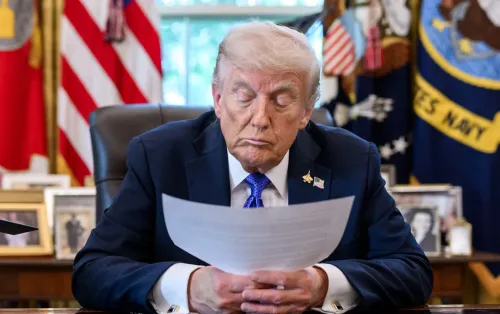
He sharply criticized the tariff policies of the Trump administration, labeling a proposed 50 percent tariff on Indian goods as “arbitrary” and “capricious.”
“A 50 percent tariff on India doesn’t make any sense. It has no basis in logic,” he argued, adding that it seemed like the result of a Truth Social tweet, which is not a valid approach to trade policy.
Krishnamoorthi stated that imposing higher tariffs on India compared to China is strategically unwise. “When we are trying to counterbalance the influence of the CCP globally, why would we ever want to alienate our friends, partners, and allies like India?” he questioned.
He described China as a “triple threat — economic, military, and technological,” accusing Beijing of stealing intellectual property, inundating markets with subsidized goods, and weaponizing monopolies for coercive tactics. “That’s what they have done from steel to solar, to paper, to glass, to electric vehicles,” he noted.
The Congressman also advocated for legal immigration, cautioning against movements to limit it. “Legal immigration has been the goose that lays the golden eggs for this country,” he stated. “We would not have a Dr Bharat Barai (an eminent Indian American from the area) here. We would not have my family in many of yours if we didn’t have a legal immigration system.”
He referred to Indian Americans as “the greatest export of India,” noting that the five-million-strong community acts as “bridge builders” between New Delhi and Washington.
Krishnamoorthi indicated that anti-Indian sentiment is on the rise, recounting an instance where an elected official from Florida called for his deportation, a statement he described as “deeply disturbing.”
The US–India strategic partnership has significantly expanded since the early 2000s, covering defense cooperation, technology, and trade. Despite occasional political tensions, both nations continue to regard each other as vital partners in counterbalancing China's influence in the Indo-Pacific.
The India Abroad Dialogue, a 10-city tour, commenced in Detroit on Saturday and is organized in collaboration with the Foundation of India and Indian Diaspora Studies (FIIDS), the US Indian Community Foundation, and several other community organizations.
Point of View
It is essential to recognize that the evolving dynamics of US-India relations necessitate careful consideration. The perspectives shared by Congressman Krishnamoorthi highlight the importance of maintaining strong partnerships in the face of external challenges, especially from China. It is crucial for policymakers to reflect on the long-term implications of current strategies and prioritize collaboration over division.
NationPress
30 Sept 2026
Frequently Asked Questions
What did Congressman Krishnamoorthi say about the US-India relationship?
Congressman Krishnamoorthi warned that the US-India relationship is entering a 'cold and frigid' phase due to recent policy changes, particularly concerning tariffs.
Why did Krishnamoorthi criticize the Trump administration's tariff policies?
He described the proposed 50 percent tariff on Indian goods as 'arbitrary' and lacking logical basis, arguing it undermines the strategic partnership with India.
What is the significance of India in the US's strategy against China?
India is seen as a crucial ally in counterbalancing China's influence, and pushing away such a partner could hinder US efforts in the Indo-Pacific.
What are the shared values between the US and India mentioned by Krishnamoorthi?
Shared values include equality, freedom, democracy, minority rights, secularism, and free enterprise.
What did Krishnamoorthi say about legal immigration?
He defended legal immigration, stating it has been vital for the US economy and has contributed significantly to the nation's diversity and innovation.