Shivraj Singh Chouhan Congratulates Padma Awards 2026 Recipients
Synopsis
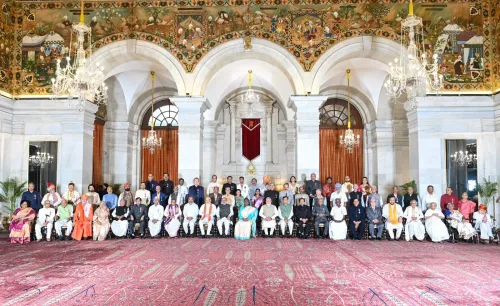
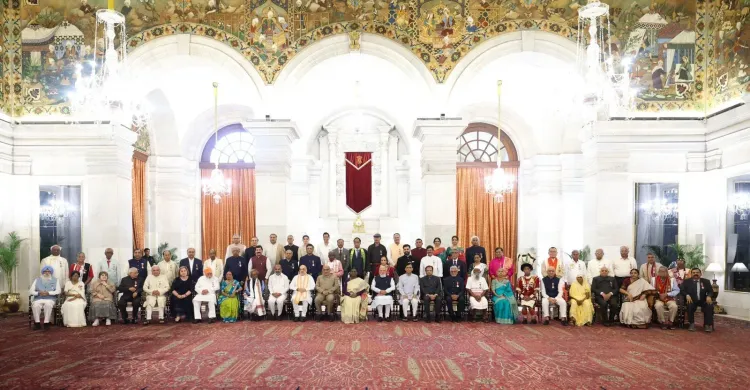
Union Agriculture Minister Shivraj Singh Chouhan congratulated the recipients of the Padma Awards 2026, conferred by President Droupadi Murmu. He praised the awardees' diverse geographic and professional backgrounds as a reflection of New India's merit-driven ethos.
Key Takeaways
Shivraj Singh Chouhan extended congratulations to Padma Awards 2026 recipients on 23 June 2026 .
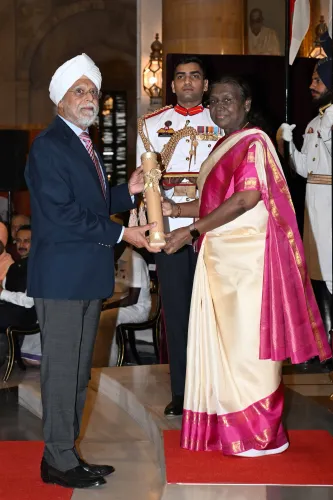
Awards were conferred by President Droupadi Murmu at a ceremonial investiture.
Chouhan highlighted recipients from Jammu & Kashmir, Ladakh, Keralam, Gujarat , and Nagaland , underscoring geographic diversity.
The Padma Awards — instituted in 1954 — comprise Padma Vibhushan , Padma Bhushan , and Padma Shri .
Chouhan described the honours as reflecting 'the spirit of a New India, where merit, hard work, and service are valued above fame and prominence.' The next Padma Awards list is expected to be announced around Republic Day in January.
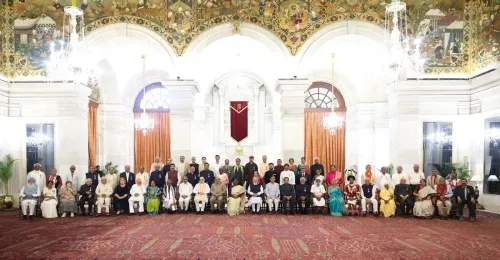
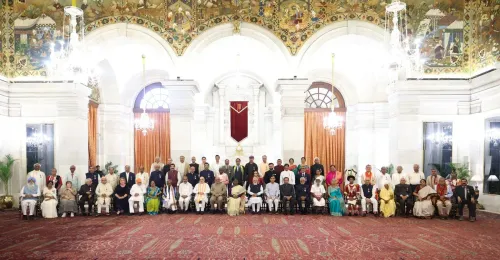
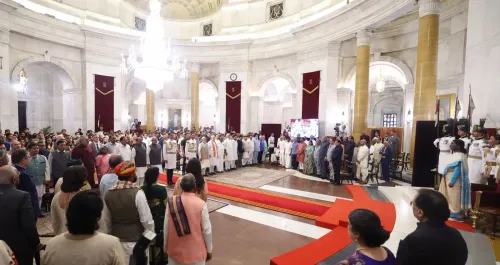
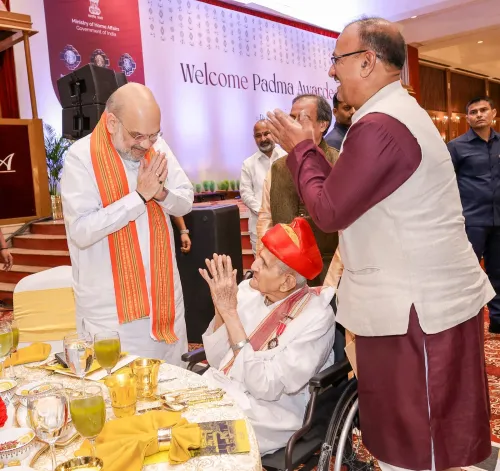
Union Agriculture Minister Shivraj Singh Chouhan on Tuesday, 23 June 2026 extended congratulations to the recipients of the Padma Awards, who were honoured by President Droupadi Murmu at a ceremonial investiture. The minister praised the awardees for their contributions spanning every corner of the country, from Jammu & Kashmir and Ladakh in the north to Keralam in the south, and from Gujarat in the west to Nagaland in the northeast.
Context
Chouhan wrote on X that the honourees have 'left an indelible mark on society through their dedication, talent, and exceptional contributions.' He described the recognition as reflecting 'the spirit of a New India, where merit, hard work, and service are valued above fame and prominence.' The minister added that the awards 'continue to bring well-deserved recognition to people from all walks of life, celebrating the extraordinary achievements of ordinary citizens.'
The Padma Awards — comprising Padma Vibhushan, Padma Bhushan, and Padma Shri — are India's highest civilian honours. They are conferred annually by the President of India at Rashtrapati Bhavan in recognition of distinguished service across a wide range of disciplines.
Policy Backdrop
The Padma Awards were instituted by the Government of India in 1954, with the mandate to recognise exceptional contributions without distinction of race, occupation, position, or sex. Over seven decades, successive administrations have maintained the annual cycle as a marker of national integration and grassroots recognition.
Since 2014, official communications around the awards have consistently emphasised merit-based selection and geographic inclusivity, with recipients drawn from states and union territories across all regions. The deliberate mention of Jammu & Kashmir, Ladakh, Keralam, Gujarat, and Nagaland in Chouhan's post mirrors this established pattern of projecting a pan-India character to the honours.
Stakeholders and Impact
The Padma investiture touches a broad cross-section of Indian society — artists, scientists, social workers, athletes, educators, and unsung community contributors among them. By publicly acknowledging recipients from geographically and culturally diverse regions, senior ministers reinforce the message that national recognition is not confined to metropolitan achievers.
Chouhan, a senior BJP leader and former four-term Chief Minister of Madhya Pradesh, carries considerable political weight in central India. His public endorsement of the awards' inclusive character amplifies the government's narrative of grassroots empowerment and merit-driven governance to his large social-media following.
What's Next
The next cycle of Padma Awards nominations is typically opened by the Government of India in the months following the current investiture, with the final list announced around Republic Day in January. Citizens, state governments, and central ministries are all eligible to submit nominations through the official portal.
As the government continues to expand the awards' reach to lesser-known contributors from remote regions, the emphasis on 'ordinary citizens with extraordinary achievements' is expected to remain a defining theme of future investiture communications.
Point of View
Reinforcing the BJP-led government's consistent messaging around merit, geographic inclusivity, and the 'New India' brand. The deliberate roll-call of regions — from Ladakh to Nagaland — signals an effort to associate the party with national integration at a time when regional identities remain politically sensitive. For a senior leader of Chouhan's stature, such public endorsements also serve to maintain visibility on national occasions without wading into controversy. The recurring 'ordinary citizens, extraordinary achievements' framing has become a signature rhetorical device in government communications since 2014, and Chouhan's post fits squarely within that established arc.
NationPress
24 Jun 2026
Frequently Asked Questions
Who received the Padma Awards in 2026?
The specific recipients of the Padma Awards 2026 were honoured by President Droupadi Murmu at a ceremonial investiture on 23 June 2026. Shivraj Singh Chouhan noted that awardees came from regions including Jammu & Kashmir, Ladakh, Keralam, Gujarat, and Nagaland, though the full list of individual recipients has not been detailed in his post.
What are the Padma Awards?
The Padma Awards are India's highest civilian honours, instituted in 1954. They comprise three categories — Padma Vibhushan, Padma Bhushan, and Padma Shri — and are conferred annually by the President of India for distinguished service across fields such as arts, science, public affairs, sports, and social work.
Who presents the Padma Awards in India?
The Padma Awards are presented by the President of India at a ceremonial investiture held at Rashtrapati Bhavan. In 2026, President Droupadi Murmu conferred the honours.
When is the next Padma Awards list announced?
The Padma Awards list is typically announced by the Government of India around Republic Day, which falls on 26 January each year. Nominations are accepted from citizens, state governments, and central ministries through an official portal.
What did Shivraj Singh Chouhan say about the Padma Awards 2026?
Shivraj Singh Chouhan said the awards reflect 'the spirit of a New India, where merit, hard work, and service are valued above fame and prominence,' and praised the recognition of individuals from all walks of life across diverse regions of the country.