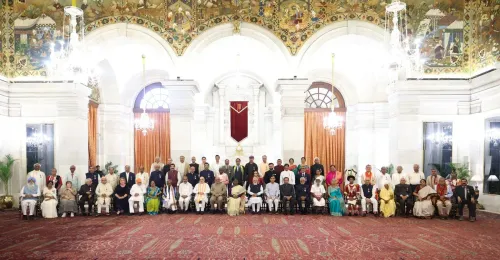
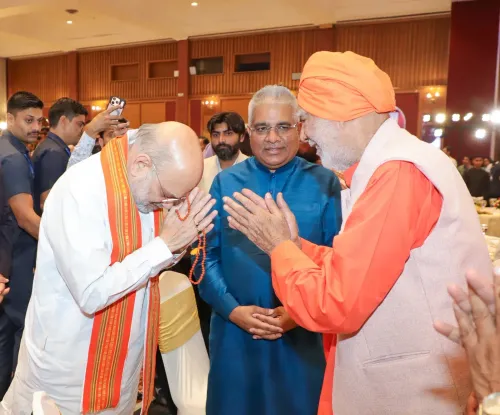
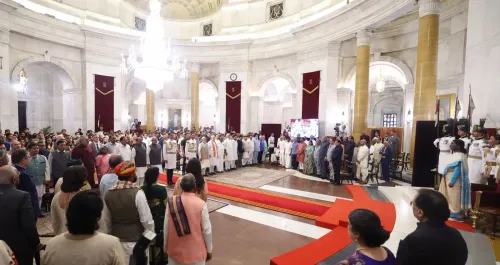
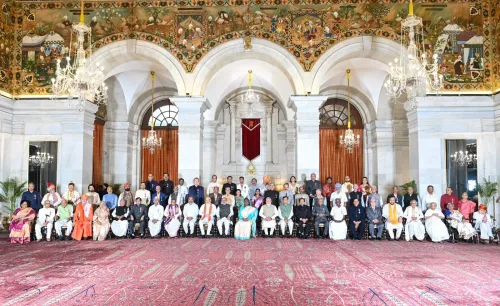
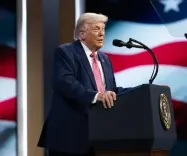
Amit Shah Congratulates Padma Awards 2026 Honourees
Synopsis
Union Home Minister Amit Shah on May 25, 2026, congratulated Padma Awards honourees conferred by the President of India, crediting PM Modi with reorienting the prestigious civilian honours to recognise grassroots change makers and drive socio-economic progress at the community level.
Key Takeaways
Union Home Minister Amit Shah congratulated Padma Awards 2026 recipients on May 25, 2026 .
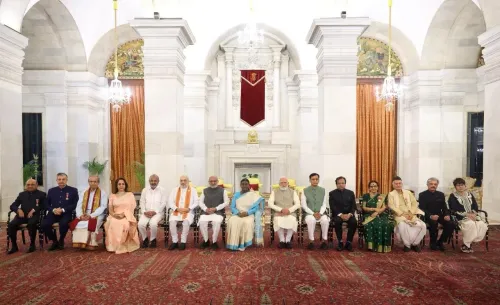
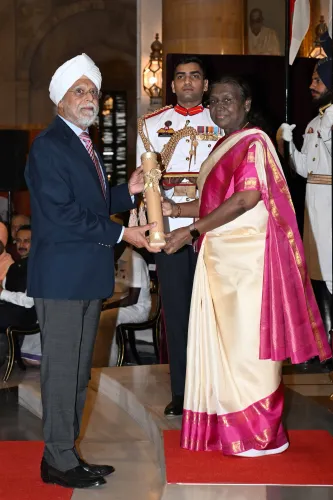
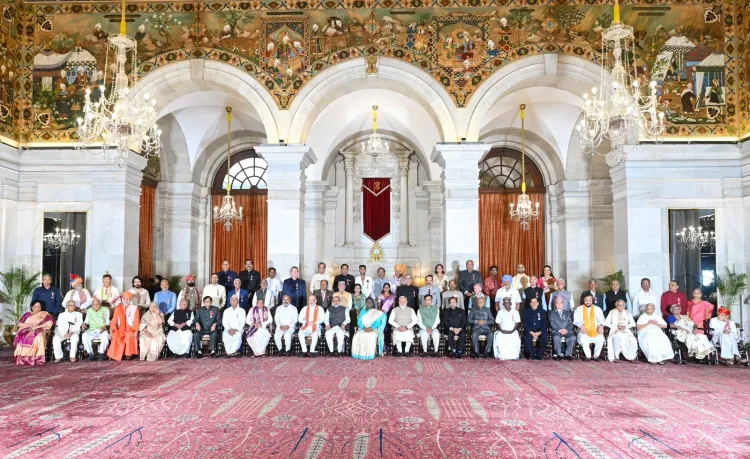
The President of India conferred the awards at a formal investiture ceremony at Rashtrapati Bhavan .
Shah credited PM Narendra Modi with reorienting the Padma Awards to honour grassroots and socio-economic change makers.
Since 2014 , the government has expanded the awardee pool to include farmers, artisans, teachers, and community volunteers.
The shift aligns with the government's Antyodaya philosophy of last-mile social recognition over elite distinction.
The next key milestone is the Republic Day announcement cycle, when the next round of awardees will be named.
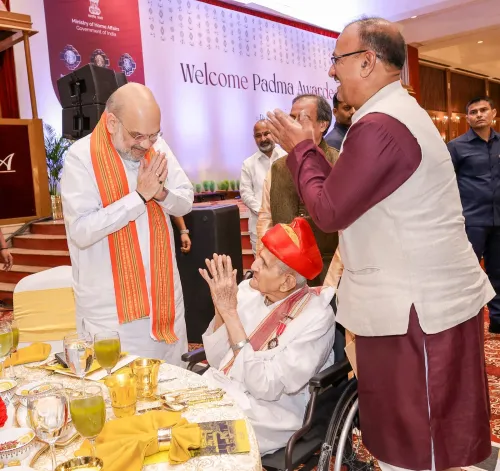
Union Home Minister Amit Shah on Monday, May 25, 2026, congratulated the recipients of the Padma Awards conferred by the President of India at a ceremonial investiture, praising the honourees as 'luminaries and change makers' driving grassroots socio-economic progress across the country.
Context
The Padma Awards — comprising Padma Vibhushan, Padma Bhushan, and Padma Shri — are India's second-highest civilian honours, conferred annually by the President of India at Rashtrapati Bhavan for distinguished service across diverse fields. The investiture ceremony marks the formal conferral of awards announced on Republic Day each year.
Shah wrote that Prime Minister Narendra Modi has 'reoriented Padma Awards as an institution to drive socio-economic progress by honoring the real change makers strengthening our society at grassroots,' adding that the ceremony 'advances this vision and inspires more people to contribute to India's journey towards greatness.'
Policy Backdrop
Since 2014, the Modi government has consistently expanded the annual quota of Padma awardees and broadened the pool of recipients to include individuals from rural areas, small towns, and non-traditional fields — farmers, artisans, teachers, and community volunteers who would previously have been overlooked by the awards process.
This shift aligns with the ruling dispensation's stated Antyodaya [last-mile outreach] philosophy, framing national civilian honours not as markers of elite distinction but as instruments of social recognition. The Home Ministry, which processes Padma recommendations, has played a central role in institutionalising this approach.
Stakeholders and Impact
The primary beneficiaries of the reoriented awards process are grassroots change makers — social workers, folk artists, unsung scientists, and community volunteers — many of whom receive national recognition for the first time through the Padma Shri category. Their recognition is intended to inspire civic participation at the local level.
For the broader public, the ceremony functions as an annual showcase of India's social diversity, drawing attention to contributions from states and communities that rarely feature in mainstream national discourse. Shah's post, accompanied by three images from the ceremony, underscores the government's effort to amplify this visibility on social media.
What's Next
Attention will now turn to the composition and criteria of the awards selection committee ahead of the next Republic Day announcement cycle, as the government continues to signal its intent to deepen the grassroots character of the honours. Any revision to nomination processes or eligibility criteria will be closely watched by civil society groups and state governments who submit recommendations.
The ceremony also sets the tone for India's cultural and civic calendar through the remainder of 2026, with the honourees expected to serve as ambassadors for their respective fields and communities.
Point of View
Positioning the Padma Awards as evidence of the BJP government's commitment to 'Antyodaya' — the idea that state recognition should flow downward to the last citizen, not upward to the already celebrated. By crediting Modi personally with 're-orienting' the institution, the message reinforces the party's broader narrative of dismantling elite gatekeeping in public life. This is a recurring pattern: civilian honours, welfare schemes, and infrastructure projects are consistently presented as expressions of a singular governing philosophy rather than routine state functions. The framing matters because it shapes how future award cycles will be publicly justified and defended.
NationPress
10 Oct 2026
Frequently Asked Questions
Who receives the Padma Awards in India?
The Padma Awards — Padma Vibhushan, Padma Bhushan, and Padma Shri — are conferred by the President of India on individuals who have made distinguished contributions in fields such as arts, science, public affairs, social work, and sports. Since 2014, the government has expanded the list to include more grassroots workers, artisans, and community volunteers.
When are Padma Awards announced each year?
Padma Awards are announced on the eve of Republic Day, January 26, each year. The formal investiture ceremony, where the President of India confers the awards, is held subsequently, typically in the first half of the year.
What did Amit Shah say about Padma Awards 2026?
Amit Shah congratulated the recipients and said PM Modi has reoriented the Padma Awards to honour 'real change makers strengthening our society at grassroots,' framing the ceremony as an instrument of socio-economic progress.
How has the Modi government changed the Padma Awards process?
Since 2014, the Modi government has increased the annual quota of Padma awardees and diversified the recipient pool to include individuals from rural areas, small towns, and non-traditional fields, including farmers, folk artists, teachers, and social workers.
What is the role of the Home Ministry in Padma Awards?
The Union Home Ministry, headed by Amit Shah, is responsible for processing Padma Awards recommendations received from state governments, central ministries, and public nominations before they are finalised and sent to the President for conferral.