Shivraj Singh Chouhan hails Punjab's Ran Singh Kalan as model village
Synopsis
Union Agriculture Minister Shivraj Singh Chouhan visited New Delhi with Moga sarpanch Amarpreet Pal Singh 'Mintu' to plant a sapling, highlighting Ran Singh Kalan's seven stubble-free years, drug-free incentive scheme, plastic-for-sugar barter drive, and a library that pays children to read.
Key Takeaways
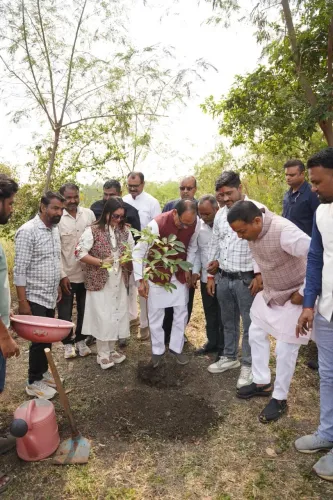
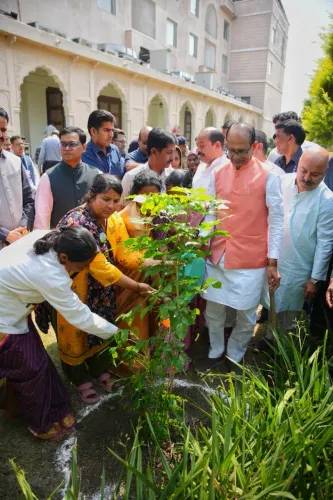
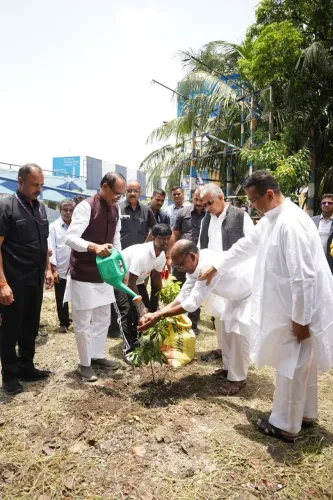
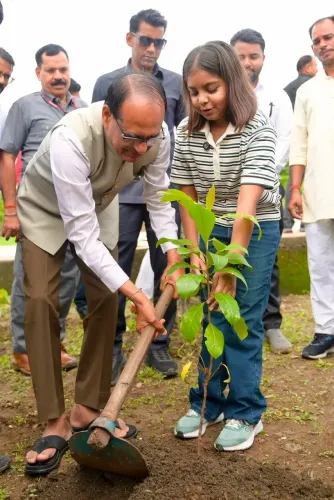
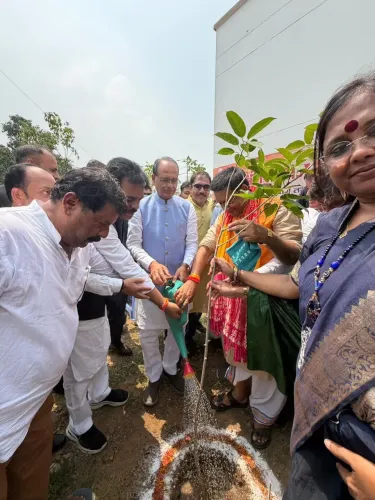
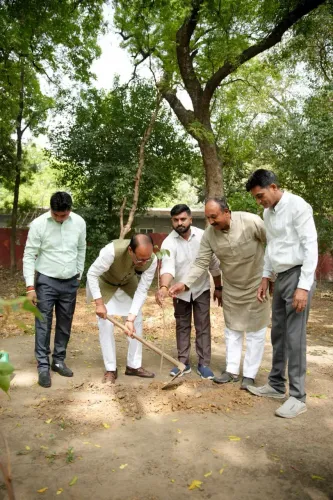
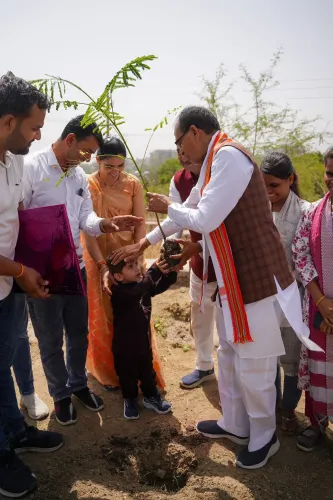
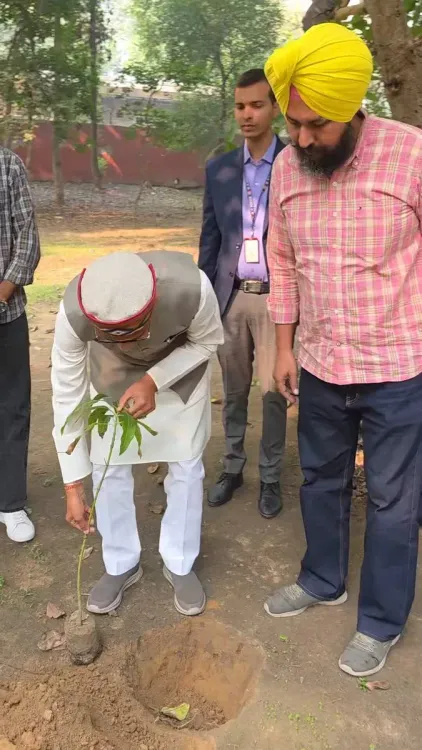
Union Agriculture Minister Shivraj Singh Chouhan planted a sapling in New Delhi on 16 November 2026 with Ran Singh Kalan sarpanch Amarpreet Pal Singh 'Mintu' as part of his daily #OnePlantADay pledge.
Ran Singh Kalan in Moga district, Punjab has reportedly not burned paddy stubble for seven consecutive years , bucking a region-wide trend that contributes to Delhi's winter smog.
The village panchayat offers free de-addiction treatment plus a ₹11,000 cash incentive for quitting drugs; the village is described as 98 percent drug-free .
A plastic-waste exchange programme gives residents sugar in return for plastic garbage , incentivising cleanliness at the household level.
Sarpanch Mintu distributes free seeds to encourage crop diversification, reducing dependence on water-intensive paddy.
The village library pays children to come and read , turning literacy into a financially rewarded activity at the community level.
A village with no open drains, seven years without a single stubble fire, and a library that pays children to read — Union Agriculture Minister Shivraj Singh Chouhan on Monday, 16 November 2026, spotlighted Ran Singh Kalan in Punjab's Moga district as a blueprint for rural India, planting a sapling in New Delhi alongside the village's sarpanch as part of his daily tree-plantation pledge.
Chouhan met Amarpreet Pal Singh 'Mintu', the sarpanch of Ran Singh Kalan, as part of his ongoing #OnePlantADay (ek paudha roz) commitment. In his post, Chouhan described Mintu as proof that 'if you make up your mind, miracles can happen even in a village,' and called him 'a model for the entire country.'
No open drain, no stubble smoke — what Ran Singh Kalan actually did
The numbers Chouhan cited are striking. The village reportedly has a functioning sewerage system with no open drains visible anywhere — a rare feat in rural Punjab. For seven consecutive years, farmers in Ran Singh Kalan are said to have avoided burning paddy stubble, a practice that chokes north India's airshed every October and November and has resisted government intervention for decades across the Indo-Gangetic plain.
Stubble burning in Punjab and Haryana contributes significantly to the toxic smog that blankets Delhi each winter. The Central and state governments have run crop-residue management schemes since the mid-2010s — but ground-level adoption has been uneven. A village voluntarily sustaining a stubble-free record over seven winters, if borne out, would represent exactly the community-led shift policymakers have been unable to mandate from above.
Cash for quitting drugs, sugar for surrendering plastic
Chouhan also highlighted the village's de-addiction initiative: the panchayat provides free treatment to those giving up drugs and pays a ₹11,000 incentive to each person who successfully quits. Drug abuse has been a persistent public health and social crisis across parts of Punjab, and local-body-led financial nudges of this kind are uncommon. The village is described as 98 percent drug-free.
The plastic-waste drive is equally inventive: residents exchange plastic waste for sugar — a barter model that creates an immediate household incentive to clean up. Mintu reportedly also distributes free seeds to village farmers to encourage crop diversification, reducing over-dependence on water-intensive paddy — a priority the Agriculture Ministry has pushed nationally to address groundwater depletion in Punjab.
A library that pays its readers
Perhaps the detail that cuts through most sharply: Ran Singh Kalan runs a village library where children who come to read are paid to do so. The panchayat has effectively monetised the act of reading — turning an aspiration into an incentive in a setting where peer and economic pressures often pull young people elsewhere.
Chouhan's tree-planting visit to Delhi with Mintu signals that such grassroots models are being elevated to national visibility. With the Swachh Bharat Mission now over a decade old and rural sanitation schemes requiring demonstration stories to sustain momentum, Ran Singh Kalan offers the kind of concrete, replicable case study that central policy often struggles to manufacture from above.
One village sarpanch, a handful of community rules, and a barter economy of plastic for sugar — if that is the template, the question now is which district names its next model village.
Point of View
Chouhan is deploying a well-established BJP playbook: elevating local governance success stories to build a national narrative around rural development and the Swachh Bharat ethos. Ran Singh Kalan's stubble-free record is particularly useful political optics given that stubble burning remains one of the most visible failures of Centre-state coordination in agriculture policy. The ₹11,000 de-addiction incentive model, if highlighted at the ministry level, could feed into the broader debate over demand-side versus supply-side approaches to Punjab's drug crisis. Crucially, the minister's framing positions the panchayat — not a central scheme — as the hero, a narrative that is both credible on the ground and politically safe ahead of ongoing rural development funding cycles.
NationPress
16 Nov 2026
Frequently Asked Questions
What is Ran Singh Kalan village famous for?
Ran Singh Kalan in Moga district, Punjab is known as a model village for its seven-year stubble-burning-free record, a sewerage system with no open drains, a drug de-addiction incentive programme, a plastic-for-sugar exchange drive, and a library that pays children to read.
Who is Amarpreet Pal Singh Mintu?
Amarpreet Pal Singh 'Mintu' is the sarpanch of Ran Singh Kalan village in Moga district, Punjab, recognised for introducing community-led sanitation, de-addiction, crop diversification, and literacy initiatives in his village.
What is Shivraj Singh Chouhan's OnePlantADay initiative?
OnePlantADay (#OnePlantADay) is a personal pledge by Union Agriculture Minister Shivraj Singh Chouhan to plant at least one tree every day, which he has been carrying out in various locations and with various guests since taking up the commitment.
How does Ran Singh Kalan handle stubble burning?
According to Union Agriculture Minister Shivraj Singh Chouhan's post, farmers in Ran Singh Kalan have not burned paddy stubble for seven consecutive years, making it a rare example of community-driven compliance with stubble management in Punjab.
What incentive does Ran Singh Kalan panchayat give for quitting drugs?
The Ran Singh Kalan panchayat provides free treatment to residents who give up drugs and pays a cash incentive of ₹11,000 to each person who successfully quits, alongside broader de-addiction support.