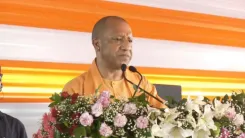
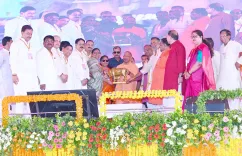
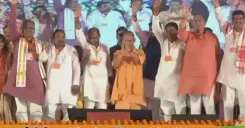
Shivraj Singh Chouhan Lauds Dharmendra Pradhan's Education Tenure
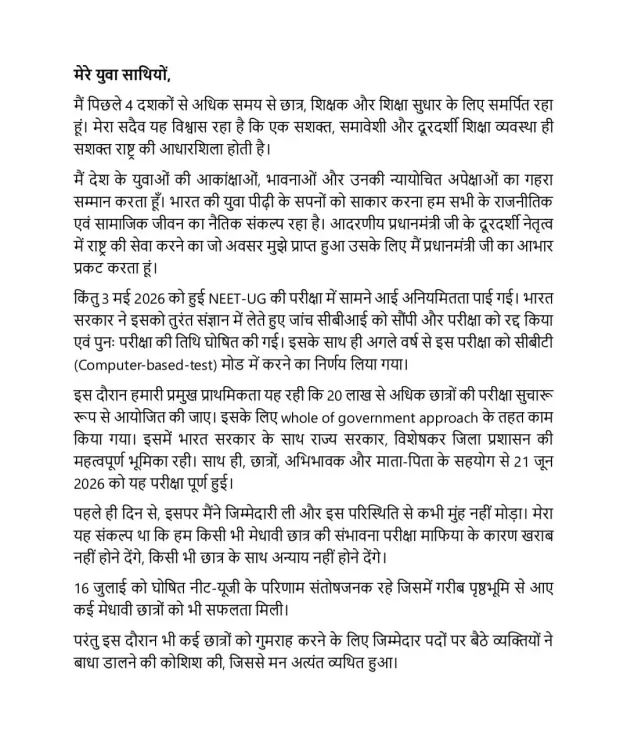
Synopsis
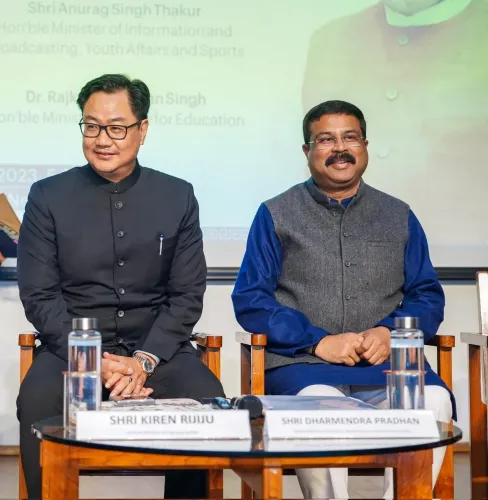
Union Agriculture Minister Shivraj Singh Chouhan on 25 July 2026 publicly commended Dharmendra Pradhan for his transformative tenure as Education Minister, citing large-scale NEP 2020 implementation and praising a recent decision by Pradhan as a mark of democratic duty and national commitment.
Key Takeaways
Shivraj Singh Chouhan posted a tribute to Dharmendra Pradhan on 25 July 2026 , praising his education ministry tenure.
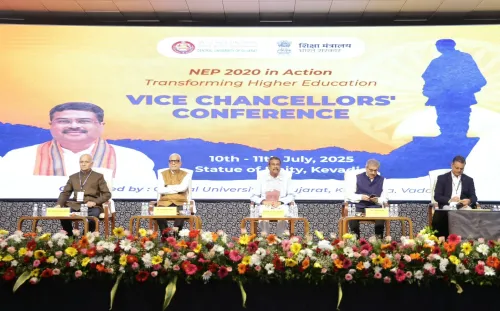
Pradhan is credited with implementing the National Education Policy 2020 at a wide scale, replacing the 1986 framework.
Chouhan highlighted Pradhan's focus on student welfare, modern education, and innovation as defining features of his ministry.
A recent, unspecified decision by Pradhan was praised by Chouhan as reflecting 'democratic traditions' and 'sense of duty.' Chouhan expressed confidence that Pradhan's experience and dedication will continue to serve national and public interest.
The post situates NEP 2020 as a cornerstone of the BJP government's domestic reform agenda.
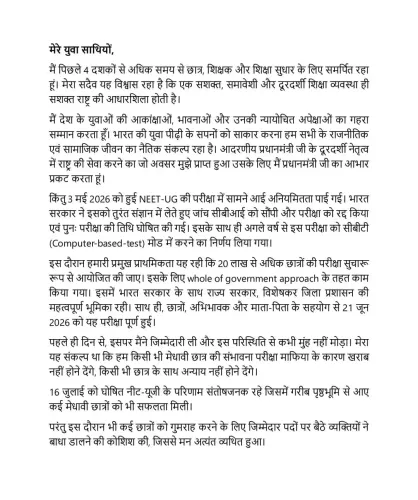
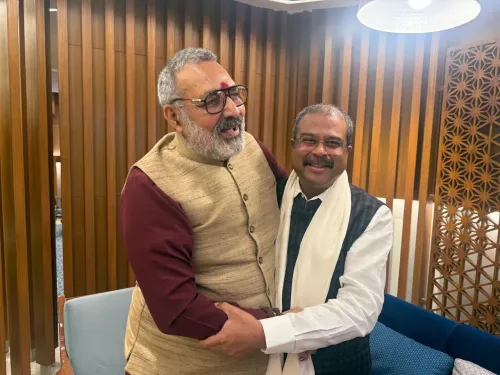
Union Agriculture Minister Shivraj Singh Chouhan on Saturday, 25 July 2026, took to X to commend former Union Education Minister Dharmendra Pradhan for his transformative contributions to India's education sector, citing his role in implementing the National Education Policy (NEP) 2020 at scale and praising a recent decision by Pradhan as reflective of democratic values and public duty.
In his post, Chouhan wrote that Pradhan had, during his tenure as Union Education Minister, 'राष्ट्रीय शिक्षा नीति-2020 को व्यापक स्तर पर लागू करने के साथ शिक्षा व्यवस्था में अनेक परिवर्तनकारी पहलों को आगे बढ़ाया' — meaning he had 'implemented the National Education Policy 2020 on a wide scale and advanced several transformative initiatives in the education system.' Chouhan added that Pradhan had given the sector 'a new direction' by prioritising student welfare, modern education, and innovation.
Context
The tribute comes in the backdrop of an unspecified recent decision by Dharmendra Pradhan that Chouhan described as one made in 'the broader interest of the country and society.' While the precise nature of that decision is not detailed in the post, Chouhan characterised it as a demonstration of Pradhan's 'कर्तव्यनिष्ठा और लोकतांत्रिक परंपराओं के प्रति सम्मान' — 'sense of duty and respect for democratic traditions.' Such language in Indian political discourse typically signals a dignified acceptance of a leadership or organisational transition.
Chouhan closed with confidence that Pradhan's 'long public experience, work capacity, and dedication to national service' would continue to strengthen efforts for public welfare and nation-building in the times ahead.
Policy Backdrop
The National Education Policy 2020 was approved by the Union Cabinet in July 2020, replacing a framework that had been in place since 1986. It introduced sweeping structural changes across school and higher education, emphasising multidisciplinary learning, vocational training, mother-tongue-based instruction in early years, and a four-year undergraduate programme model at universities. Dharmendra Pradhan, who helmed the Ministry of Education, was the principal political face of the policy's rollout, coordinating with state governments and overseeing institutional reform.
The NEP's implementation has been uneven across states, with some adopting the four-year undergraduate framework while others are still in transition phases. The policy remains one of the BJP-led government's flagship domestic reform agendas.
Stakeholders and Impact
The NEP 2020 directly affects millions of students across India's school and higher education ecosystem, as well as thousands of universities, colleges, and research institutions. Pradhan's tenure saw initiatives aimed at aligning curricula with emerging technologies, expanding the reach of vocational education, and reforming the assessment framework for school students.
For the BJP as an organisation, Chouhan's post also carries an internal signal — senior leaders publicly affirming colleagues who take decisions in the 'collective interest' reinforces party cohesion and democratic norms within the organisation at a time of any transition.
What's Next
The state-level rollout of NEP 2020 provisions — including the four-year undergraduate programme and reforms to the national testing framework — will continue to be closely watched. Pradhan's future role, in whatever capacity, will be shaped by his established reputation as a minister who oversaw one of independent India's most ambitious education overhauls. Chouhan's public endorsement positions Pradhan's legacy firmly on the reform side of the BJP's governance record.
Point of View
Chouhan frames Pradhan's legacy within the BJP's broader governance narrative of institutional modernisation. The language of 'broader national interest' and 'democratic traditions' is a recognisable BJP idiom used when senior leaders gracefully step aside or transition roles, signalling that the party's internal processes remain intact. This kind of senior-to-senior public affirmation also serves to maintain Pradhan's political capital for future responsibilities.
NationPress
25 Jul 2026
Frequently Asked Questions
What did Shivraj Singh Chouhan say about Dharmendra Pradhan?
Shivraj Singh Chouhan praised Dharmendra Pradhan on 25 July 2026 for implementing the National Education Policy 2020 at scale, advancing transformative education initiatives, and for a recent decision he described as reflecting democratic values and dedication to national interest.
What is the National Education Policy 2020?
The National Education Policy 2020 is India's overarching education reform framework approved by the Union Cabinet in July 2020, replacing the 1986 policy. It introduced multidisciplinary learning, a four-year undergraduate programme, vocational training integration, and mother-tongue-based early education.
What role did Dharmendra Pradhan play in NEP 2020?
Dharmendra Pradhan served as Union Minister of Education and was the principal political face of the NEP 2020 rollout, coordinating with state governments and overseeing institutional and curriculum reforms across school and higher education.
Why did Shivraj Singh Chouhan praise Dharmendra Pradhan now?
Chouhan's post references a recent decision by Pradhan described as being in the 'broader interest of the country and society,' language typically used in Indian political discourse when a senior leader accepts a transition in role or responsibility with grace.
What is the current status of NEP 2020 implementation in India?
NEP 2020 implementation is ongoing and uneven across states. Key provisions such as the four-year undergraduate programme have been adopted by several universities, while school-level reforms and national testing framework changes continue to be rolled out progressively.