Shivraj Singh Chouhan pays tribute to APJ Abdul Kalam on birth anniversary
Synopsis
Union Agriculture Minister Shivraj Singh Chouhan honoured Dr. APJ Abdul Kalam on his birth anniversary, praising the former President's pivotal role in India's missile programmes, the 1998 Pokhran-II nuclear tests, and his enduring inspiration to India's youth.
Key Takeaways
Union Agriculture Minister Shivraj Singh Chouhan posted a tribute to Dr.
APJ Abdul Kalam on his birth anniversary, October 15 .
Kalam, known as India's 'Missile Man', served as the 11th President of India (2002-2007) and was a Bharat Ratna awardee.
He played a central technical role in India's Pokhran-II nuclear tests of May 1998 , making India a declared nuclear-weapons state.
Chouhan linked Kalam's legacy explicitly to the Viksit Bharat (Developed India) vision, framing him as an inspiration for young nation-builders.
Indian leaders across the political spectrum routinely mark October 15 with tributes tying Kalam's defence and space legacy to contemporary policy goals.
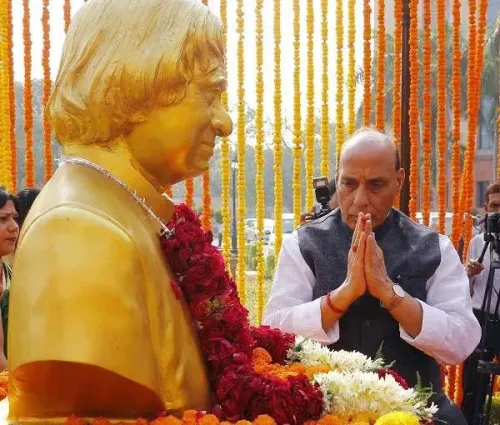
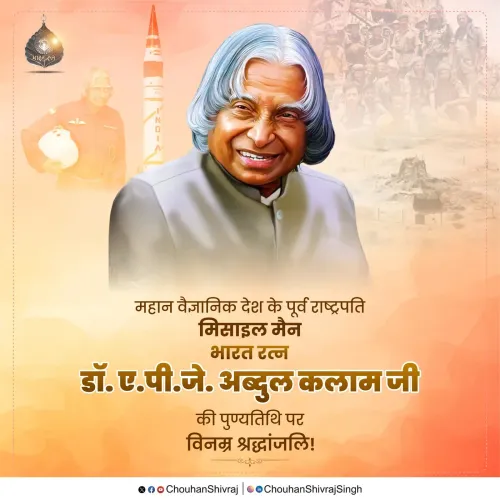
On the birth anniversary of one of India's most beloved scientist-statesmen, Union Agriculture Minister Shivraj Singh Chouhan offered a heartfelt salute to Dr. A.P.J. Abdul Kalam on Thursday, October 15, honouring the man who gave India its missile backbone and its nuclear shield.
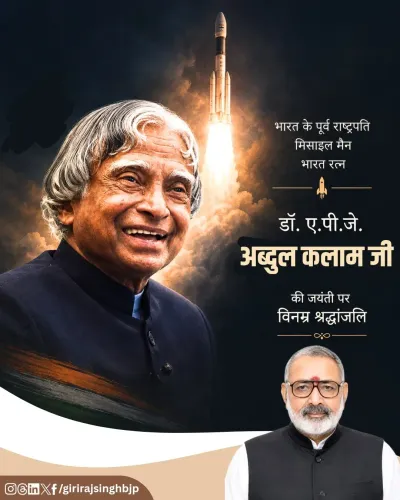
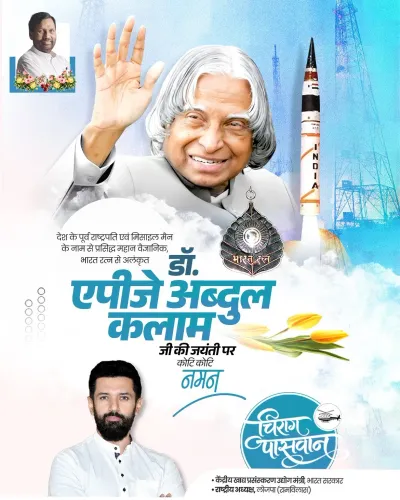
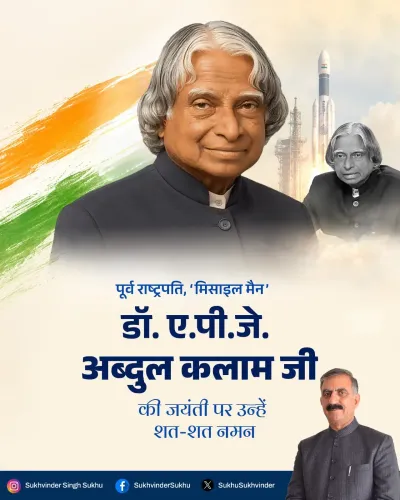
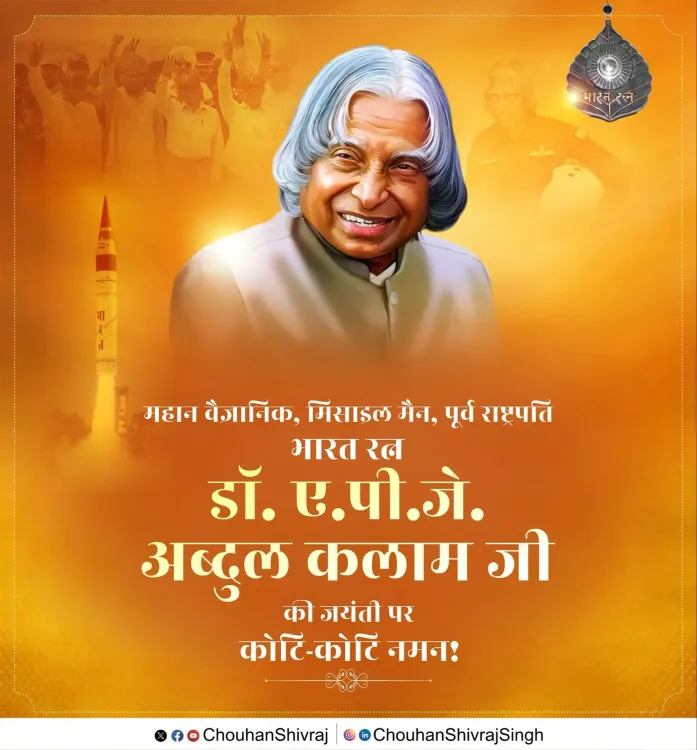
Chouhan wrote on X: 'महान वैज्ञानिक, मिसाइल मैन, पूर्व राष्ट्रपति, भारत रत्न डॉ. ए.पी.जे. अब्दुल कलाम जी की जयंती पर कोटि-कोटि नमन करता हूँ!' — translating broadly as: 'I bow in countless reverence to the great scientist, Missile Man, former President and Bharat Ratna, Dr. A.P.J. Abdul Kalam, on his birth anniversary.' The minister underscored Kalam's 'unprecedented contribution' in making India a nuclear-capable nation and elevating the country's stature in defence and space science on the global stage.
From Pokhran to the stars: what Kalam built
Dr. Avul Pakir Jainulabdeen Abdul Kalam, born October 15, 1931, in Rameswaram, Tamil Nadu, spent decades as the chief architect of India's integrated missile development programme before serving as the 11th President of India from 2002 to 2007. He earned the title 'Missile Man' for steering programmes that produced the Agni and Prithvi missile series, fundamentally reshaping India's strategic posture.
His most consequential technical moment came in May 1998, when India conducted the Pokhran-II nuclear tests — a series of five underground detonations in the Rajasthan desert that announced India's arrival as a declared nuclear-weapons state. Kalam played a central scientific role in that mission. The tests drew international sanctions but cemented a deterrence doctrine that successive governments have built upon ever since. India awarded him the Bharat Ratna, its highest civilian honour, in 1997.
The 'Viksit Bharat' thread Chouhan draws
Chouhan's tribute is more than ceremonial sentiment. He specifically linked Kalam's 'priceless thoughts and exemplary life' to the goal of inspiring young generations toward nation-building and the vision of a Viksit Bharat — Developed India — a political and policy frame the current government has made central to its long-term agenda. The framing is deliberate: positioning Kalam's scientific ambition as a founding spirit for an India that aspires to be a global technology and economic power by 2047.
Indian leaders across party lines mark this date every year, but the consistent invocation of Kalam's legacy in the context of space, defence, and youth development signals that his memory functions as rare political common ground — a scientist-president whose story transcends ideology.
Point of View
Apolitical figure as spiritual patron of an ambitious 2047 development agenda. The Pokhran-II reference is particularly pointed: invoking a moment of strategic defiance that resonates with voters across regions and generations. What is notable is the consistency with which Kalam's memory functions as bipartisan shorthand for ambition and self-reliance — rare in a polarised political environment. How strongly his legacy gets institutionalised in science-education or space-programme branding under the current government will be worth watching.
NationPress
15 Oct 2026
Frequently Asked Questions
When is APJ Abdul Kalam's birthday?
Dr. APJ Abdul Kalam was born on October 15, 1931 , in Rameswaram, Tamil Nadu. His birth anniversary is widely observed across India as a day to honour his scientific and national contributions.
Why is APJ Abdul Kalam called the Missile Man of India?
Kalam earned the title 'Missile Man' for his foundational role in developing India's integrated missile programme, including the Agni and Prithvi missile series, which transformed India's strategic and defence capabilities.
What was Kalam's role in the Pokhran nuclear tests?
Dr. Kalam played a central technical role in the Pokhran-II nuclear tests of May 1998 , the series of underground detonations that established India as a declared nuclear-weapons state.
What is Bharat Ratna and did APJ Abdul Kalam receive it?
The Bharat Ratna is India's highest civilian honour. Dr. APJ Abdul Kalam received it in 1997 in recognition of his extraordinary service to science and the nation.
What did Shivraj Singh Chouhan say about APJ Abdul Kalam?
Union Agriculture Minister Shivraj Singh Chouhan paid tribute to Kalam on his birth anniversary, praising his 'unprecedented contribution' to India's defence, space, and nuclear programmes, and calling his life and thoughts a perpetual inspiration for youth working toward a developed India.