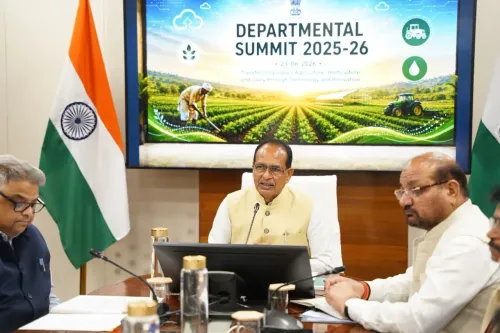
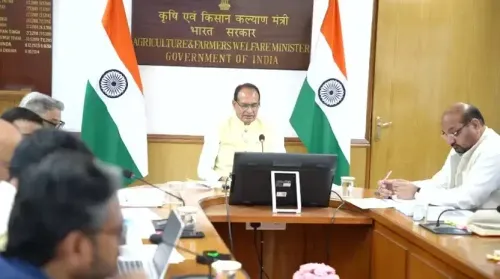
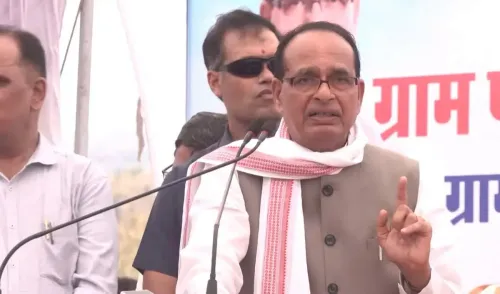
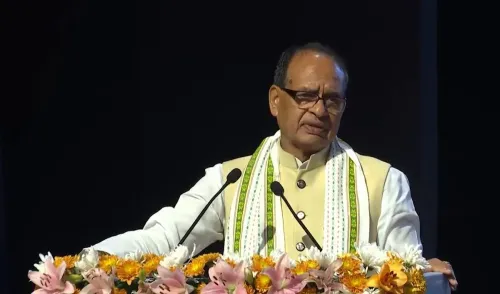
Shivraj Singh Chouhan: Protect small farmers' land, sustain output
Synopsis
Union Agriculture Minister Shivraj Singh Chouhan on 21 October 2026 called for building a system that protects small farmers' land while ensuring agricultural production does not decline — naming a structural tension at the heart of India's agrarian policy.
Key Takeaways
Shivraj Singh Chouhan , Union Minister of Agriculture & Farmers Welfare and Rural Development, posted a policy statement on 21 October 2026 calling for protection of small farmers' land alongside sustained agricultural output.
The statement directly acknowledges the central tension in Indian agrarian reform: consolidation efforts risk displacing small landowners, while fragmentation limits productivity.
India's small and marginal farmers — those holding under two hectares — constitute the dominant share of the country's agricultural workforce, making land protection a matter of national food security.
Existing central schemes such as PM-KISAN , PMFBY , and PMKSY address income and output support, but structural land-protection frameworks remain uneven across states.
Chouhan's language — 'we must build a system' — signals a policy design intent rather than a ready announcement, with follow-up expected in Parliament or at state-level agricultural reviews.
India's small farmers hold the land — and the question is whether policy can hold both the land and the harvest together. Union Agriculture Minister Shivraj Singh Chouhan on Wednesday, 21 October 2026 issued a sharp call-to-action, demanding a system that simultaneously shields small landholdings from loss while keeping agricultural production from declining.
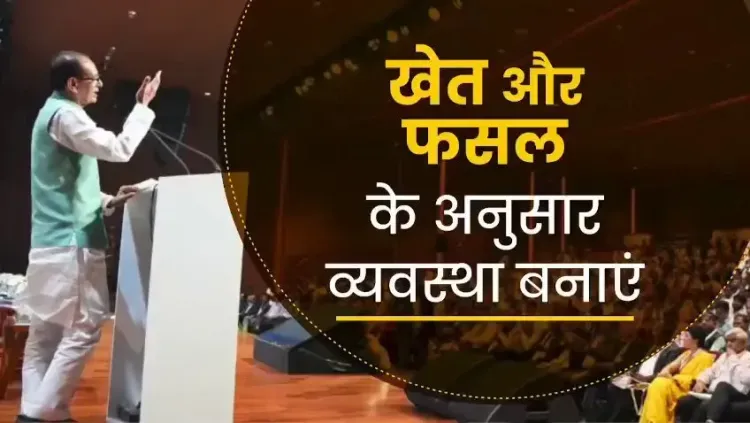
Posting on X in Hindi, Chouhan stated: 'हमें ऐसी व्यवस्था बनानी होगी, जिससे छोटे किसानों की जमीन भी बचे और कृषि उत्पादन भी न घटे.' Translated: 'We must build a system where small farmers' land is also protected and agricultural production does not decline either.' The two clauses are the tension — and they have defined Indian agrarian policy for decades.
The fragmentation problem India cannot ignore
India's agricultural landscape is dominated by small and marginal farmers — those holding less than two hectares. Decades of inheritance-driven subdivision have produced one of the most fragmented landholding structures in the world, with each generation carving already-small plots into smaller ones. The result: sub-viable farms that struggle to invest in inputs, machinery, or irrigation, eroding both household incomes and national output per acre.
The paradox Chouhan is naming is real. Efforts to consolidate holdings — whether through cooperative farming, lease models, or land-pooling — can inadvertently displace small owners who lose effective control of their land even while nominally retaining title. Any structural reform must thread this needle with precision.
What a protective framework would have to do
Successive central and state governments have pursued this balance through a patchwork of tools: direct income support like PM-KISAN, crop insurance under PMFBY, irrigation expansion under PMKSY, and technology extension through Krishi Vigyan Kendras. Yet land protection specifically — through tenancy reform, legally-recognised leasing rights, or digital land-records modernisation — remains uneven across states, many of which guard agricultural land law as a state-list subject.
Chouhan's words signal that the Ministry is thinking beyond output-support schemes and into the structural question of who owns what, and whether that ownership survives economic stress or distress sales. The mention of 'building a system' rather than announcing a specific scheme suggests a policy design phase rather than a ready rollout.
Why the timing matters
As the minister responsible for both agriculture and rural development, Chouhan sits at the intersection where land, livelihoods, and production policy converge. Any follow-up — whether in Parliament, at a state agricultural review, or through a formal policy document — will be watched closely by farm-rights advocates, state revenue departments, and lending institutions that hold agricultural collateral.
The statement lands at a moment when the twin pressures of climate variability and rising input costs are already squeezing marginal farmers hardest. Protecting their land while keeping yields up is not just a policy ambition — it is the precondition for rural stability.
Point of View
He brings credibility to the structural dimension of the argument. The call to 'build a system' rather than name an existing scheme suggests the Ministry may be in early-stage consultation on land-tenure or cooperative-farming reform. If it translates into legislation or pilot programmes, it would represent one of the more consequential agrarian policy moves of the current term.
NationPress
21 Oct 2026
Frequently Asked Questions
What did Shivraj Singh Chouhan say about small farmers in October 2026?
He called for building a system that simultaneously protects small farmers' land from being lost and ensures that agricultural production does not decline — naming both as non-negotiable goals.
Why is small farmers' land at risk in India?
Successive inheritance-driven subdivision has fragmented landholdings into sub-viable plots. Economic stress, debt, and distress sales further threaten small farmers' ownership, leaving many vulnerable to losing their land entirely.
How does land fragmentation affect agricultural production in India?
Very small plots make it economically unviable to invest in mechanisation, quality inputs, or irrigation, which reduces yields per acre and suppresses total agricultural output over time.
What existing government schemes protect small farmers in India?
Central schemes include PM-KISAN for direct income support, PMFBY for crop insurance, and PMKSY for irrigation. However, structural land-protection laws remain a state subject and vary widely across India.
Is Shivraj Singh Chouhan announcing a new farm policy?
Not yet. His statement signals a policy design intent — the phrase 'we must build a system' suggests early-stage thinking rather than a ready scheme. Follow-up announcements in Parliament or state-level reviews would confirm any formal proposal.