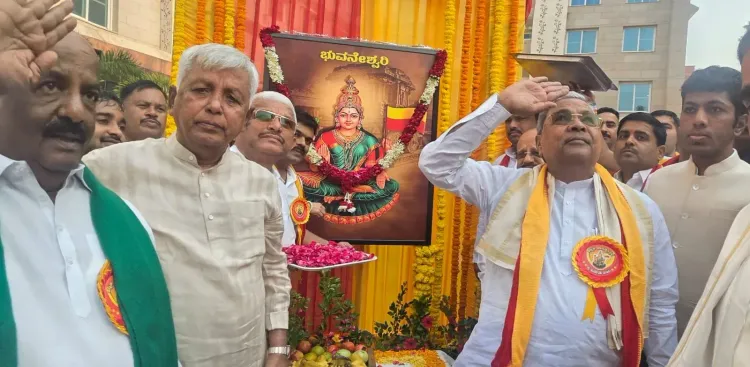
CM Siddaramaiah joins Kannada Rajyotsava at Karnataka Bhavan, Delhi
Synopsis
Karnataka Chief Minister Siddaramaiah attended the Kannada Rajyotsava ceremony at Karnataka Bhavan in New Delhi on 1 November 2026, paid floral tributes to goddess Bhuvaneshwari, and was joined by Delhi representative T.B. Jayachandra, Karnataka MPs, MLAs, and Bhavan staff.
Key Takeaways
CM Siddaramaiah represented Karnataka at its 69th Rajyotsava celebration held at Karnataka Bhavan, New Delhi on 1 November 2026 .
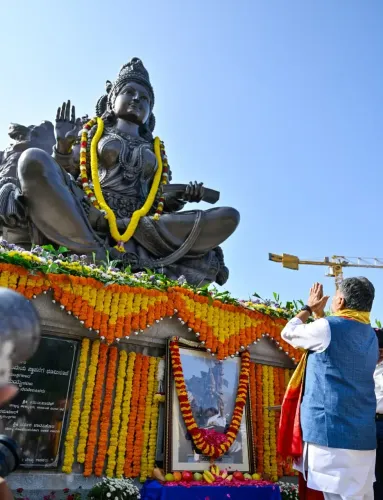
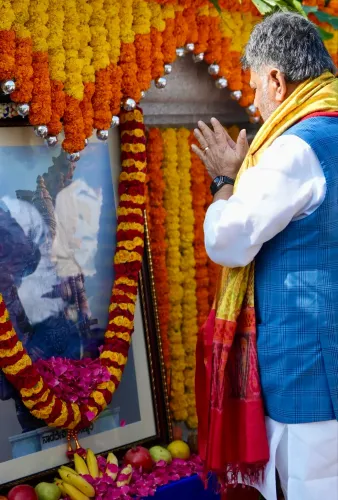
He offered floral tributes to a portrait of Bhuvaneshwari , the presiding goddess and cultural symbol of Karnataka.
State government Delhi representative T.B.
Jayachandra — a senior Congress leader and former minister — attended alongside the Chief Minister.
Karnataka MPs, MLAs, Bhavan staff, and their families participated in the ceremony.
Karnataka was formed as a unified Kannada-speaking state on 1 November 1956 , making Rajyotsava the state's founding anniversary.
The event at Karnataka Bhavan is part of a broader practice of Indian state governments hosting cultural celebrations at their Delhi outposts to assert identity in the national capital.
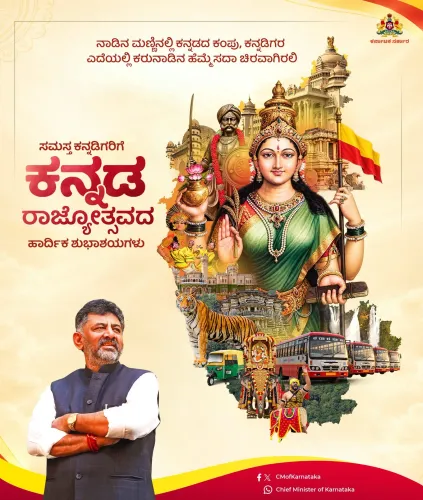
On the 69th Karnataka Rajyotsava — 1 November 2026 — Karnataka Chief Minister Siddaramaiah travelled to New Delhi to mark the state's formation day at its own outpost in the capital, Karnataka Bhavan. He offered floral tributes to a portrait of Bhuvaneshwari, the presiding goddess of Karnataka, in a ceremony that brought together the state's parliamentary delegation, legislative members, and Bhavan staff under one roof.
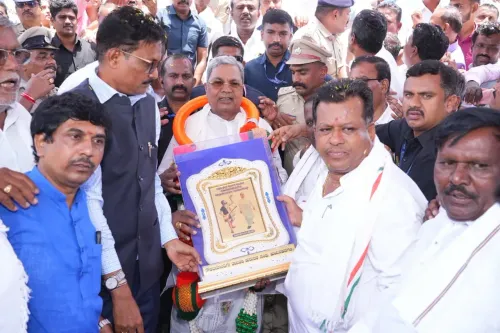
Posting in Kannada, the Chief Minister wrote that he participated in the Kannada Rajyotsava Samarambha (Kannada State Formation Day celebration) held in the premises of Karnataka Bhavan, Delhi, and paid floral respects to the portrait of Nadadevate Bhuvaneshwari Thayi — the motherland deity. Among those present were state government Delhi representative T.B. Jayachandra, the Resident Commissioner, the Assistant Commissioner, Karnataka MPs, MLAs, Bhavan staff, and their families.Why Karnataka Bhavan becomes the heart of the celebration
Karnataka was carved out as a unified Kannada-speaking state on 1 November 1956, and every year since, Rajyotsava has been observed as the state's founding anniversary — its own Republic Day of sorts. For Kannada communities far from home, Karnataka Bhavan in New Delhi functions as the most visible symbol of that identity: the official guesthouse, cultural centre, and diplomatic nerve-centre of the state government in the national capital.
Holding the celebration there rather than in Bengaluru is a deliberate act of federal-cultural assertion. It signals to lawmakers, officials, and the wider Karnataka diaspora in Delhi that the state's cultural calendar travels with its people — the ceremony is as much about community as it is about politics.
T.B. Jayachandra's role and the Delhi representation axis
T.B. Jayachandra, a senior Congress leader and former Karnataka minister, serves as the state government's representative in Delhi — a role that involves lobbying for the state's interests with the Union government, coordinating visits by state officials, and anchoring events like this one. His presence alongside the Chief Minister underscored the event's official weight beyond mere ceremony.
The gathering of Karnataka MPs and MLAs in Delhi for Rajyotsava is itself a statement: elected representatives from both houses of Parliament and the state legislature standing together on the founding day, away from the state capital, reinforcing Karnataka's unified political voice in the corridors of Union power.
Bhuvaneshwari: the cultural anchor of every Rajyotsava
The floral tribute to Bhuvaneshwari is not incidental — it is the ceremonial centrepiece of every official Karnataka Rajyotsava event. The goddess is enshrined in state iconography, her portrait a fixture at government functions across Karnataka and its Delhi outpost alike. For Chief Minister Siddaramaiah, a vocal proponent of Kannada pride and Kannadiga identity, leading this tribute personally carries unmistakable political and cultural resonance.
Sixty-nine years after the linguistic reorganisation of 1956 gave Karnataka its modern form, the state's Chief Minister standing before its presiding goddess in the heart of New Delhi is the kind of image that travels. It is Rajyotsava not just celebrated, but claimed.
Point of View
And Siddaramaiah, who has staked much of his political brand on pro-Kannada positions, gains symbolic capital by leading tributes at the national capital. The assembly of Karnataka MPs and MLAs in Delhi on Rajyotsava also reinforces a soft-power message to the Union government: Karnataka speaks with one voice on its cultural claims. As the state navigates ongoing federal disputes — from river-water sharing to fiscal devolution — these ceremonial moments quietly double as displays of political cohesion.
NationPress
1 Nov 2026
Frequently Asked Questions
What is Kannada Rajyotsava and why is it celebrated on 1 November?
Kannada Rajyotsava, or Karnataka Formation Day, marks the creation of Karnataka as a unified Kannada-speaking state on 1 November 1956 , following the linguistic reorganisation of Indian states. It is observed annually as the state's founding anniversary.
What is Karnataka Bhavan in New Delhi?
Karnataka Bhavan in New Delhi is the official guesthouse and cultural centre of the Karnataka government in the national capital. It hosts state officials, facilitates liaison with the Union government, and serves as a venue for cultural events like Rajyotsava.
Who is T.B. Jayachandra and what is his role?
T.B. Jayachandra is a senior Congress leader and former Karnataka minister who serves as the Karnataka state government's representative in New Delhi, managing federal liaison and official state events in the capital.
Who is Bhuvaneshwari and why is she significant to Karnataka?
Bhuvaneshwari is revered as Karnataka's presiding goddess and appears in the state's official iconography. Paying floral tributes to her portrait is the ceremonial centrepiece of every official Rajyotsava celebration.
Did CM Siddaramaiah attend Rajyotsava in Delhi or Bengaluru in 2026?
In 2026 , Chief Minister Siddaramaiah attended the Rajyotsava celebration at Karnataka Bhavan in New Delhi , where he offered floral tributes and participated in the formal ceremony alongside Karnataka legislators and officials based in the capital.