Sikkim to launch online RAP/PAP permit system to curb tourism revenue leaks

Synopsis
Sikkim is replacing its manual, checkpoint-based tourist permit system with an AI-integrated online platform that geo-fences access from Rangpo, locks permits to Sikkimese operators and drivers, and ring-fences destination revenue for conservation — a structural shift that could become a template for Himalayan tourism governance.
Key Takeaways
Sikkim is preparing an integrated online system for Restricted Area Permits (RAP) and Protected Area Permits (PAP) , announced on 18 August .
Chief Minister Prem Singh Tamang chaired a stakeholders' consultation under the Sikkim INSPIRES initiative.
A geo-fencing mechanism from Rangpo will restrict permit generation to Sikkim-based operators and drivers only.
Permits will be non-transferable , digitally paid, and monitored via an AI-integrated real-time system .
Revenue from each destination will be ring-fenced and reinvested locally; Yumthang Valley was cited as a pilot example.
Permit validity extended from one hour to two hours following stakeholder feedback; Police and Army will not issue permits directly.
The Sikkim government is set to introduce an integrated online platform for issuing Restricted Area Permits (RAP) and Protected Area Permits (PAP), aimed at eliminating revenue leakages, improving transparency, and regulating tourist movement across ecologically sensitive zones, officials said on Tuesday, 18 August. The move marks a significant overhaul of a permit system that has long relied on manual, checkpoint-based issuance.
Stakeholder Consultation Led by CM Tamang
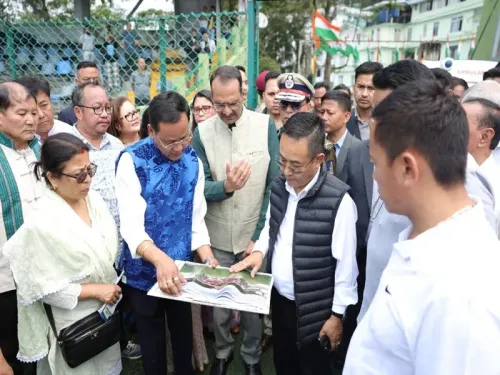
Chief Minister Prem Singh Tamang chaired a stakeholders' consultation on the proposed framework, organised by the Tourism and Civil Aviation Department under the Sikkim INSPIRES initiative. The meeting brought together tour operators, drivers' associations, and police officials to gather feedback before the system goes live.
Tourism Department Chairman Tenzing Norgay Lachungpa and senior official Raj Yadav walked stakeholders through the proposed architecture and invited responses on its implementation.
How the New System Will Work
Under the proposed framework, online permits would be issued exclusively for destinations falling under the RAP and PAP regime. A geo-fencing mechanism — operational from Rangpo, the entry point from West Bengal — would ensure that only eligible Sikkim-based tour operators and Sikkimese drivers can generate permits. Vehicles registered outside the state would not be allowed on designated routes.
Permits would be non-transferable and cannot be resold, with all payments processed digitally. An AI-integrated, real-time monitoring system is proposed to close the gaps currently associated with manual permit issuance at checkpoints. Following stakeholder feedback, officials also agreed to extend the proposed permit validity window from one hour to two hours.
Revenue Leakages and the 'Quality Over Quantity' Approach
Yadav flagged discrepancies in revenue collection data from 2025, stating that leakages had resulted in significant financial losses for the state. The new system is designed to ring-fence revenue collected at individual tourist destinations and reinvest it directly in developing and maintaining those sites.
The department said the system would follow a 'quality over quantity' philosophy, prioritising high-value destinations over mass footfall. Yumthang Valley was cited as a model where regulated access and destination-specific revenue could support conservation and infrastructure development.
Who Can Issue Permits — and Who Cannot
Under the revised protocol, neither Police nor Army personnel would have authority to issue permits directly. Special cases would be routed through the Home Department. Officials also assured stakeholders that robust safeguards would be put in place to protect personal data and prevent information leaks from the digital system.
The government has additionally invited local youth to submit tourism-related business proposals as part of a broader push to channel permit-linked economic activity toward Sikkimese residents.
What Comes Next
The consultation marks a pre-implementation phase; no formal launch date has been announced yet. With stakeholder feedback now in hand, the Tourism and Civil Aviation Department is expected to finalise the framework before rolling out the platform. If executed as proposed, the system could serve as a replicable model for permit-based tourism regulation in other ecologically sensitive Himalayan states.
Point of View
Concentrating permit-linked income within the state. That protectionist design will likely face pressure from larger national tour operators who currently route traffic through Sikkim. The revenue ring-fencing model is sound in principle, but its credibility depends entirely on whether the AI monitoring layer is independently audited or remains a government-run black box. The 2025 leakage discrepancies Yadav cited were never quantified publicly — that opacity is precisely the accountability gap the new system must close, not replicate.
NationPress
19 Aug 2026
Frequently Asked Questions
What is Sikkim's new online tourist permit system?
It is an integrated digital platform being developed by the Sikkim Tourism and Civil Aviation Department to issue Restricted Area Permits (RAP) and Protected Area Permits (PAP) online. The system will use geo-fencing, AI-based monitoring, and digital payments to replace the existing manual, checkpoint-based process.
Who can generate permits under the new Sikkim system?
Only Sikkim-based tour operators and Sikkimese drivers will be eligible to generate permits through the geo-fenced platform. Vehicles registered outside the state will not be permitted on designated RAP/PAP routes.
Why is Sikkim overhauling its permit system?
Officials cited significant revenue leakages in 2025 due to discrepancies in manual permit issuance at checkpoints. The new system aims to plug these gaps, improve transparency, and reinvest destination-specific revenue into conservation and infrastructure.
Which areas will the new permit system cover?
The system will cover destinations under the RAP and PAP regime. Yumthang Valley was specifically mentioned as an example where regulated tourist access and ring-fenced revenue could support conservation efforts.
When will the new Sikkim permit system launch?
No formal launch date has been announced. The stakeholder consultation on 18 August 2025 was a pre-implementation step; the Tourism Department is expected to finalise the framework before going live.