Dr Jitendra Singh calls cancer fight a mass public movement
Synopsis
Union Minister Dr. Jitendra Singh addressed the release of cancer survivor Dr. Akhilesh Gupta's memoir 'UNBROKEN', calling for India's NCD response to move beyond hospitals into a mass public movement and urging a crackdown on health misinformation.
Key Takeaways
Jitendra Singh addressed the release of 'UNBROKEN: My Battle with Cancer' authored by scientist and cancer survivor Dr.
The minister described non-communicable diseases — cancer, diabetes, obesity, fatty liver disease — as 'one of the country's biggest public health challenges,' increasingly affecting younger populations.
He stated that several cancers are now curable or manageable with early diagnosis and prompt medical intervention .
Singh called for India's NCD response to 'move beyond hospitals and become a mass public movement.' He flagged the 'alarming spread of misinformation' on nutrition, diet and obesity as a critical threat requiring urgent attention.
India's NPCDCS (launched 2010 ) and National Health Policy 2017 form the existing policy backbone for NCD prevention and community-level health promotion.
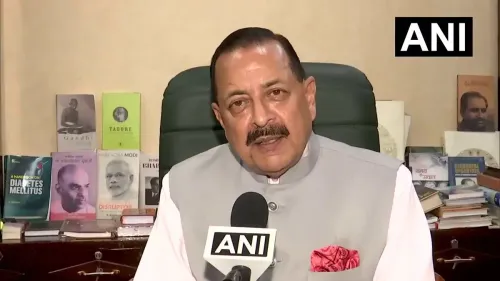
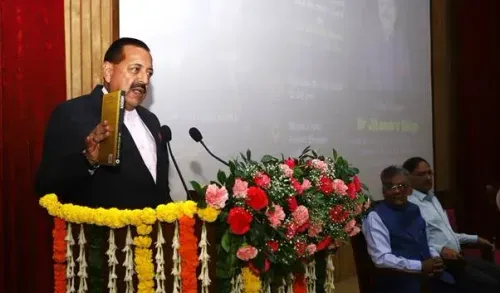
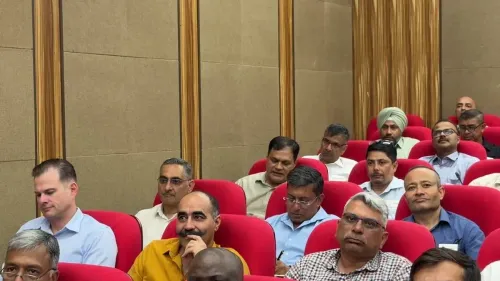
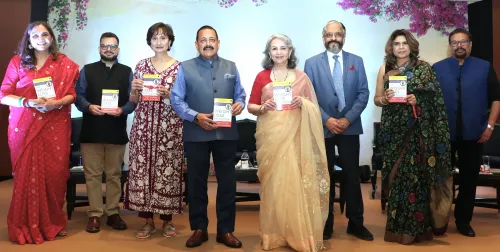
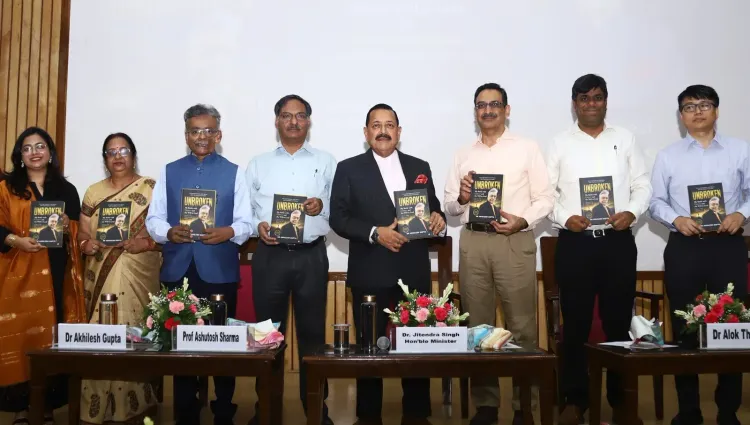
Union Minister of State (Independent Charge) for Science and Technology Dr. Jitendra Singh addressed a gathering on Sunday, 19 July 2026, at the release of 'UNBROKEN: My Battle with Cancer', a memoir authored by eminent scientist and cancer survivor Dr. Akhilesh Gupta, calling on India to transform its response to non-communicable diseases into a nationwide public movement.
Context
Speaking at the book release, Dr. Jitendra Singh described the memoir as 'much more than a personal memoir' that 'chronicles an extraordinary journey of courage, resilience, integrity and unwavering faith in medical science.' The book, written by Dr. Akhilesh Gupta — a scientist who battled cancer himself — offers both a personal account and a broader commentary on India's public health landscape.
The minister highlighted that non-communicable diseases have emerged as 'one of the country's biggest public health challenges,' with cancer, diabetes, obesity, fatty liver disease and other metabolic disorders rising across all regions and increasingly affecting younger populations.
Policy Backdrop
India's policy architecture for tackling NCDs dates to 2010, when the National Programme for Prevention and Control of Cancer, Diabetes, Cardiovascular Diseases and Stroke (NPCDCS) was launched to strengthen community-level screening and awareness. The National Health Policy of 2017 further prioritised NCDs and explicitly called for a shift from curative hospital-centric care toward prevention and health promotion.
Dr. Singh reinforced this directional shift, stating that 'India's response to the growing burden of cancer, diabetes, obesity and other non-communicable diseases must move beyond hospitals and become a mass public movement.' He underscored the need for 'greater dissemination of evidence-based health information' alongside a firm check on 'the alarming spread of misinformation, particularly relating to nutrition, diet and obesity.'
The Science and Technology Ministry has increasingly contributed to health messaging frameworks, integrating evidence-based communication strategies to counter digital misinformation on diet and treatment options — a challenge that has grown sharply with social media proliferation.
Stakeholders and Impact
The minister's remarks carry direct relevance for NCD patients, frontline public health workers, and young adults — the demographic now most visibly affected by the rise in metabolic disorders. Dr. Singh offered a note of cautious optimism, pointing out that 'several cancers are now curable or manageable if diagnosed early, followed by prompt medical intervention.'
The book itself is positioned as a tool for public awareness. As a narrative by a working scientist who experienced cancer firsthand, it bridges the gap between clinical knowledge and lived experience — a combination that health communication experts consider particularly effective in building public trust around early detection and treatment adherence.
What's Next
Attention will now turn to whether the ministry translates the political momentum of such public engagements into concrete programme updates. Revised NPCDCS guidelines are expected to filter through state health missions, and any parliamentary discussion on regulating health-related misinformation during the upcoming budget session will be closely watched. The minister's call for a 'mass public movement' signals intent, but sustained institutional follow-through — from community screening drives to regulated digital health content — will determine the real-world impact on India's NCD burden.
Point of View
' the minister is echoing a governance philosophy that has sought to position preventive health as a citizen-level responsibility, not just a state-delivery function. The explicit call to counter misinformation on nutrition and diet also reflects growing recognition that social media ecosystems are actively undermining public health gains. Whether this translates into regulatory action or remains aspirational rhetoric will be the real test of this political moment.
NationPress
18 Oct 2026
Frequently Asked Questions
Who is Dr. Akhilesh Gupta and what is the book 'UNBROKEN' about?
Dr. Akhilesh Gupta is an eminent Indian scientist who survived cancer and authored 'UNBROKEN: My Battle with Cancer,' a memoir chronicling his personal journey through illness, recovery, and his faith in medical science.
What did Dr. Jitendra Singh say at the 'UNBROKEN' book release?
Dr. Jitendra Singh said India's response to cancer, diabetes, obesity and other non-communicable diseases must move beyond hospitals and become a mass public movement, and called for stronger dissemination of evidence-based health information while checking the spread of misinformation.
What is India's NPCDCS programme?
The National Programme for Prevention and Control of Cancer, Diabetes, Cardiovascular Diseases and Stroke (NPCDCS), launched in 2010, is India's flagship government initiative to address rising NCD burden through community screening, awareness, and early intervention.
Are cancers curable in India?
Dr. Jitendra Singh noted that several cancers are now curable or manageable if diagnosed early and followed by prompt medical intervention, reflecting advances in oncology available within India's health system.
Why is health misinformation a concern in India?
Misinformation on nutrition, diet and obesity spreads rapidly through digital platforms, undermining evidence-based public health messaging and discouraging timely medical consultation — a concern Dr. Singh specifically raised at the book release event.