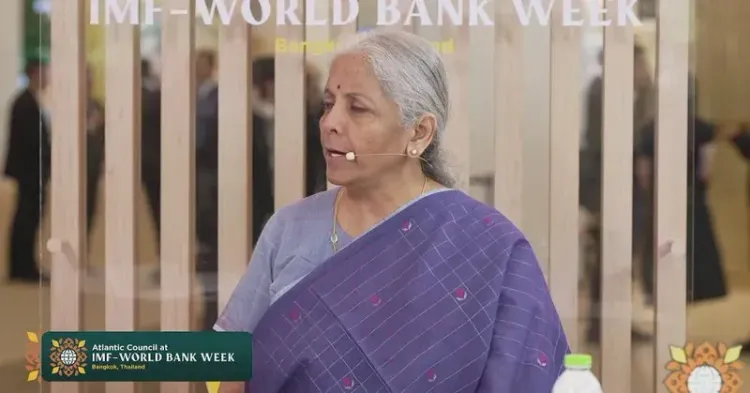
Sitharaman addresses Atlantic Council at IMF-World Bank Meetings
Synopsis
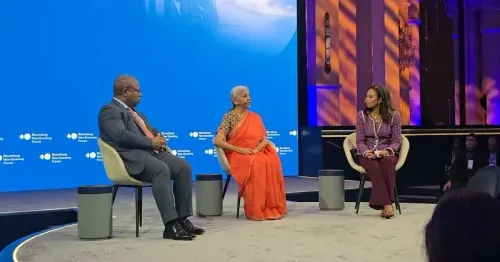
Union Finance Minister Nirmala Sitharaman addressed a live Atlantic Council interactive session on the sidelines of the IMF-World Bank Annual Meetings in Bangkok, Thailand, on 16 October 2026, presenting India's economic perspective to a global policy audience under the #FutureOfEcon banner.
Key Takeaways
Nirmala Sitharaman took part in a live interactive session hosted by the Atlantic Council in Bangkok, Thailand on 16 October 2026 .
The session was held on the sidelines of the IMF-World Bank Annual Meetings , an annual gathering of global finance ministers and central bank governors.
The Atlantic Council is a prominent US-based think tank focused on international economic and security policy.
The session was broadcast live under the hashtag #FutureOfEcon , signalling a deliberate effort to widen the domestic and international audience.
Indian finance ministers have consistently used IMF-World Bank sideline forums to present India's positions on global economic governance and Bretton Woods reform.
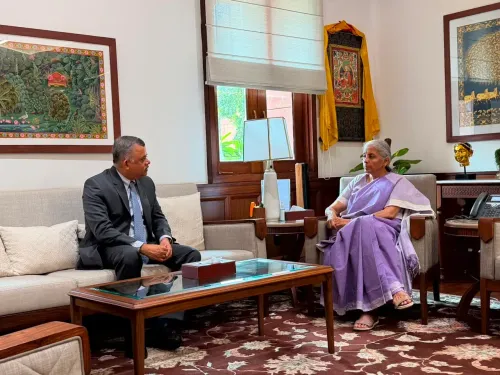
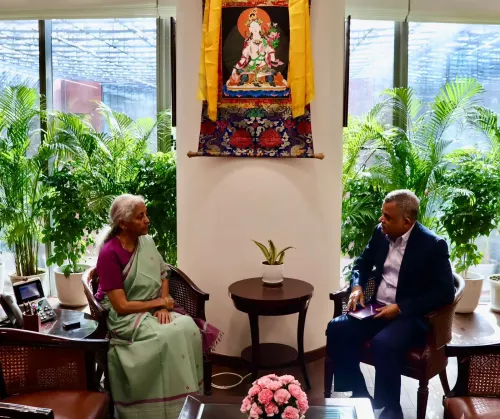
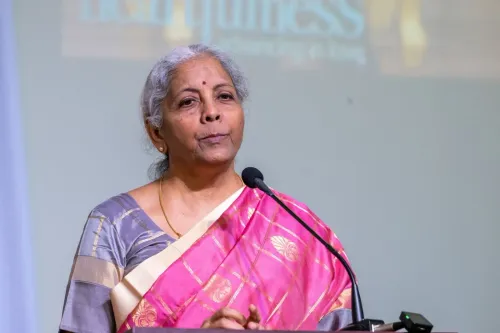
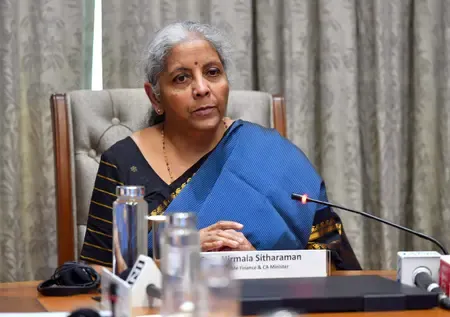
On the sidelines of the IMF-World Bank Annual Meetings in Bangkok, Thailand, Union Finance Minister Nirmala Sitharaman took part in a live interactive session hosted by the Atlantic Council on Friday, 16 October 2026 — placing India's economic voice at one of the world's most consequential multilateral gatherings.
Bangkok as the stage for India's global economic pitch
The IMF-World Bank Annual Meetings draw finance ministers and central bank governors from across the globe to take stock of the world economy, coordinate policy responses, and set the agenda for Bretton Woods institutions. Bangkok — hosting the meetings this cycle — provides the backdrop for hundreds of bilateral and sideline engagements that often shape as much policy as the formal plenary sessions themselves.
The Atlantic Council, a Washington-based think tank with a wide footprint in international economic and security policy, organised the interactive session under the hashtag #FutureOfEcon. Its choice to feature Sitharaman reflects India's growing centrality to conversations about global growth, development finance, and the reform of multilateral institutions.
A seat India has consistently claimed
Indian finance ministers have made it a point to engage substantively at IMF-World Bank Annual Meeting sidelines in recent years — using think-tank forums to articulate India's positions on debt architecture, climate finance, and the voice of the Global South inside Bretton Woods governance. Sitharaman has been a particularly active presence in these circuits, having represented India at multiple G20 and IMF gatherings.
Sideline sessions with institutions like the Atlantic Council serve a distinct purpose: they allow a finance minister to speak to a global investor and policy audience in a more conversational, on-record format — outside the carefully scripted communiqués of formal ministerial meetings. What gets said in these rooms tends to travel.
What India's presence signals at this juncture
The session arrives at a moment when the international community is navigating debates around IMF quota reform, World Bank capital adequacy, and the financing needs of emerging economies. India — as the world's fastest-growing major economy and an increasingly assertive voice in multilateral forums — has a direct stake in how those debates land. Sitharaman's engagement at Bangkok puts Delhi's perspective on the table in real time, in front of an audience that includes the fund managers, treasury officials, and economic policymakers who move capital across borders.
The live broadcast format, amplified through official social channels, also signals a deliberate effort to make India's multilateral diplomacy visible to a domestic audience — framing global economic engagement not as arcane negotiation but as active national interest.
Whatever signals emerge from Bangkok will be parsed closely by markets and policymakers alike. When a finance minister speaks at the Atlantic Council during IMF week, the world is listening.
Point of View
Not merely a recipient of multilateral advice. At a moment when IMF quota reform and development-finance architecture are live debates, what a finance minister says in Bangkok this week carries real signal value for markets and partner governments watching India's policy direction.
NationPress
16 Oct 2026
Frequently Asked Questions
What is the IMF-World Bank Annual Meetings and why is it held in Bangkok in 2026?
The IMF-World Bank Annual Meetings are a yearly gathering of finance ministers and central bank governors from member countries to discuss the global economy, financial stability, and development finance. Bangkok, Thailand is hosting the 2026 edition, rotating the venue to Southeast Asia.
What is the Atlantic Council and why did it host Sitharaman?
The Atlantic Council is a Washington-based think tank that organises policy discussions on international economic and security issues. It hosted Finance Minister Sitharaman as part of its #FutureOfEcon series, reflecting India's growing prominence in global economic conversations.
What topics does Nirmala Sitharaman typically discuss at IMF sideline events?
At IMF and World Bank sideline sessions, Sitharaman has addressed themes including India's growth outlook, global debt architecture, climate finance for emerging economies, and reform of the Bretton Woods institutions to give developing nations greater voice.
Why do Indian finance ministers engage with think tanks at IMF-World Bank meetings?
Think-tank sideline sessions allow finance ministers to speak directly to global investors, policymakers, and media in a conversational on-record format — complementing formal ministerial communiqués and helping shape the global narrative around India's economic priorities.
How can I watch Nirmala Sitharaman's Atlantic Council session live?
The session was broadcast live via an X (formerly Twitter) stream linked from the official @nsitharamanoffc account, accessible through the broadcast link shared in the original post under the hashtag #FutureOfEcon.