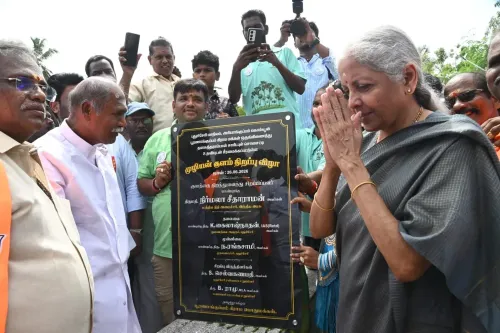
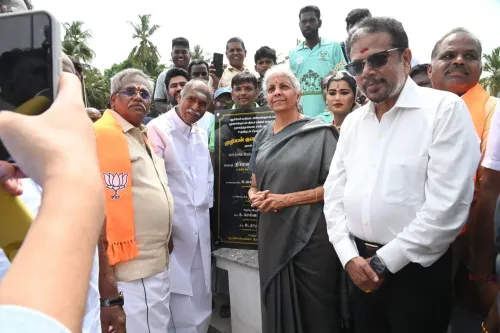
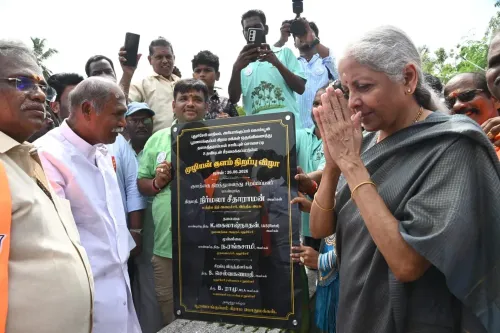
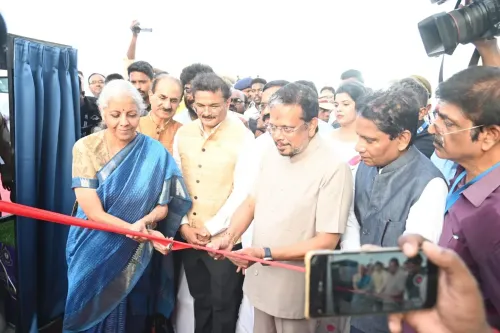
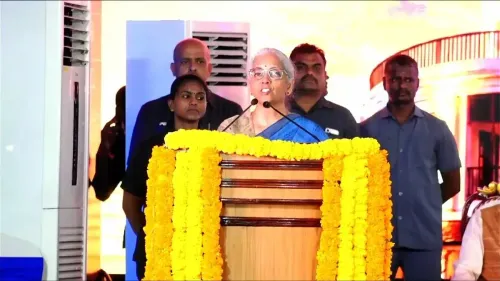
Sitharaman highlights multi-agency effort behind Old Light House restoration
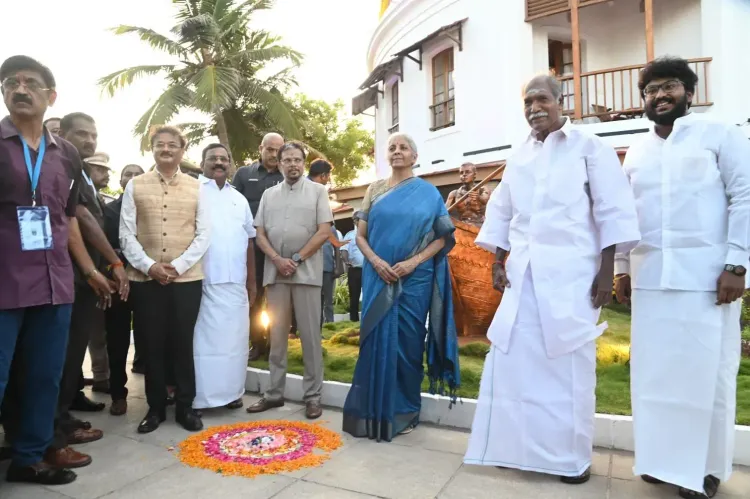
Synopsis
Finance Minister Nirmala Sitharaman spotlighted the multi-agency restoration of Puducherry's Old Light House, crediting IIT Madras, ASI, INTACH and CPWD for combining scientific rigour with heritage sensitivity under PM Modi's 'whole of government' framework.
Key Takeaways
Union Finance Minister Nirmala Sitharaman posted on 25 June 2026 about the renovation of the Old Light House in Puducherry .
The National Centre for Safety of Heritage Structures at IIT Madras carried out a detailed structural safety assessment of the nineteenth-century structure.
The Archaeological Survey of India guided the project to preserve the authenticity and integrity of the restoration.
INTACH , drawing on its experience with Puducherry's heritage buildings, served as project consultant throughout the work.
The CPWD executed the physical construction and renovation under INTACH's guidance.
Sitharaman framed the collaboration as a model of PM Modi's 'whole of government' approach to national projects.
Union Finance Minister Nirmala Sitharaman on Thursday, 25 June 2026 highlighted the collaborative institutional model behind the renovation of the Old Light House in Puducherry, calling it a model example of the 'whole of government' approach championed by Prime Minister Narendra Modi.
Context
In a post on X, Sitharaman outlined how four distinct institutions — IIT Madras, the Archaeological Survey of India (ASI), INTACH, and the Central Public Works Department (CPWD) — each played a defined role in restoring the nineteenth-century structure. She described the exercise as a demonstration of institutional collaboration rather than a single-agency effort. The post is the second in a thread, indicating a broader communication around the project.
The Old Light House is among Puducherry's colonial-era heritage landmarks, a Union Territory whose built heritage reflects its history as a former French colony and features a concentration of eighteenth- and nineteenth-century structures.
Policy Backdrop
The National Centre for Safety of Heritage Structures (NCSHS), established at IIT Madras in 2019, was tasked with conducting a detailed structural safety assessment of the lighthouse. Sitharaman noted that the centre's 'scientific rigour helped ensure that this nineteenth-century structure would remain safe and stable for future generations.' The NCSHS was created precisely to bring engineering discipline to the assessment of India's ageing heritage stock.
The Archaeological Survey of India, founded in 1861 and the nodal body for protection of ancient monuments, provided expert guidance to preserve the 'authenticity and integrity of the restoration,' according to Sitharaman's post. INTACH, which has worked on Puducherry's heritage buildings since the 1990s, served as project consultant, while the CPWD executed the physical work under INTACH's guidance.
The project reflects a wider policy emphasis on applying modern engineering standards to colonial-era structures without compromising their historical character — a balance that has become a recurring challenge in coastal and former colonial cities across India.
Stakeholders and Impact
Heritage conservationists have long advocated for exactly this kind of layered institutional involvement, arguing that structural safety and cultural authenticity require separate but coordinated expertise. The Puducherry tourism sector, which draws visitors partly on the strength of its colonial streetscapes and landmarks, stands to benefit directly from the lighthouse's stabilisation and preservation.
Local residents and civil society groups in Puducherry have historically been invested in the fate of heritage structures in the Union Territory, and the involvement of INTACH — an organisation with deep community ties in the region — is likely to lend the project credibility among those stakeholders.
What's Next
Sitharaman's thread format ('2/n') suggests further details on the project are forthcoming, potentially covering outcomes, timelines, or other aspects of the restoration. Observers will watch whether the NCSHS at IIT Madras expands its structural assessments to other lighthouses or heritage buildings along India's coastline, and whether the INTACH-CPWD partnership model is replicated in other heritage-dense Union Territories and cities facing similar preservation challenges.
Point of View
She is making a case for the 'whole of government' model as a replicable template, not just a one-off project outcome. The framing ties a relatively niche conservation story to a broader BJP governance narrative around coordinated state capacity. Notably, a senior Finance Minister amplifying a cultural heritage project signals that the Modi government views heritage restoration as a cross-ministerial priority, not solely the domain of the Culture Ministry. If the NCSHS-ASI-INTACH-CPWD model is formalised and scaled, it could mark a structural shift in how India manages its colonial-era built heritage.
NationPress
24 Sept 2026
Frequently Asked Questions
What is the Old Light House in Puducherry?
The Old Light House is a nineteenth-century heritage structure in Puducherry, a Union Territory and former French colony known for its colonial-era architecture. It has undergone a multi-agency renovation involving IIT Madras, ASI, INTACH and CPWD.
What role did IIT Madras play in the Old Light House renovation?
The National Centre for Safety of Heritage Structures at IIT Madras conducted a detailed structural safety assessment to ensure the nineteenth-century lighthouse would remain safe and stable for future generations.
What is INTACH and why was it involved?
INTACH, the Indian National Trust for Art and Cultural Heritage, is a specialist conservation organisation founded in 1984. It served as project consultant for the Old Light House renovation, drawing on its deep experience with Puducherry's heritage buildings.
What did Nirmala Sitharaman say about the Old Light House?
Sitharaman described the renovation as a good example of institutional collaboration and the 'whole of government' approach envisioned by PM Modi, detailing the specific contributions of IIT Madras, ASI, INTACH and CPWD to the project.
What is the 'whole of government' approach mentioned by Sitharaman?
The 'whole of government' approach refers to a governance model where multiple ministries, agencies and institutions work in a coordinated manner towards a common objective, rather than operating in silos. PM Modi has promoted this framework across various national projects.