Sitharaman: Humans Must Stay in AI Loop, Industry Should Create Tier-II Jobs
Synopsis
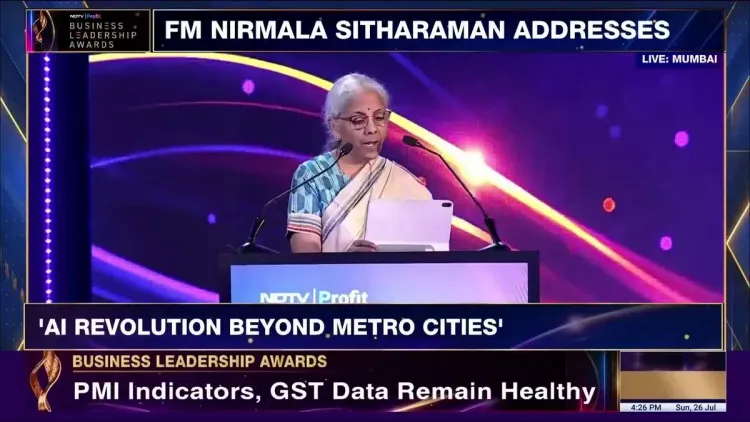
Finance Minister Nirmala Sitharaman, speaking at a business leadership awards event, declared that human judgment must not be replaced by AI and called on industry to convert expanding infrastructure into quality jobs in smaller Indian cities.
Key Takeaways
Finance Minister Nirmala Sitharaman stated that 'humans must remain in the loop' as AI transforms industries.
She drew a distinction between AI enhancing human capability versus replacing human judgment.
Sitharaman called on industry to create quality employment in Tier-II and Tier-III cities as infrastructure expands.
The remarks align with India's 2018 National Strategy for AI by NITI Aayog, which stressed human-centric and ethical AI development.
The statements echo the employment-generation goals of the PM Gati Shakti National Master Plan launched in 2021 .
Possible follow-up policy action could emerge in the next Union Budget or parliamentary technology regulation debates.
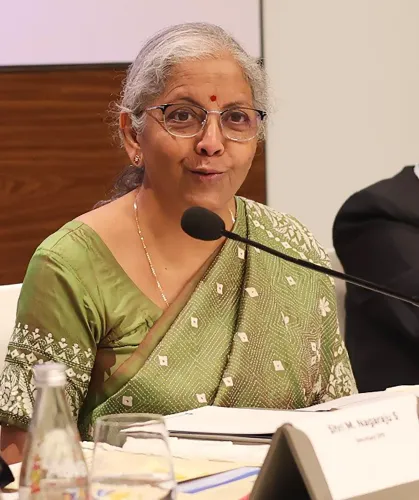
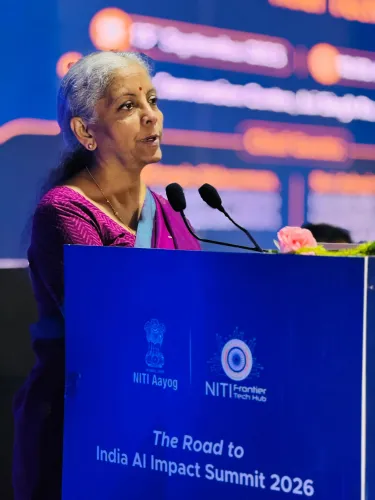
Union Finance Minister Nirmala Sitharaman on Sunday, 26 July 2026 called for keeping humans central to artificial intelligence decision-making and urged industry to channel infrastructure-led growth into quality employment in Tier-II and Tier-III cities. She was speaking at the NDTV Profit Business Leadership Awards 2026 in what amounted to a dual policy signal on technology governance and inclusive job creation.
Context
Sitharaman stated that as AI transforms industries, 'one principle must remain non-negotiable: Humans must remain in the loop.' She drew a clear line between augmentation and replacement, saying 'AI should enhance human capability, not replace human judgment.' The remarks were shared on the official handle of her office and attributed directly to her address at the awards ceremony.
The statement comes at a moment when Indian policymakers and global regulators are grappling with how to govern rapidly advancing AI systems. India has so far opted for a principles-based approach rather than hard statutory AI regulation, making ministerial articulations of this kind significant signposts for the direction of future policy.
Policy Backdrop
NITI Aayog laid out India's foundational position on AI governance as far back as 2018, when it released the National Strategy for Artificial Intelligence emphasising responsible, human-centric development and ethical guardrails. Sitharaman's remarks at the awards event echo that framework and reinforce its continued relevance under the current government.
On the infrastructure and employment front, the PM Gati Shakti National Master Plan, launched in 2021, was designed to accelerate multimodal connectivity and generate jobs beyond the major metros. Sitharaman's call for industry to create 'quality employment in Tier-II and Tier-III cities' as infrastructure expands aligns directly with the stated objectives of that programme, signalling that the government expects the private sector to translate public infrastructure investment into distributed employment gains.
Stakeholders and Impact
The technology sector — spanning software services, platform companies, and emerging AI-native startups — is the primary audience for the human-oversight message. A clear signal from the Finance Minister that AI must not displace human judgment could influence how Indian firms design AI-assisted workflows and how they frame compliance when formal AI regulation eventually arrives.
For the workforce in Tier-II and Tier-III cities, the remarks carry a different weight. As industrial corridors, logistics hubs, and digital infrastructure projects take shape outside the major metros, the minister's statement places a public expectation on industry to convert that physical expansion into stable, skilled jobs locally — reducing the migration pressure on cities like Mumbai, Delhi, and Bengaluru.
What's Next
Observers will watch whether the Finance Ministry or NITI Aayog follows up these remarks with concrete AI governance guidelines or a dedicated policy framework ahead of the next Union Budget. Parliamentary discussions on technology regulation are also a likely arena where the principles articulated here could be tested and codified.
For industry, the dual message — govern AI responsibly and invest in smaller-city employment — sets a tone that could shape corporate social responsibility commitments, hiring strategies, and technology deployment frameworks in the months ahead.
Point of View
The Finance Ministry signals that AI adoption without distributed employment gains will face political scrutiny. The remarks also serve as an informal regulatory nudge at a time when India has yet to enact hard AI legislation, effectively setting expectations for corporate behaviour in the interim. Taken together, they position the government as both an enabler of technology and a guardian of labour-market stability ahead of what are likely to be consequential Budget and parliamentary sessions on technology governance.
NationPress
26 Jul 2026
Frequently Asked Questions
What did Nirmala Sitharaman say about AI at the business leadership awards?
Sitharaman said that as AI transforms industries, humans must remain in the loop and that AI should enhance human capability rather than replace human judgment.
Why is Sitharaman calling for human oversight of AI?
India's policy approach, rooted in the 2018 NITI Aayog AI strategy, has consistently emphasised human-centric and ethical AI use; the Finance Minister's remarks reinforce that framework at a time when global AI governance debates are intensifying.
What did Sitharaman say about jobs in Tier-II and Tier-III cities?
She said that as infrastructure expands across the country, industry has an opportunity to create quality employment in Tier-II and Tier-III cities, linking public infrastructure investment to private-sector job creation in smaller urban centres.
What is the PM Gati Shakti plan and how does it relate to these remarks?
PM Gati Shakti is a national master plan launched in 2021 to accelerate multimodal infrastructure and promote employment outside major metros; Sitharaman's call for Tier-II and Tier-III city jobs aligns directly with its stated goals.
Will India introduce formal AI regulation following these remarks?
No formal AI legislation has been announced, but observers expect possible follow-up in the next Union Budget or parliamentary technology regulation discussions, where the principles Sitharaman articulated could be codified.