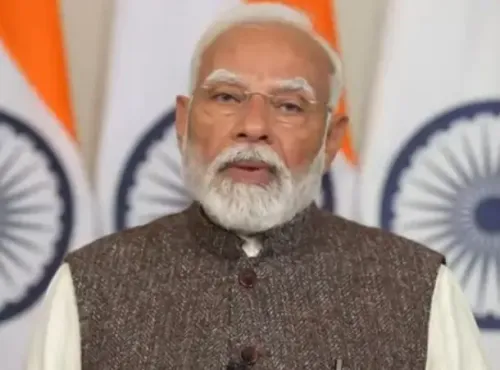
FM Sitharaman: India's economic fundamentals intact amid global turbulence
Synopsis
With global public debt racing toward a post-WWII record of 100% of GDP by 2029, Finance Minister Sitharaman used the Kautilya Economic Conclave to argue India has done the opposite — growing at 7.8%, keeping its current account deficit to 0.5% of GDP, and matching a decade of past capital spending in a single budget year. The data points are striking; the political timing, ahead of the next Budget, is equally deliberate.
Key Takeaways
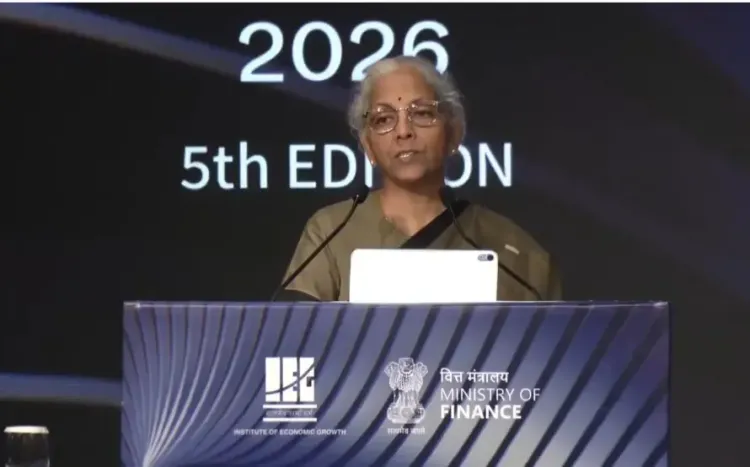
Finance Minister Nirmala Sitharaman addressed the 5th Kautilya Economic Conclave (KEC 2026) in New Delhi on 3 October 2026 .
Real GDP grew 7.8 per cent in Q1 FY 2026–27 ; CPI inflation was 4.8 per cent in August 2026; current account deficit stood at 0.5 per cent of GDP .
Global public debt reached nearly 94 per cent of GDP in 2025, projected to hit 100 per cent by 2029 — a post-WWII record.
Capital expenditure budgeted at ₹12.22 lakh crore in FY 2026–27, with effective capex at ₹17.15 lakh crore or 4.4 per cent of GDP .
PM MUDRA Yojana has sanctioned over 52 crore collateral-free loans; non-food credit grew 18.8 per cent in the year to August 2026.
National highways expanded ~61% , railway routes more than doubled, and major port cargo capacity rose ~60% since 2014.
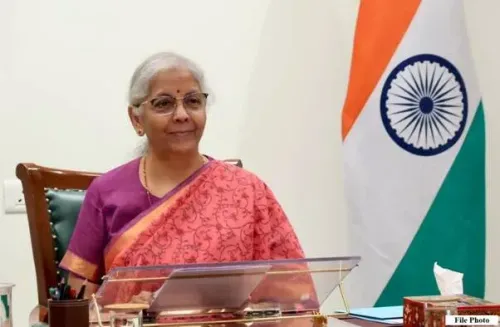
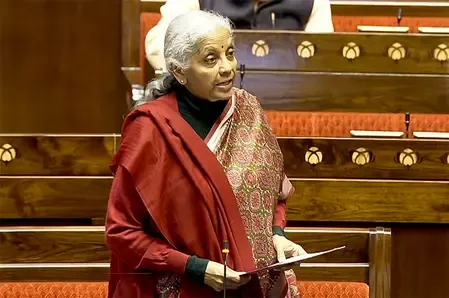
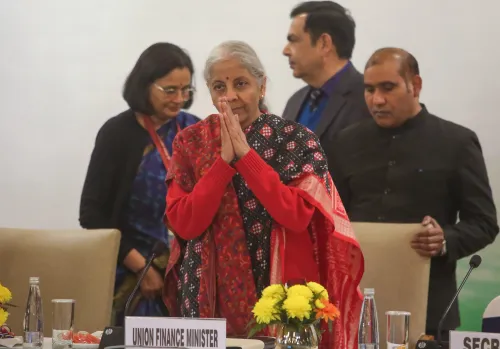
Finance Minister Nirmala Sitharaman on Saturday, 3 October 2026 declared that India has successfully navigated the global economic turbulence triggered by the West Asia crisis, with its macroeconomic fundamentals not only intact but strengthening. She made the remarks while addressing the special plenary on 'Resilience in an Age of Flux: India's Economic Priorities' at the 5th Kautilya Economic Conclave (KEC 2026) in New Delhi.
Key Economic Indicators
Sitharaman cited a robust set of macroeconomic data to back her assertion. Real GDP grew 7.8 per cent in the first quarter of FY 2026–27, while CPI inflation stood at approximately 4.8 per cent in August 2026. The current account deficit remained contained at 0.5 per cent of GDP in Q1 FY27 — a notably narrow figure amid elevated global commodity volatility.
The Finance Minister flagged the severity of the global backdrop against which these numbers were achieved. Global public debt rose to nearly 94 per cent of GDP in 2025 and is projected to hit 100 per cent by 2029 — a level last seen in the aftermath of World War II. 'A price shock can be cushioned with monetary and fiscal tools. But a quantity shock tests macroeconomic systems, the reach of delivery systems, and therefore the capacity of the state itself,' she told the gathering.
Four Foundations of India's Resilience
Sitharaman outlined four pillars she credited with anchoring India's stability. The first is household-level resilience, delivered through the Jan Dhan-Aadhaar-Mobile (JAM) trinity and Direct Benefit Transfer (DBT) framework. Flagship programmes including PM Awas Yojana (housing), Swachh Bharat (sanitation), Ujjwala (clean cooking gas), Ayushman Bharat (healthcare), and PM Garib Kalyan Anna Yojana (food security) have, she said, directly addressed multiple layers of household vulnerability.
The second pillar is productive economic participation. The PM MUDRA Yojana has sanctioned over 52 crore collateral-free loans, underpinning self-employment and small enterprise growth. Non-food credit grew 18.8 per cent in the year to August 2026, reflecting strong credit demand. The Emergency Credit Line Guarantee Scheme provided working-capital support during periods of disruption, she noted.
The third foundation is physical infrastructure. Sitharaman highlighted that in FY 2026–27 alone, the government has budgeted ₹12.22 lakh crore in capital expenditure — broadly matching, in nominal terms, the ₹12.39 lakh crore the Centre spent across the entire decade from 2004–05 to 2013–14. Effective capital expenditure stands at ₹17.15 lakh crore, or 4.4 per cent of GDP. Since 2014, national highways have expanded by about 61 per cent, operational railway routes have more than doubled, and cargo-handling capacity at major ports has risen by nearly 60 per cent. Operational airports have also more than doubled over the same period.
The fourth pillar is reform-driven governance. Sitharaman credited Prime Minister Narendra Modi with approaching reform 'as a matter of conviction, not compulsion.' She cited the Goods and Services Tax (GST), the Insolvency and Bankruptcy Code (IBC), the four Labour Codes, and the Jan Vishwas Acts as structural reforms that have strengthened the country's macroeconomic architecture.
Banking Sector Reforms and Credit Flow
On financial sector health, Sitharaman said the government had undertaken tough banking reforms — including recapitalisation, resolution of stressed assets, and tighter governance and risk-management frameworks. A strong banking sector is, she argued, now helping enterprises weather external uncertainty, even as working capital access and market connectivity remain ongoing priorities.
What This Signals
This comes amid a broader global reckoning with public debt sustainability and supply-chain fragility. Notably, India's contained current account deficit and relatively stable inflation stand in contrast to several emerging-market peers facing currency pressure and fiscal stress. Sitharaman's address signals that New Delhi intends to frame its economic record as a deliberate policy outcome rather than a windfall — a positioning with clear significance ahead of the next Union Budget cycle.
Point of View
The gap is narrower. More importantly, the resilience narrative sidesteps unresolved structural questions: private investment has not consistently matched public capex, and the MUDRA loan count of 52 crore masks questions about average loan size and repayment quality. The Kautilya platform is, by design, a sympathetic venue — the sturdier test of these fundamentals will come when Budget 2027 has to sustain this spending trajectory without widening the fiscal deficit.
NationPress
3 Oct 2026
Frequently Asked Questions
What did Finance Minister Sitharaman say about India's economy at KEC 2026?
Sitharaman said India has navigated global turbulence — including the West Asia crisis — with its economic fundamentals intact and strengthening. She cited real GDP growth of 7.8 per cent in Q1 FY27, CPI inflation of 4.8 per cent, and a current account deficit of just 0.5 per cent of GDP as evidence.
How bad is global public debt, according to Sitharaman?
Global public debt rose to nearly 94 per cent of GDP in 2025 and is projected to reach 100 per cent by 2029 — a level last seen after World War II, according to the Finance Minister. She described this as a backdrop of 'even thinner buffers' for absorbing economic shocks.
What is India's capital expenditure target for FY 2026–27?
The government has budgeted ₹12.22 lakh crore in capital expenditure for FY 2026–27, with effective capital expenditure at ₹17.15 lakh crore, equivalent to 4.4 per cent of GDP. Sitharaman noted this single-year figure broadly matches — in nominal terms — the total capex spent by the Centre in the entire decade from 2004–05 to 2013–14.
What are the four foundations of India's economic resilience cited by Sitharaman?
Sitharaman outlined four pillars: household-level resilience through the JAM trinity and DBT; productive economic participation via MUDRA loans and banking reforms; physical infrastructure through highways, railways, ports, and airports; and reform-driven governance through GST, IBC, Labour Codes, and Jan Vishwas Acts.
What is the PM MUDRA Yojana and how many loans has it disbursed?
PM MUDRA Yojana is a government scheme providing collateral-free loans to support self-employment and small enterprises. As of Sitharaman's address on 3 October 2026, the scheme has sanctioned over 52 crore loans since its launch.