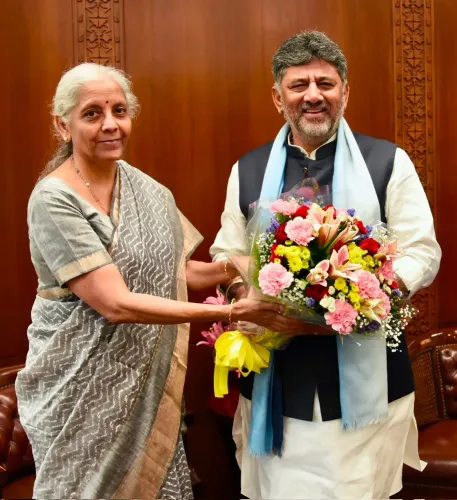
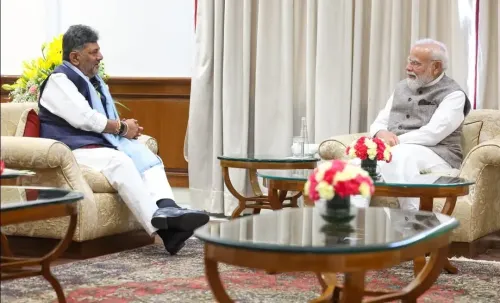
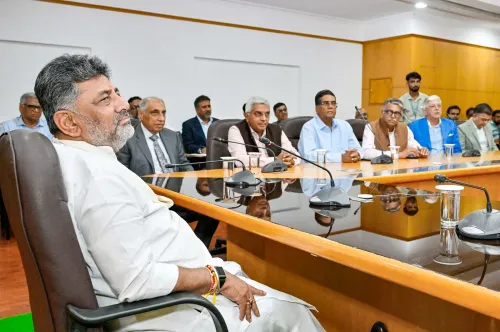
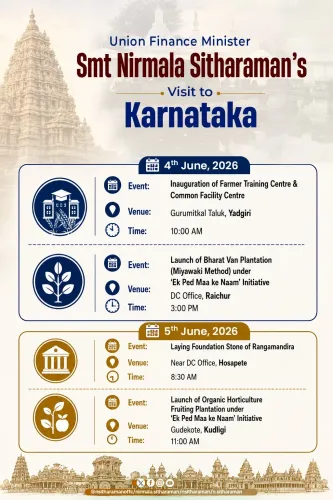
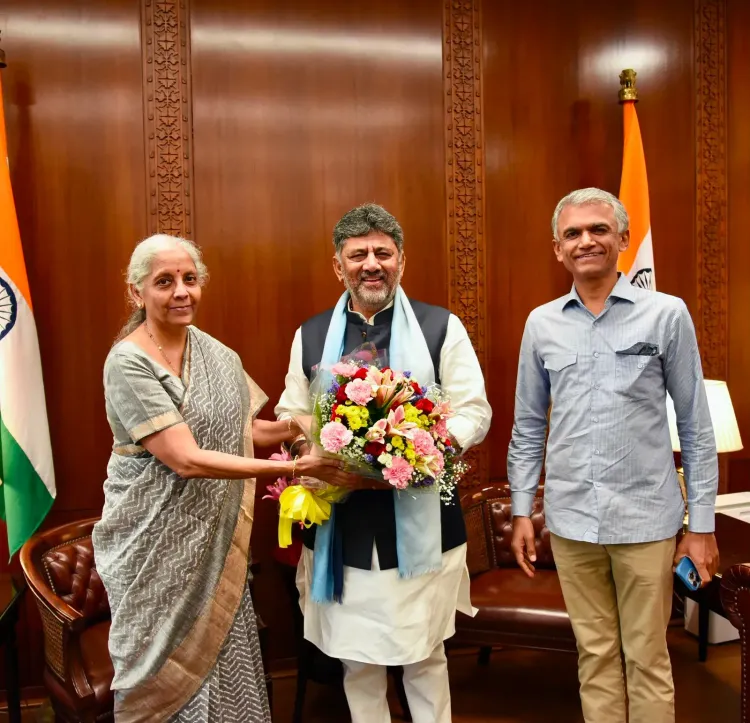
Sitharaman meets Karnataka CM Shivakumar, Minister Byre Gowda
Synopsis
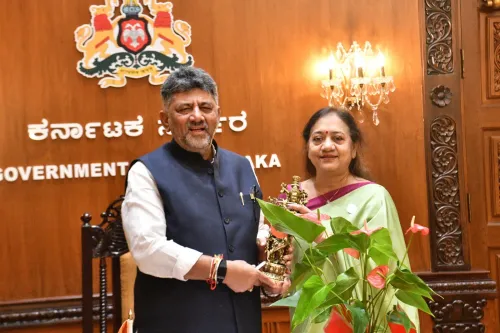
Karnataka Chief Minister D.K. Shivakumar and state Minister Krishna Byre Gowda called on Union Finance Minister Nirmala Sitharaman in New Delhi on June 11, 2026. The meeting reflects ongoing centre-state fiscal negotiations over tax devolution, central grants, and scheme funding between the Congress-led Karnataka government and the BJP-led Union government.
Key Takeaways
Union Finance Minister Nirmala Sitharaman met Karnataka Chief Minister D.K.
Shivakumar and Minister Krishna Byre Gowda on June 11, 2026 in New Delhi.
The meeting was confirmed in a bilingual English-Kannada post on X by the Finance Minister's official account.
Such centre-state fiscal meetings typically cover tax devolution, GST-related dues, grants-in-aid, and centrally sponsored scheme funding.
Karnataka has previously raised concerns about its share in central tax devolution under the 15th Finance Commission framework.
The Congress-BJP political divide between state and centre adds significance to the engagement, though fiscal dialogue continues as a constitutional requirement.
Outcomes may reflect in central fund releases, supplementary grants, or pre-Budget allocations in the coming weeks.
Union Finance Minister Nirmala Sitharaman received Karnataka Chief Minister D.K. Shivakumar and state Minister Krishna Byre Gowda in New Delhi on Thursday, June 11, 2026, in what marks a significant centre-state fiscal interaction between the BJP-led Union government and the Congress-governed state.
Context
The Finance Minister's office confirmed the meeting via an official post on X, noting in both English and Kannada that the Karnataka delegation ಭೇಟಿ ಮಾಡಿದರು (called on) Sitharaman. The bilingual communication reflects the formal nature of the engagement. Chief Minister Shivakumar was accompanied by Krishna Byre Gowda, who holds responsibilities in the Karnataka cabinet covering agriculture and allied sectors.
While the specific agenda of the meeting was not disclosed publicly, such interactions between state governments and the Union Finance Ministry are a routine but consequential feature of India's cooperative federal structure.
Policy Backdrop
Centre-state fiscal meetings have become particularly significant following the rollout of the Goods and Services Tax (GST) in 2017 and the implementation of the 15th Finance Commission recommendations from 2021. State governments periodically approach the Finance Ministry to discuss devolution of taxes, grants-in-aid, pending central releases, and the implementation of centrally sponsored schemes.
Karnataka has in recent years raised concerns over its share in central tax devolution, arguing that the state contributes disproportionately to the national tax pool relative to what it receives back. The Congress government in Bengaluru has been vocal about what it describes as fiscal inequity in the devolution formula, making such meetings with Finance Minister Sitharaman especially consequential for the state's budget planning.
With a Congress-led government in Karnataka and the BJP at the centre, the political optics of such meetings carry added weight, though direct engagement on fiscal matters has continued across party lines as a constitutional necessity.
Stakeholders and Impact
The primary stakeholders are the Karnataka state government and the Union Finance Ministry. Any outcomes from the discussion could influence the release of pending central funds, adjustments in GST compensation calculations, or allocations under flagship central schemes that Karnataka is implementing.
For Karnataka's approximately 6.5 crore residents, the results of such fiscal negotiations have direct implications — from infrastructure project timelines to the state's capacity to fund its own welfare programmes without borrowing pressure. Farmers, urban development authorities, and beneficiaries of centrally sponsored welfare schemes stand to be most directly affected by the outcomes.
What's Next
The concrete outcomes of the meeting, if any, are likely to surface through official channels in the coming weeks — either as supplementary demands for grants, revised central release orders, or as part of pre-Budget consultations ahead of the next Union Budget cycle. Observers will watch for any state government announcements regarding receipt of pending central dues or approvals for state-specific development projects. The meeting adds to a pattern of intensifying centre-state fiscal dialogue as the next Budget season approaches.
Point of View
Whatever the rhetorical battles over devolution, the transactional business of governance cannot be suspended. Karnataka has been among the more assertive states in demanding a fairer share of central taxes, and Shivakumar's direct outreach to Sitharaman suggests the state is pressing its case at the highest available level. The absence of a disclosed agenda is itself telling: outcomes in such meetings are rarely announced immediately, but tend to materialise quietly in budget documents and release orders, making this a moment to watch in Karnataka's fiscal calendar.
NationPress
29 Jul 2026
Frequently Asked Questions
Why did Karnataka CM DK Shivakumar meet Finance Minister Nirmala Sitharaman?
The meeting on June 11, 2026 was a centre-state fiscal interaction, likely covering Karnataka's demands related to central tax devolution, pending GST dues, grants-in-aid, and funding for centrally sponsored schemes. The specific agenda was not publicly disclosed.
What is the significance of Karnataka meeting the Union Finance Minister?
Karnataka, governed by Congress, has raised concerns about receiving a smaller share of central taxes relative to its contribution. Meetings with the Union Finance Minister are a key channel for the state to press its fiscal demands directly.
Who is Krishna Byre Gowda and why was he part of the Karnataka delegation?
Krishna Byre Gowda is a Congress politician serving as a minister in the Karnataka cabinet, with responsibilities covering agriculture and related sectors. His presence alongside CM Shivakumar suggests the delegation covered sector-specific funding discussions as well.
What happens after a state CM meets the Union Finance Minister?
Outcomes typically surface as revised central fund releases, approvals for state projects, adjustments in grant calculations, or as part of pre-Budget consultations. Announcements may take days to weeks to become public.
Does the political difference between Karnataka and the Centre affect such meetings?
While a Congress-governed Karnataka and a BJP-led Centre do have political differences, direct fiscal engagement is a constitutional necessity. Such meetings have continued across different political combinations at the centre and states since the GST era began in 2017.