Sitharaman in Bengaluru: Karnataka got ₹4 lakh crore in tax devolution since 2014
Synopsis
Union Finance Minister Nirmala Sitharaman, in Bengaluru, countered the Karnataka government's narrative of fiscal neglect, citing Finance Commission data showing tax devolution to the state rose nearly fivefold to ₹4 lakh crore between 2014 and 2026, with grants-in-aid climbing to ₹2.71 lakh crore over the same period.
Key Takeaways
Nirmala Sitharaman visited Bengaluru on 14 June 2026 and directly rebutted Karnataka's claim of being shortchanged by the Centre.
Karnataka received ₹4 lakh crore in tax devolution between 2014 and 2026 , nearly five times the ₹82,000 crore received during 2004–14 .
Grants-in-aid to Karnataka rose from ₹60,000 crore (2004–14) to ₹2.71 lakh crore (2014–26).
Tax devolution is governed by the Finance Commission framework under Article 280 of the Constitution.
The post is part of a series ( 1/n ), signalling that Sitharaman plans to release additional data in subsequent posts.
The 16th Finance Commission will set devolution shares for 2026–31 , making its recommendations the next key milestone in this debate.
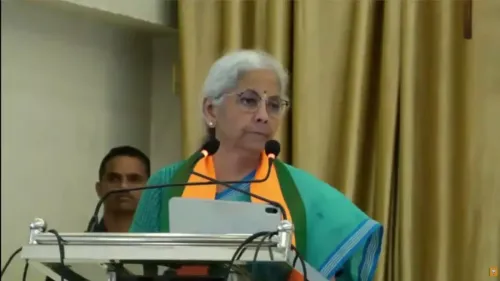
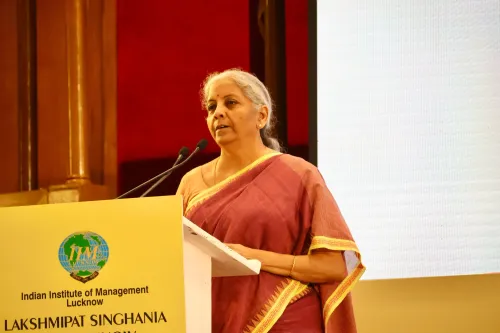
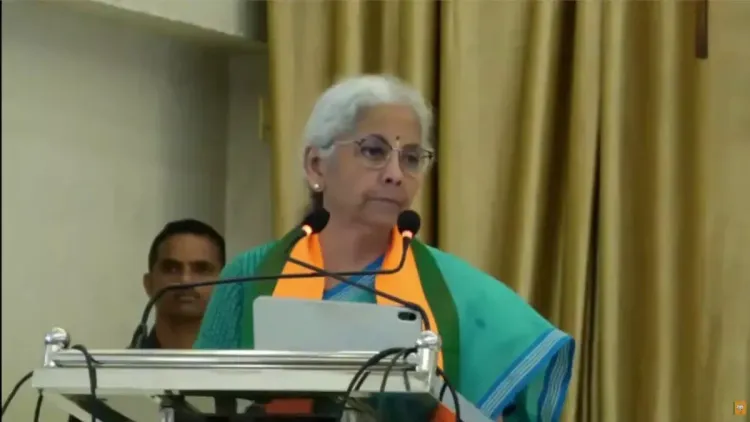
Union Finance Minister Nirmala Sitharaman, speaking in Bengaluru on Sunday, 14 June 2026, pushed back sharply against the Karnataka state government's claim that the state does not receive its fair share of central funds, presenting devolution figures she said tell 'a very different story.'
Context
The Karnataka state government, currently led by the Congress party, has repeatedly argued that the state contributes disproportionately to central tax revenues but receives less in return — a grievance that has become a recurring flashpoint in Centre-state fiscal relations. Sitharaman directly addressed this narrative during her visit to the state capital.
Citing Finance Commission data, she stated that Karnataka received ₹4 lakh crore in tax devolution between 2014 and 2026 — nearly five times the ₹82,000 crore the state received during the previous decade from 2004 to 2014. In addition, grants-in-aid to the state rose to ₹2.71 lakh crore over the same period, up from ₹60,000 crore during 2004–14.
Policy Backdrop
Tax devolution to states is governed by the Finance Commission framework, a constitutional mechanism under Article 280 that is reconstituted every five years. The 14th Finance Commission made a landmark recommendation, raising states' collective share in the central divisible pool from 32% to 42% for the period 2015–20 — the single largest increase in the history of devolution.
The 15th Finance Commission, chaired by N.K. Singh, retained a 41% devolution share for 2021–26 while introducing performance-based criteria. The implementation of GST in 2017 also expanded the divisible pool by subsuming multiple state and central levies into a unified framework, contributing to the higher nominal transfer figures cited by Sitharaman.
Southern states, including Karnataka, have long argued that their higher per-capita tax contributions are not matched by proportional returns under the horizontal devolution formula, which factors in population, area, and development indicators that can favour less-developed states.
Stakeholders and Impact
Karnataka is one of India's largest revenue-generating states, home to a significant share of the country's IT and services sector, concentrated in Bengaluru. State finance officials have used contribution-versus-receipt arguments to demand a larger share or special grants, particularly for urban infrastructure in the capital.
The figures presented by Sitharaman — covering both tax devolution and grants-in-aid — represent the Centre's counter-narrative: that absolute transfers have grown substantially under successive Finance Commissions, regardless of the horizontal distribution formula. Karnataka taxpayers and state budget planners are the most directly affected stakeholders in this ongoing debate.
What's Next
The recommendations of the 16th Finance Commission, which will determine devolution shares for 2026–31, will be the next major inflection point in this debate. States, including Karnataka, are expected to make detailed submissions to the Commission arguing for a revision of the horizontal distribution criteria.
The post is marked '1/n', indicating that Sitharaman intends to release further data points in a series, suggesting a sustained public communication effort by the Centre to counter the Karnataka government's fiscal narrative ahead of what may be a politically significant period in Centre-state relations.
Point of View
Data-driven political offensive by the BJP-led Centre against the Congress-run Karnataka government ahead of what could be a prolonged fiscal standoff. The choice to anchor the argument in Finance Commission numbers — a constitutionally independent mechanism — is tactically significant, as it frames the Centre's position as process-bound rather than political. Southern states' grievances over horizontal devolution formulae are structurally legitimate and unlikely to be resolved by aggregate figures alone, meaning this exchange is likely a preview of the submissions Karnataka will make to the 16th Finance Commission. The 'nearly five times' framing, while arithmetically valid, reflects a period of both higher nominal collections post-GST and a larger divisible pool — context the state government is certain to contest.
NationPress
13 Sept 2026
Frequently Asked Questions
How much tax devolution did Karnataka receive from the Centre between 2014 and 2026?
According to Union Finance Minister Nirmala Sitharaman, Karnataka received ₹4 lakh crore in tax devolution between 2014 and 2026, nearly five times the ₹82,000 crore received in the preceding decade from 2004 to 2014.
Why does Karnataka say it does not get its fair share from the Centre?
The Karnataka government argues that the state contributes a disproportionately large share of central tax revenues — driven by its large IT and services economy — but receives less in return under the horizontal devolution formula, which weights factors like population and development levels that favour less-developed states.
What is the Finance Commission and how does it decide state transfers?
The Finance Commission is a constitutional body constituted every five years under Article 280. It recommends how central taxes should be divided between the Union and states (vertical devolution) and among states themselves (horizontal devolution), based on factors such as population, area, income distance, and fiscal effort.
What are grants-in-aid and how much did Karnataka receive?
Grants-in-aid are non-repayable transfers from the Centre to states, separate from tax devolution, recommended by the Finance Commission for specific purposes. Sitharaman stated Karnataka received ₹2.71 lakh crore in grants-in-aid between 2014 and 2026, up from ₹60,000 crore during 2004–14.
What is the 16th Finance Commission and when will it report?
The 16th Finance Commission will determine the devolution formula and grant recommendations for the period 2026–31. Its final report, once submitted and tabled in Parliament, will set the terms of Centre-state fiscal transfers for the next five years and is expected to be a key arena for Karnataka's demands.