Sitharaman in Bengaluru: Karnataka got ₹18,000 cr SASCI loans, ₹63,000 cr devolution in FY27
Synopsis
Finance Minister Nirmala Sitharaman, speaking in Bengaluru, said Karnataka received over ₹18,000 crore in 50-year interest-free SASCI loans and that the state's FY27 devolution of ₹63,000 crore equals 76% of its entire UPA-era receipts, framing the data as evidence of cooperative federalism under PM Modi.
Key Takeaways
Karnataka received over ₹18,000 crore in 50-year interest-free loans under SASCI , over and above Finance Commission recommendations.
Karnataka's budgeted tax devolution for 2026–27 alone is ₹63,000 crore .
That single-year figure equals 76 per cent of all devolution Karnataka received during the entire UPA period (2004–14) .
SASCI loans are discretionary capital transfers that supplement, not replace, the statutory Finance Commission formula.
The 16th Finance Commission 's forthcoming recommendations will shape Centre-state transfers beyond 2026.
Sitharaman made these remarks during a visit to Bengaluru on June 14, 2026 .
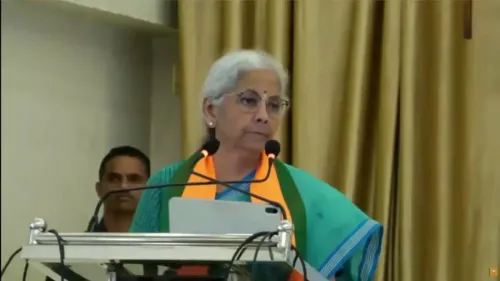
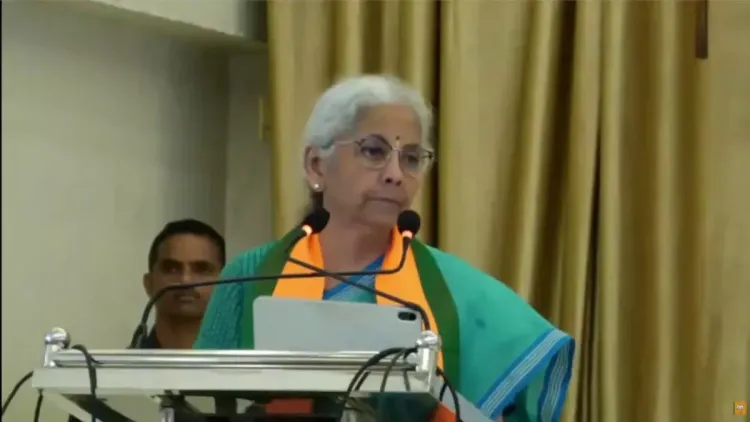
Union Finance Minister Nirmala Sitharaman, speaking in Bengaluru on Sunday, June 14, 2026, shared a detailed breakdown of central transfers to Karnataka, asserting that the state's fiscal receipts under the current Union government have far outpaced what it received during the entire UPA era from 2004 to 2014.
Context
Sitharaman stated that under the Scheme for Special Assistance to States for Capital Investment (SASCI), Karnataka received over ₹18,000 crore in Union-funded, 50-year interest-free loans for infrastructure — transfers made over and above what the Finance Commission recommends as the state's statutory share. These loans are discretionary and directed at accelerating capital spending at the state level.
For the financial year 2026–27 alone, Karnataka's budgeted tax devolution stands at ₹63,000 crore. The Finance Minister noted this single-year figure equals 76 per cent of the total devolution Karnataka received across the entire ten-year UPA period.
Policy Backdrop
SASCI — the Scheme for Special Assistance to States for Capital Investment — was significantly expanded in Union Budgets after 2019, providing states with long-term, interest-free capital loans that sit outside the statutory revenue-sharing formula determined by the Finance Commission. The 15th Finance Commission set the devolution formula for 2021–26, forming the baseline against which the current government measures its additional transfers.
The broader approach of layering discretionary capital loans on top of Finance Commission awards has been a recurring feature of Union budgets under Prime Minister Narendra Modi. Sitharaman reiterated that the Union government 'believes in and works with the spirit of cooperative federalism.'
Stakeholders and Impact
Karnataka, governed by the Congress at the state level, has been at the centre of a political debate over alleged fiscal discrimination by the Centre — a charge the Union government has consistently denied. Sitharaman's Bengaluru appearance and the data-led rebuttal are squarely aimed at that narrative.
State governments across India are key stakeholders in SASCI, as the scheme directly supplements their capital budgets without adding to their debt-servicing burden in the short term. A 50-year interest-free tenor effectively functions as a grant for most planning horizons.
What's Next
The 16th Finance Commission, currently deliberating its recommendations, will set the devolution framework beyond 2026. Its final report and the Union government's response will determine whether the enhanced transfer trajectory signalled by Sitharaman is institutionalised or remains discretionary. The Commission's award, expected to take effect from 2026–27 onwards, will be the next major milestone in Centre-state fiscal relations.
Point of View
The Finance Ministry is fighting a political battle on economic terrain. The SASCI figures serve a dual purpose: they demonstrate enhanced capital support while reinforcing the BJP's cooperative federalism branding ahead of the 16th Finance Commission's award. The framing also pre-empts criticism that discretionary loans distort the constitutional revenue-sharing framework — by presenting them as additions rather than substitutes.
NationPress
13 Sept 2026
Frequently Asked Questions
What is SASCI and how does it benefit Karnataka?
SASCI — the Scheme for Special Assistance to States for Capital Investment — provides states with long-term, 50-year interest-free loans for infrastructure projects, over and above the tax devolution recommended by the Finance Commission. Karnataka received over ₹18,000 crore under this scheme.
How much devolution is Karnataka getting in 2026-27?
Karnataka's budgeted tax devolution from the Union government for the financial year 2026–27 is ₹63,000 crore, according to Finance Minister Nirmala Sitharaman's statement in Bengaluru on June 14, 2026.
How does Karnataka's current devolution compare to the UPA era?
Sitharaman stated that Karnataka's FY27 devolution of ₹63,000 crore alone equals 76 per cent of the total devolution the state received across the entire ten-year UPA period from 2004 to 2014.
What is cooperative federalism in the Indian context?
Cooperative federalism refers to a model of Centre-state relations where the Union and states work collaboratively on fiscal and policy matters. The Modi government has used the term to describe enhanced capital transfers and consultative budget-making with state governments.
What is the 16th Finance Commission and why does it matter for Karnataka?
The 16th Finance Commission is a constitutional body currently formulating recommendations on how Union tax revenues should be shared with states from 2026 onwards. Its award will determine Karnataka's statutory devolution share for the next five-year cycle, making it a critical milestone for Centre-state fiscal relations.