Sitharaman Meets PM Internship Scheme Interns in Delhi
Synopsis
Union Finance Minister Nirmala Sitharaman met Prime Minister's Internship Scheme interns in New Delhi on 14 August 2026. Announced in Budget 2024-25, PMIS targets one crore internship placements over five years in India's top 500 companies, aiming to bridge the gap between academic learning and industry-ready employment.
Key Takeaways
Union Finance Minister Nirmala Sitharaman interacted with Prime Minister's Internship Scheme (PMIS) interns in New Delhi on 14 August 2026 .
PMIS was announced in the Union Budget 2024-25 to create one crore internship opportunities over five years .
The scheme places youth in India's top 500 companies for 12-month stints focused on hands-on, industry-relevant skills.
Interns attending the interaction came from across India and represented diverse sectors .
The scheme is part of a broader government effort to formalise industry-academia linkages and improve youth employability at scale.
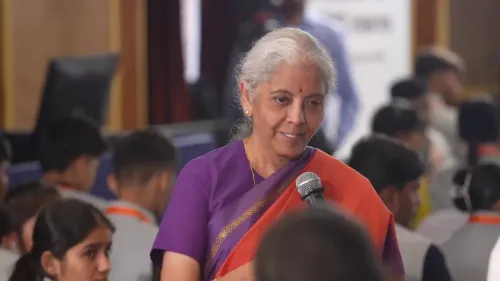
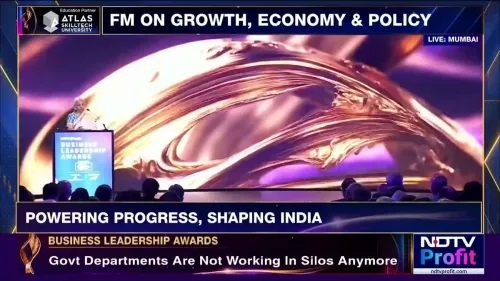
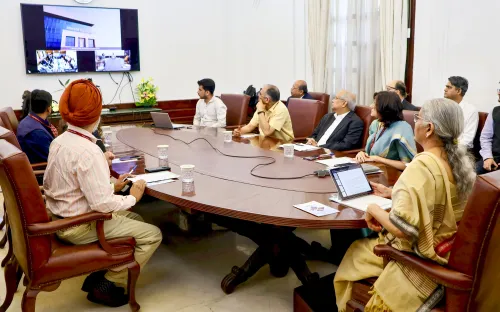
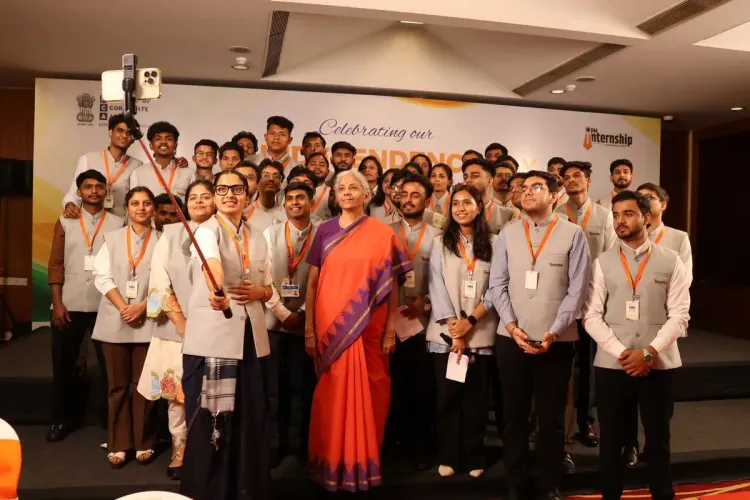
A room full of young Indians from every corner of the country — and every sector of the economy — got a rare audience with the woman who put their programme in the budget. Union Finance Minister Nirmala Sitharaman met with interns of the Prime Minister's Internship Scheme (PMIS) in New Delhi on 14 August 2026, engaging directly with participants who are midway through building the industry skills their classrooms never taught them.
What PMIS promises — and who it is for
The Prime Minister's Internship Scheme was announced in the Union Budget 2024-25 with an ambitious mandate: one crore internship opportunities over five years, placed inside India's top 500 companies. The design is deliberate — 12 months of hands-on exposure, long enough to matter, structured around industry-relevant skills and genuine job readiness. The gap it targets is a stubborn one: millions of graduates entering the workforce each year with degrees but without the practical grounding employers actually demand.
Sitharaman, as the Finance Minister who introduced the scheme, has a direct stake in its delivery. Her interaction with the interns was not ceremonial — it was a signal that the government is watching implementation, not just announcing intent.
Diverse cohort, national reach
The interns who met the Finance Minister come from across India and represent diverse sectors, reflecting the scheme's design to cut across geography and industry rather than concentrate opportunity in metro centres. That breadth is the scheme's core value proposition: a student from a tier-2 city getting the same structured corporate exposure as one from a major urban hub.
The interaction fits into a wider government push — running through the Skill India framework — to formalise the industry-academia link that has historically been left to chance. Structured internships in top-tier companies are the mechanism; employability at scale is the goal.
From budget line to boardroom floor
Schemes announced in budgets live or die in implementation. The PMIS is now past its announcement phase and into the harder work of company participation, intern placements, and measurable outcomes. Sitharaman's direct engagement with interns puts a face — and a floor-level check — on that process. The question the scheme will eventually have to answer is not whether the intent is right, but whether the numbers hold: companies enrolled, interns placed, and — most critically — jobs that follow.
India's youth employment challenge is structural. A programme that puts a crore young people inside top companies over five years, if it delivers, is not a welfare gesture — it is a workforce intervention at scale.
Point of View
The Finance Ministry signals accountability — and implicitly raises the stakes for companies and administrators to show results. The PMIS sits at the intersection of two of the government's most politically sensitive pressure points: youth unemployment and the widening skills gap. If the scheme delivers on its one-crore target, it becomes a flagship of the BJP's economic governance narrative heading into future electoral cycles.
NationPress
14 Aug 2026
Frequently Asked Questions
What is the Prime Minister's Internship Scheme (PMIS)?
The Prime Minister's Internship Scheme is a government programme announced in the Union Budget 2024-25 that provides 12-month internship placements for youth in India's top 500 companies, targeting one crore opportunities over five years to bridge the gap between academic education and industry requirements.
Why did Nirmala Sitharaman meet PMIS interns?
Union Finance Minister Nirmala Sitharaman met PMIS interns in New Delhi on 14 August 2026 to engage directly with participants in the scheme she introduced through the Union Budget, reflecting the government's continued focus on the programme's implementation and outcomes.
How many internships does PMIS aim to create?
PMIS aims to create one crore (10 million) internship opportunities over five years, placing young people in India's top 500 companies for 12-month hands-on stints.
Which companies are part of the PM Internship Scheme?
The scheme targets India's top 500 companies across diverse sectors, though the specific list of participating firms is determined through the scheme's official implementation framework.
How does PMIS help with youth unemployment in India?
PMIS addresses youth unemployment by giving graduates structured, long-duration industry exposure inside major companies, building job-relevant skills that academic curricula often do not provide, and improving overall employability at scale.