Sitharaman on Tirumurais: Over 1,000 Years of Musical Heritage
Synopsis
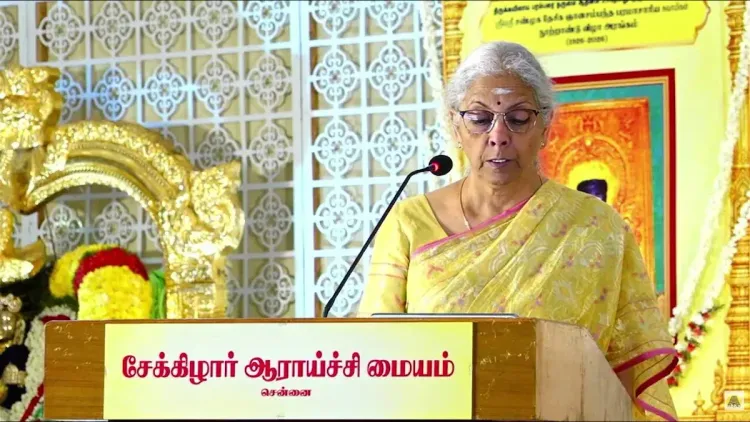
Union Finance Minister Nirmala Sitharaman, addressing an audience in Chennai, highlighted the documented musical heritage of the Tirumurais — Tamil Shaiva devotional hymns spanning over 1,000 years — noting their performance on ancient instruments including the yazh, udukkai, and kottu.
Key Takeaways
Nirmala Sitharaman spoke in Chennai about the musical tradition of the Tirumurais , the twelve-volume Tamil Shaiva devotional hymn corpus.
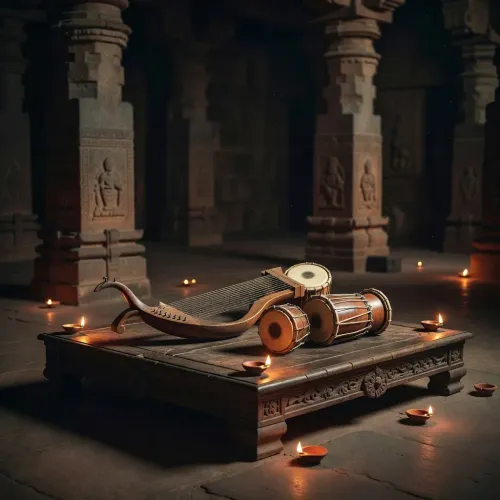
She cited documented evidence of the hymns being performed on instruments including the yazh (harp), udukkai (small drum), and kottu (percussion).
The Tirumurais were composed by the Nayanar saints between the 6th and 11th centuries CE , giving them a musical lineage of over 1,000 years .
The yazh is one of the oldest recorded instruments in Tamil culture, referenced in ancient Sangam literature.
The post is part 2 of an ongoing Chennai speech series, with further remarks expected.
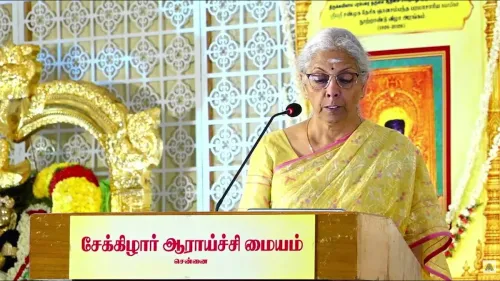
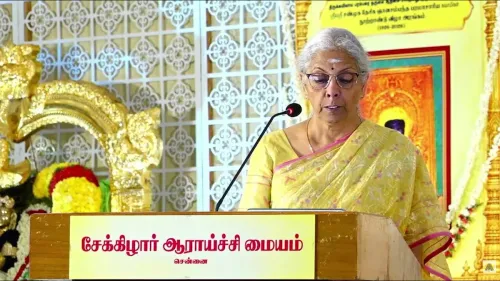
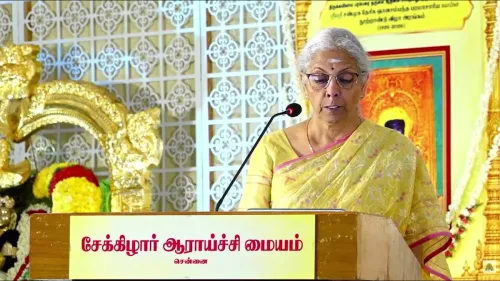
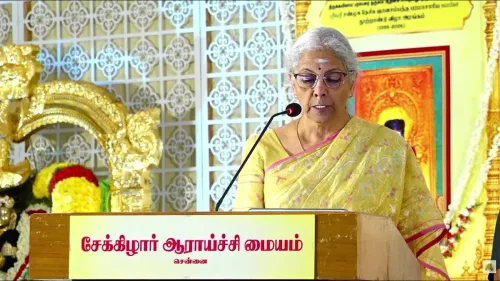
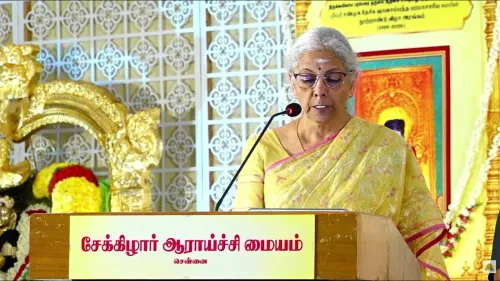
Speaking in Chennai, Union Finance Minister Nirmala Sitharaman drew attention to the deep musical tradition embedded in the Tirumurais — the twelve-volume collection of Tamil Shaiva devotional hymns — highlighting how ancient instruments like the yazh (harp), udukkai (small drum), and kottu (percussion) have carried these sacred verses across more than a millennium.
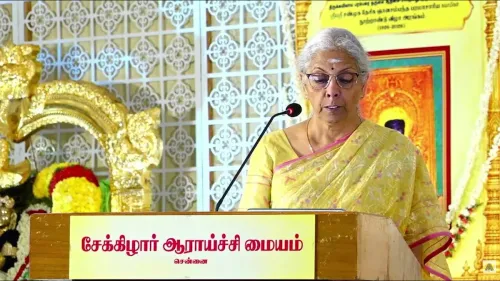
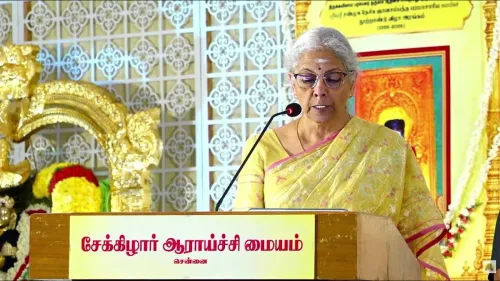
In her own words from the speech series, she noted: 'There are many documents to show that these Tirumurais were performed with various musical instruments. The Tirumurais have been sung through instruments like the yazh, udukkai, and kottu. In this way, the Tirumurais carry a musical tradition of over a thousand years.'
What the Tirumurais Are — and Why the Music Matters
The Tirumurais are a canonical corpus of Tamil Shaiva devotional poetry composed by the Nayanar saints roughly between the 6th and 11th centuries CE. Spanning twelve volumes, they represent one of the most sustained traditions of devotional literature in the subcontinent. What Sitharaman underscored is that this was never a purely textual tradition — it was a performed, living musical practice, documented and transmitted through instruments that predate many of the world's classical music systems. The yazh, a harp-like stringed instrument, appears prominently in ancient Sangam literature and is among the earliest recorded instruments in Tamil culture. The udukkai and kottu represent the percussive backbone that gave these hymns their ceremonial weight. Together, they point to a sophisticated, multi-instrumental musical ecosystem that flourished alongside the composition of the hymns themselves.Ministers and the Tamil Classical Stage
Sitharaman's remarks are part of a broader pattern of senior Indian political figures engaging with classical Tamil literary and performing arts traditions when addressing audiences in Tamil Nadu. The acknowledgement of documented evidence — manuscripts, inscriptions, and musicological records — lends the speech an academic register, signalling more than ceremonial appreciation. For Tamil musicians and Shaivite communities, public affirmation of the Tirumurais' musical lineage at a national-level platform carries real cultural resonance. It places a spotlight on a tradition that scholars argue has been underrepresented in mainstream national conversations about Indian classical music. The post is marked 2/n, indicating this is one instalment in a longer series from the Chennai speech — subsequent remarks may elaborate on specific instruments, institutions, or policy directions related to this heritage.Point of View
Particularly relevant in Tamil Nadu's competitive political landscape. Citing documented instrumental traditions elevates the speech beyond ceremonial rhetoric into the register of cultural scholarship. This fits a broader national pattern of connecting pre-modern South Indian arts to contemporary political identity. The 'n-part' format of the speech series suggests a sustained, structured cultural outreach rather than an off-the-cuff remark.
NationPress
2 Aug 2026
Frequently Asked Questions
What are the Tirumurais?
The Tirumurais are a twelve-volume collection of Tamil Shaiva devotional hymns composed by the Nayanar saints between approximately the 6th and 11th centuries CE. They are among the most important texts in Tamil religious and literary tradition.
What instruments did Nirmala Sitharaman mention in her Chennai speech?
She mentioned the yazh (an ancient Tamil harp-like instrument), the udukkai (a small drum), and the kottu (a percussion instrument) as instruments used to perform the Tirumurais.
What is the yazh instrument?
The yazh is an ancient Tamil stringed instrument resembling a harp. It appears in Sangam-era literature and is considered one of the earliest documented instruments in Tamil culture.
Why did Nirmala Sitharaman speak about Tamil classical music?
Sitharaman was delivering a speech in Chennai and addressed the documented musical heritage of the Tirumurais as part of a multi-part speech series. Senior Indian political figures frequently engage with Tamil classical traditions when addressing audiences in Tamil Nadu.
What is the musical tradition of the Tirumurais?
The Tirumurais have a documented musical performance tradition spanning over 1,000 years, with historical records showing they were sung and performed using a range of instruments including stringed and percussion instruments from ancient Tamil musical practice.